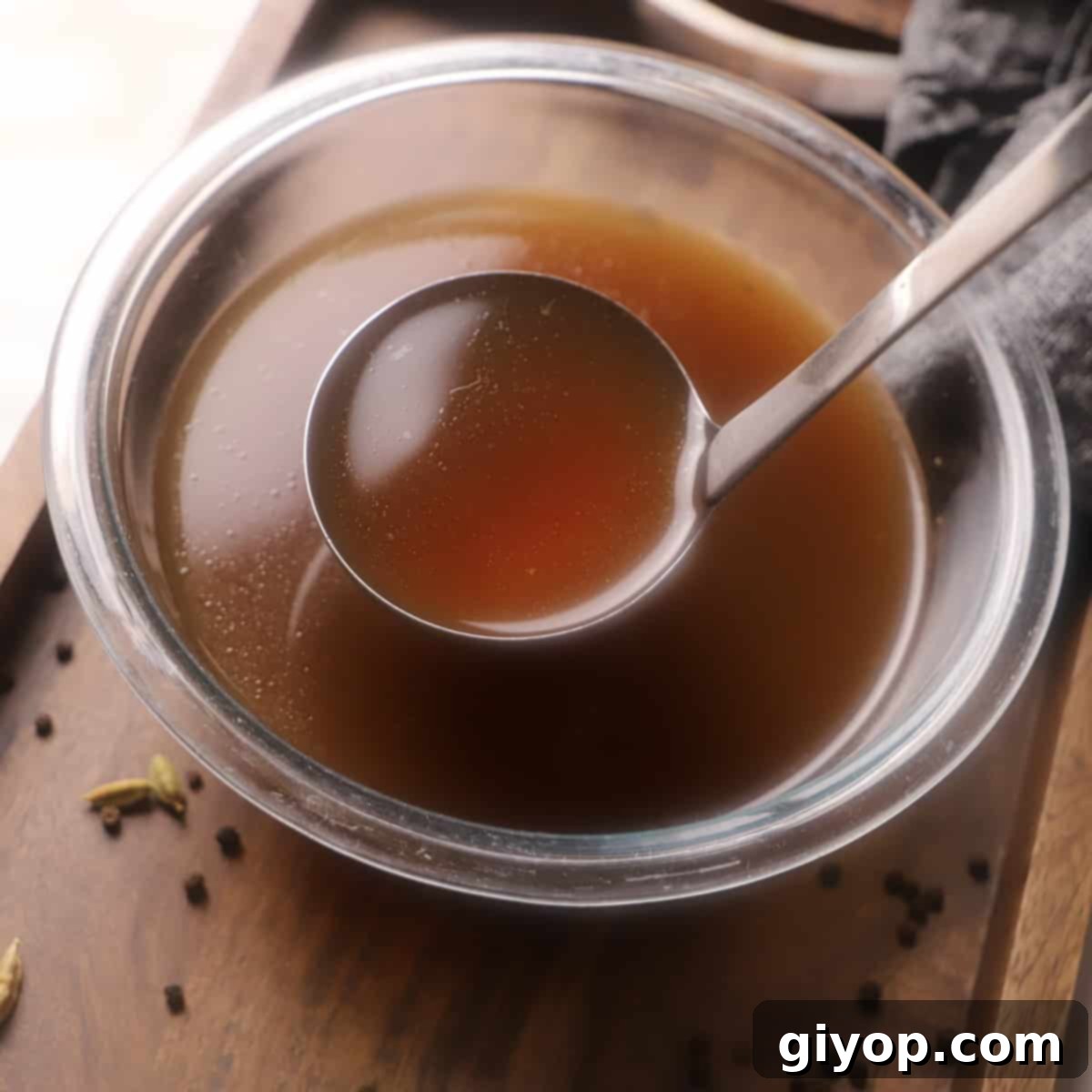
Unlock the secret to deeply flavorful and incredibly nourishing dishes with homemade bone broth. Thanks to the Instant Pot, crafting your own rich, golden elixir is astonishingly easy and significantly more rewarding than relying on store-bought alternatives. Beyond its culinary prowess, bone broth is celebrated for a myriad of health benefits, making it a powerful addition to your diet. This comprehensive guide will walk you through a simple, quick, and foolproof method to create your own nutrient-dense bone broth, ensuring restaurant-quality results every time.
Once you’ve experienced the unparalleled richness of homemade bone broth, you’ll want to incorporate it into everything. It’s fantastic simply sipped warm, or as a foundational ingredient for elevating your favorite recipes, from comforting beef stroganoff to hearty stews and classic moussaka. Its robust flavor profile adds an unmatched depth that transforms everyday meals into culinary masterpieces.
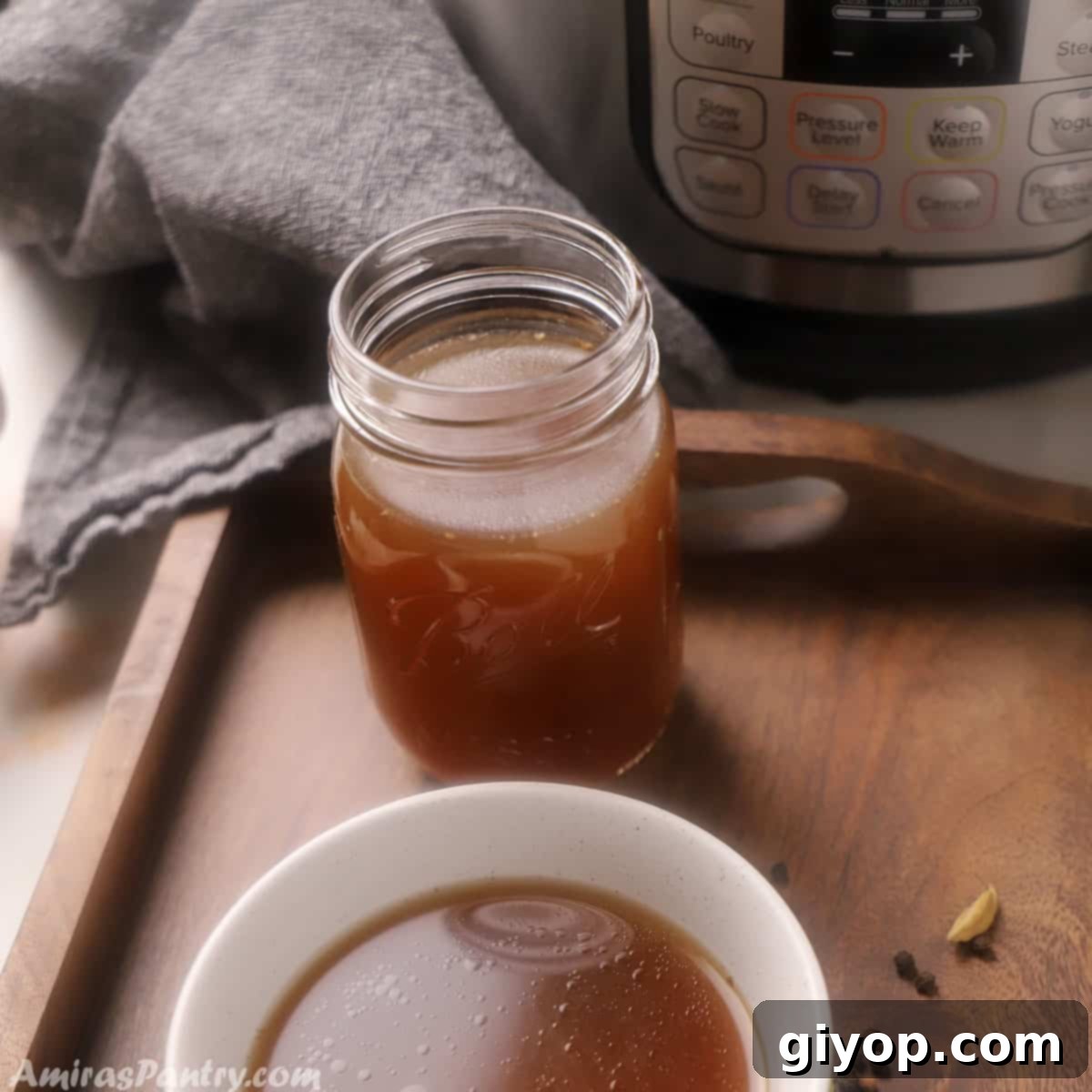
Why Homemade Bone Broth is a Game-Changer
There’s a reason chefs and home cooks alike swear by homemade bone broth. Its rich, complex flavor and incredible versatility are simply unmatched by anything you can buy in a carton. Crafting your own beef broth from scratch offers several compelling advantages:
- Unrivaled Flavor and Depth: Store-bought broths often lack the gelatinous richness and deep umami notes that come from slow-simmering quality bones. This homemade version creates a restaurant-quality foundation for all your culinary endeavors.
- Nutrient Powerhouse: Bone broth is a natural source of collagen, amino acids, and essential minerals like calcium, magnesium, and phosphorus. These nutrients are extracted during the cooking process, contributing to gut health, joint support, and skin vitality.
- Efficient and Quick (with an Instant Pot): While traditional stovetop methods can take 12-48 hours, the Instant Pot drastically reduces cooking time to just a few hours, delivering a high-quality broth without the long wait.
- Sustainable Cooking: It’s an excellent way to utilize leftover bones from roasts and vegetable scraps that might otherwise be discarded, minimizing food waste and maximizing flavor.
- Cost-Effective: Making your own broth is significantly cheaper than purchasing premium store-bought options, especially considering the superior quality and health benefits you receive.
- Customizable: You have complete control over the ingredients, allowing you to tailor the flavor profile to your preferences and dietary needs.
I genuinely love the process of making homemade soups, stews, and sauces, and this bone broth recipe forms the backbone of countless incredible meals. It infuses your cooking with a depth of flavor that is simply impossible to achieve with standard beef broth or stock from the supermarket.
Essential Ingredients
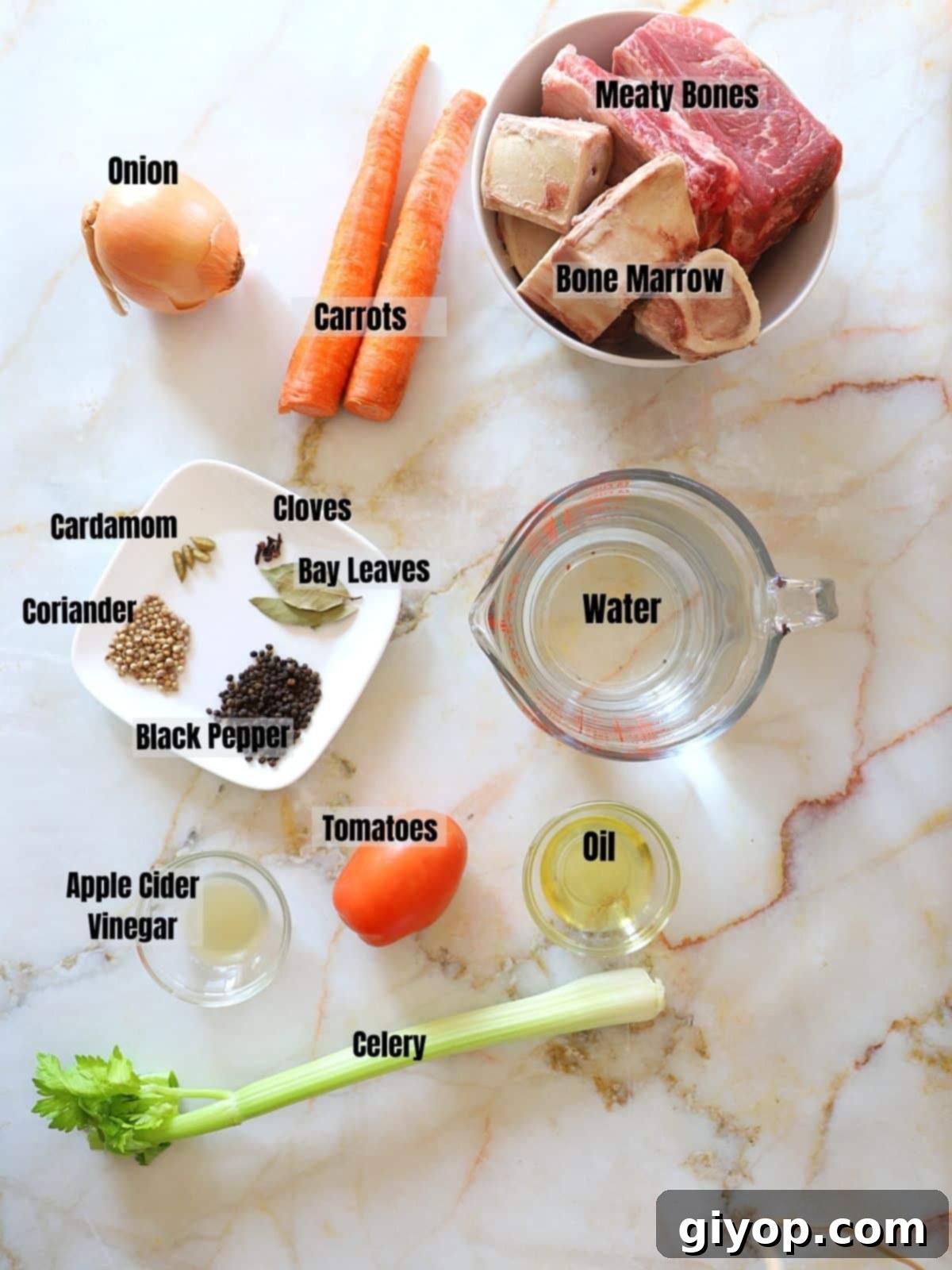
Ingredient Notes for Optimal Flavor and Nutrition
The beauty of bone broth lies in its simplicity, but a few thoughtful ingredient choices can elevate your broth from good to extraordinary.
- Choosing the Best Bones: For the richest flavor and maximum nutritional benefits, I highly recommend using a combination of bone marrow bones and meaty bones. Marrow bones contribute a buttery richness and a significant amount of nutrients, while meaty bones add a robust, savory depth. I often buy bone marrow frozen and let it thaw overnight in the refrigerator for convenience. Don’t be afraid to ask your local butcher for “soup bones” or “knuckle bones” – they often have excellent options.
- Selecting Your Vegetables: The classic “mirepoix” (carrots, celery, and onion) forms the aromatic foundation of any good broth. You can use almost any vegetable scraps you have on hand, but steer clear of strong-flavored vegetables like cauliflower or broccoli, which can overpower the delicate broth. While many recipes include garlic, I personally omit it to maintain a cleaner beef flavor, allowing the natural essence of the bones and classic aromatics to shine.
- Spices and Herbs: Whole spices like cloves, coriander seeds, black peppercorns, and cardamom, along with bay leaves, infuse the broth with subtle warmth and complexity without being dominant. Fresh herbs such as parsley or thyme can also be added for an extra layer of freshness, though they are optional.
- The Role of Apple Cider Vinegar: A small amount of apple cider vinegar is crucial. Its acidity helps to draw out valuable minerals and collagen from the bones during the simmering process, enhancing both the nutritional profile and the gelatinous texture of your finished broth.
- Quality Water: Use filtered water if possible, as the quality of your water can impact the overall taste of your broth.

Instant Pot Bone Broth Recipe
Elevate your cooking with this incredibly easy Instant Pot bone broth recipe. Achieve a restaurant-quality foundation for your soups, stews, and sauces, packed with flavor and nutrition, all made simpler in your pressure cooker.
Course: Stocks | Cuisine: French, Western | Diet: Halal
Prep Time: 50 minutes | Cook Time: 2 hours | Total Time: 2 hours 50 minutes
Servings: 8 cups | Calories: 55kcal per cup | Author: Amira
Ingredients
- 2 Tablespoons Oil (olive oil or avocado oil recommended)
- 4 pounds beef bones (preferably a mixture of marrow bones and meaty bones)
- 3-4 whole cloves
- ½ Tablespoon coriander seeds
- 1 Tablespoon black peppercorns
- 3 whole cardamom pods
- 2 bay leaves
- 2 large carrots, roughly chopped
- 1 large onion, quartered
- 1 tomato, quartered
- 1 celery stalk, roughly chopped
- 2 liters tap water (approximately 8 cups)
- 1 ½ teaspoon apple cider vinegar
Instructions
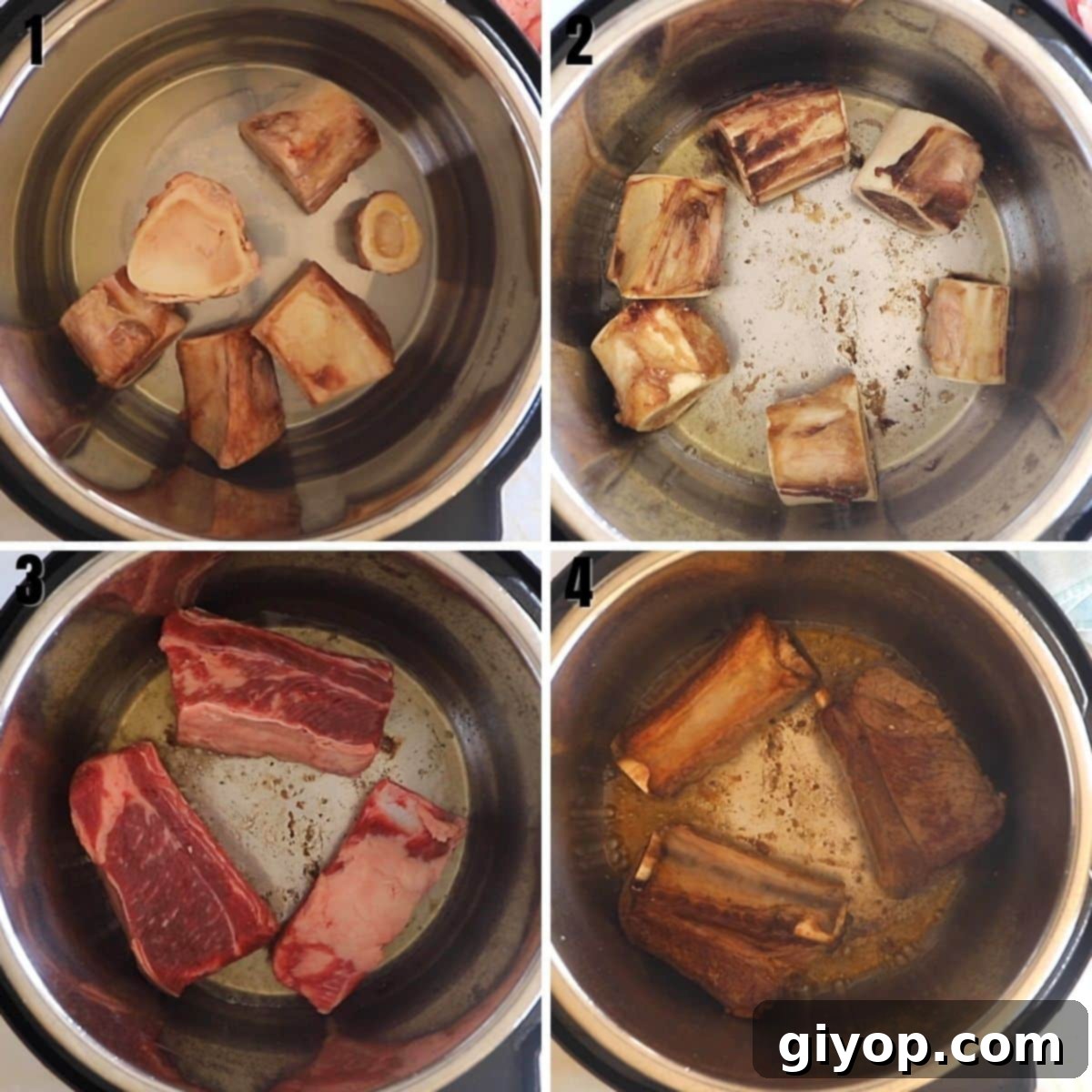
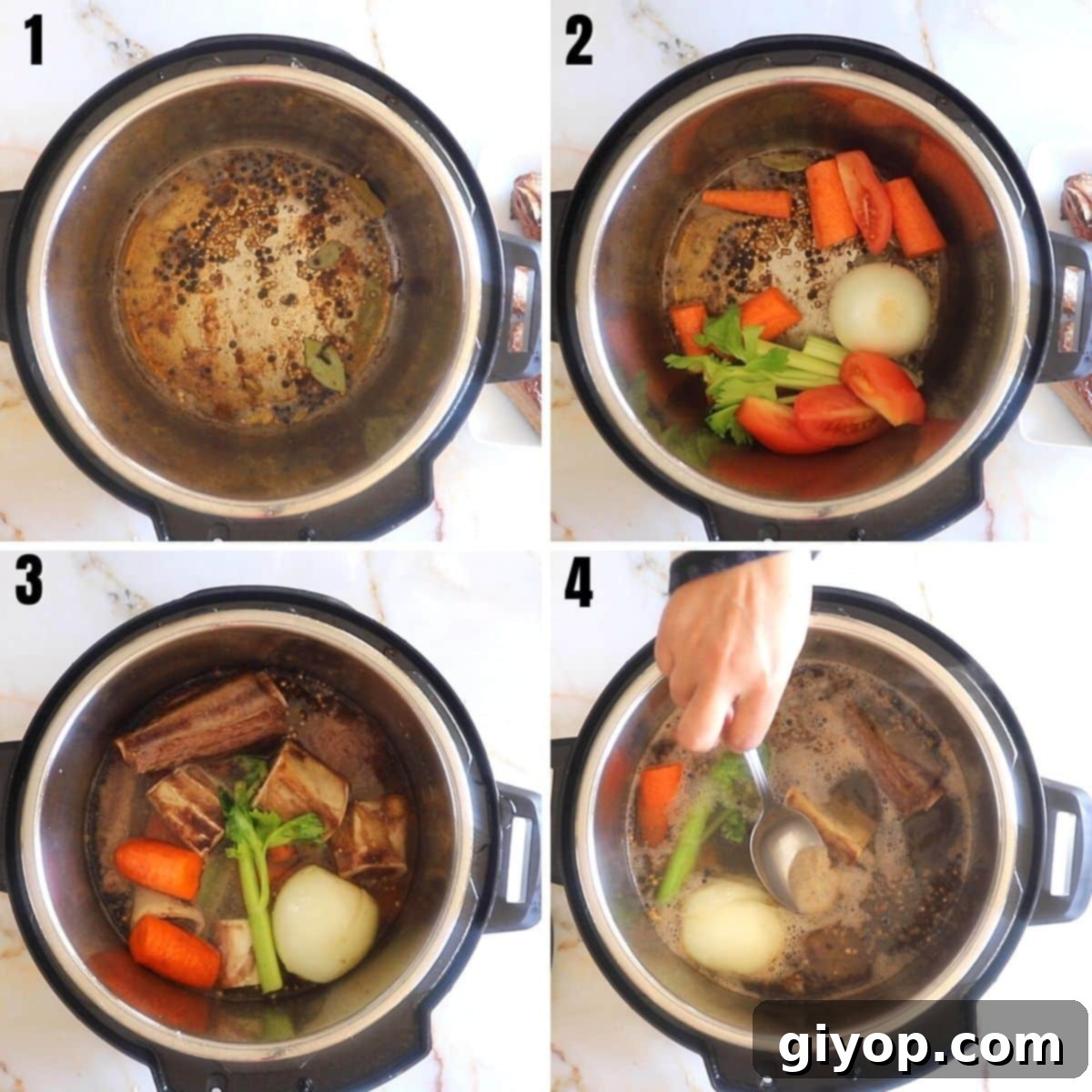
- Brown the Bones: Set your Instant Pot to the ‘Sauté’ function on high. Add the oil. Once hot, add the beef bones (marrow and meaty bones) in batches if necessary, browning them thoroughly on all sides until deeply golden. This step is crucial for developing rich flavor. Remove browned bones and set aside.
- Sauté Aromatics: Add the whole spices (cloves, coriander seeds, black peppercorns, cardamom, bay leaves) to the pot and sauté for about 1 minute until fragrant. Then, add the chopped carrots, onion, tomato, and celery. Sauté for 4-5 minutes, stirring occasionally, until slightly softened and aromatic.
- Deglaze and Add Vinegar: Turn off the Instant Pot. Return all the browned bones to the pot. Pour in the apple cider vinegar and water. Ensure the water covers the bones and vegetables, but do not exceed the ‘Max Fill’ line of your Instant Pot.
- Initial Soak and Skim: Allow the bones to sit in the water with vinegar for 20-30 minutes. This crucial resting period helps the vinegar extract more minerals and collagen from the bones. After this soak, turn the Instant Pot back to ‘Sauté’ and bring the mixture to a boil (this will take about 15 minutes). As it heats, skim off any foam or “scum” that rises to the surface with a spoon or ladle. This ensures a cleaner, clearer broth.
- Pressure Cook: Cancel the ‘Sauté’ function. Secure the lid on the Instant Pot and set the sealing valve to the ‘Sealing’ position. Select the ‘Pressure Cook’ (or ‘Manual’) function and set it to HIGH pressure for 120 minutes (2 hours).
- Natural Pressure Release: Once the cooking cycle is complete, allow for a natural pressure release (NPR) for 45 minutes. This means letting the pressure naturally decrease without manually opening the valve. After 45 minutes, carefully perform a quick release (QR) for any remaining pressure.
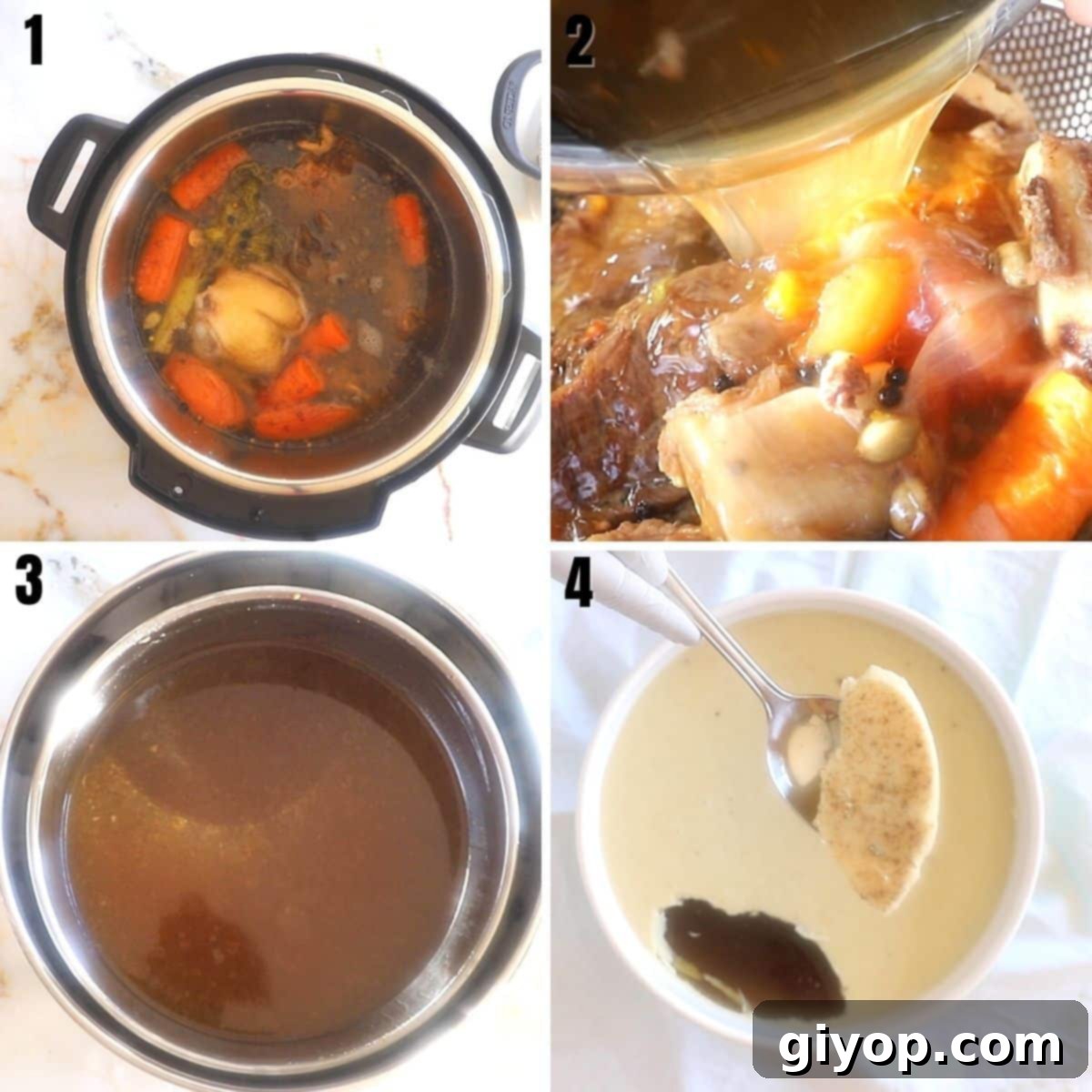
- Strain the Broth: Open the lid. Carefully remove the bones and discard them (or save any meat for other uses). Strain the hot broth through a fine-mesh colander or sieve, preferably lined with cheesecloth, into a large heat-safe bowl or container. This removes all solid particles, leaving you with a clear broth.
- Rapid Cooling: To prevent bacterial growth and ensure food safety, the broth must be cooled quickly. Place the bowl of hot broth into a larger bowl filled with ice water. Stir the broth occasionally to help it cool down faster.
- Chill and Defat: Once the broth has cooled significantly (to room temperature or below), cover it tightly and refrigerate overnight. The next day, a solidified layer of fat will have formed on top. Carefully spoon off and discard this fat layer for a cleaner, healthier broth.
Notes & Tips for Success
- Stovetop Alternative: While the Instant Pot is superior for speed, you can make this broth on the stovetop. Use a large stockpot and simmer the broth on low heat for a much longer duration, typically 8-10 hours, and some enthusiasts even simmer for up to 48 hours for maximum extraction.
- Roasting Bones (Optional): Some prefer to roast bones in the oven on a baking sheet before adding them to the pot. While this can deepen flavor, the ‘Sauté’ function in the Instant Pot achieves a similar effect more quickly and with less cleanup.
- Skimming the Scum: The foam (often called scum) that appears during the initial boil is natural. Removing it is important as it can introduce impurities and sometimes an off-odor to the finished broth.
- Cooling the Bones with Vinegar: Allowing the bones to cool in the water with apple cider vinegar is crucial for the vinegar to work its magic, effectively drawing out more minerals and collagen from the bone matrix.
- Why Rapid Cooling is Essential: Broth is a hospitable environment for bacteria. Rapid cooling, especially using an ice bath, significantly reduces the time it spends in the “danger zone” (40°F to 140°F / 5°C to 60°C), where bacteria multiply rapidly, ensuring food safety.
- Defatting for Purity: Removing the solidified fat layer after chilling results in a cleaner, less greasy broth that is often preferred for its taste and health benefits. This fat can be saved and used for cooking, if desired.
- Max Fill Line: Always ensure your water level is at least 1 inch below the Instant Pot’s ‘Max Fill’ line to allow for proper pressure build-up and safe operation.
Nutrition Facts
Per 1 cup serving: Calories: 55kcal | Carbohydrates: 6g | Protein: 1g | Fat: 4g | Saturated Fat: 1g | Trans Fat: 1g | Sodium: 16mg | Potassium: 152mg | Fiber: 2g | Sugar: 2g | Vitamin A: 3147IU | Vitamin C: 5mg | Calcium: 24mg | Iron: 1mg
Tried this Recipe? We’d love to hear from you! Pin it for Later!
Mention @AmirasPantry or tag #AmirasPantry on social media!
Step-by-Step Visual Guide
For those who prefer a visual reference, these images illustrate key stages of making your Instant Pot bone broth.
Pro Tips for the Perfect Broth
Mastering bone broth means understanding a few key techniques that enhance both flavor and nutritional value. Here are some pro tips to ensure your Instant Pot bone broth is always exceptional:
- Don’t Skip the Browning: Sautéing the bones until they are deeply browned is not just for aesthetics; it caramelizes the proteins and sugars, creating a rich, deep flavor profile that will shine through in your finished broth.
- The Power of Apple Cider Vinegar: The small amount of apple cider vinegar (ACV) might seem unusual, but it plays a vital role. Its acidity helps to break down the connective tissues and bones, allowing more collagen, gelatin, and minerals to be extracted into the liquid. Ensuring the bones cool down in the water with the vinegar for about 30 minutes before pressure cooking maximizes this effect.
- Skim the Scum for Clarity: As the broth begins to heat, you’ll notice foam (often called ‘scum’) rising to the surface. Skimming this off before sealing the Instant Pot helps to remove impurities, resulting in a cleaner, clearer, and better-tasting broth. Depending on the bones used, this foam can sometimes impart an undesirable odor if not removed.
- Mind the Water Level: When filling your Instant Pot, always pay attention to the ‘Max Fill’ line. Overfilling can be dangerous and prevent the pot from coming to pressure correctly. Aim for about 1 inch below the maximum line for optimal performance and safety.
- Rapid Cooling is Crucial for Safety: Cooked broths are highly perishable. To prevent the rapid growth of bacteria, it’s essential to cool the broth down quickly after cooking. An ice bath is the most effective method: place your pot or container of hot broth into a larger bowl filled with ice water, stirring the broth occasionally until it reaches a safe temperature (below 40°F/5°C).
- Defatting for a Cleaner Broth: After chilling your broth overnight, a solid layer of fat will typically form on the surface. While some fat is desirable for flavor, removing the majority of this solidified layer results in a cleaner, less greasy broth that is often preferred for sipping and as a base for many dishes. This fat can be repurposed for cooking if you wish.
- Consider a Long Simmer (Stovetop): While the Instant Pot significantly cuts down cooking time, if you have the luxury of time, a traditional stovetop simmer over 8-10 hours (or even up to 48 hours for some connoisseurs) can yield an even deeper, more complex broth. This is a personal preference, as the Instant Pot still delivers fantastic results in a fraction of the time.
Delicious Variations
While beef bone broth is a classic, the beauty of homemade broth is its adaptability. Feel free to experiment with different ingredients to create unique flavor profiles:
- Chicken or Turkey Bone Broth: Easily substitute beef bones with chicken bones (backs, necks, feet, or a whole carcass) or a leftover turkey carcass after Thanksgiving. The cooking time might be slightly shorter for poultry, typically 90 minutes to 2 hours in the Instant Pot.
- Herbal Infusion: Add fresh herbs like a bundle of parsley stems, thyme sprigs, rosemary, or a sprig of sage during the pressure cooking phase for an aromatic boost.
- Spice it Up: Experiment with different whole spices like star anise, fennel seeds, or a touch of dried ginger for an Asian-inspired broth.
- Root Vegetable Enhancement: While carrots, celery, and onion are standard, you can add parsnips, leeks (white and light green parts), or even a few mushrooms (dried or fresh) for added umami. Avoid starchy vegetables like potatoes, which can make the broth cloudy.
- Ginger and Turmeric Broth: For an immune-boosting variation, add a few slices of fresh ginger and a teaspoon of ground turmeric (or a small piece of fresh turmeric root) along with your other aromatics.
Storage and Shelf Life
Proper storage is essential to enjoy your homemade bone broth safely and conveniently for weeks or even months:
- Refrigeration: Once cooled, your bone broth can be stored in airtight containers in the refrigerator for up to 5-7 days. Always ensure it has been cooled rapidly before storing.
- Freezing for Longer Storage: For extended shelf life, freezing is your best option. Store your broth in individual portions (1-2 cups, depending on your typical usage) in freezer-safe containers for up to 3 months.
- Using Glass Jars: If you opt for glass jars, ensure they are freezer-safe and do not fill them to the brim. Leave at least an inch of headspace to allow for expansion as the broth freezes, preventing the glass from breaking.
- Ice Cube Trays: For smaller portions perfect for sauces, deglazing a pan, or quick additions to dishes, freeze broth in ice cube trays. Once solid, transfer the broth cubes to a freezer-safe bag.
- Labeling: Always label your containers with the date of preparation to keep track of freshness.
Frequently Asked Questions
Many local butchers and grocery store meat departments are happy to set aside soup bones for you if you ask in advance. It’s always a good idea to call your preferred shopping place to inquire about their availability. Often, they prefer to give them to a customer rather than dispose of them. You can also frequently find frozen bones, including marrow bones, at farmer’s markets or specialty grocery stores.
For the richest and most nutritious bone broth, a variety of bones is ideal. Knuckle bones, bone marrow bones, and meaty short ribs are excellent choices. Bones with a good amount of connective tissue, such as oxtail or joint bones, are particularly beneficial as they contribute to the gelatinous texture and high collagen content of the broth.
A gelatinous broth is a sign of good collagen extraction. If your broth isn’t gelatinous, it could be due to several factors: not enough bones with collagen (like knuckles or feet), not enough cooking time (especially on the stovetop), or not enough apple cider vinegar to help extract the collagen. Ensure you use a good mix of bones and follow the cooking and vinegar steps closely for best results.
While it’s technically possible, reusing bones is generally not recommended for beef bone broth. Most of the beneficial nutrients and flavor compounds are extracted during the first long simmer. A second batch would likely result in a much weaker, less flavorful, and less nutritious broth. It’s best to start with fresh bones each time.
Serving Suggestions
Beyond being a fantastic base for recipes, bone broth can be enjoyed in many ways:
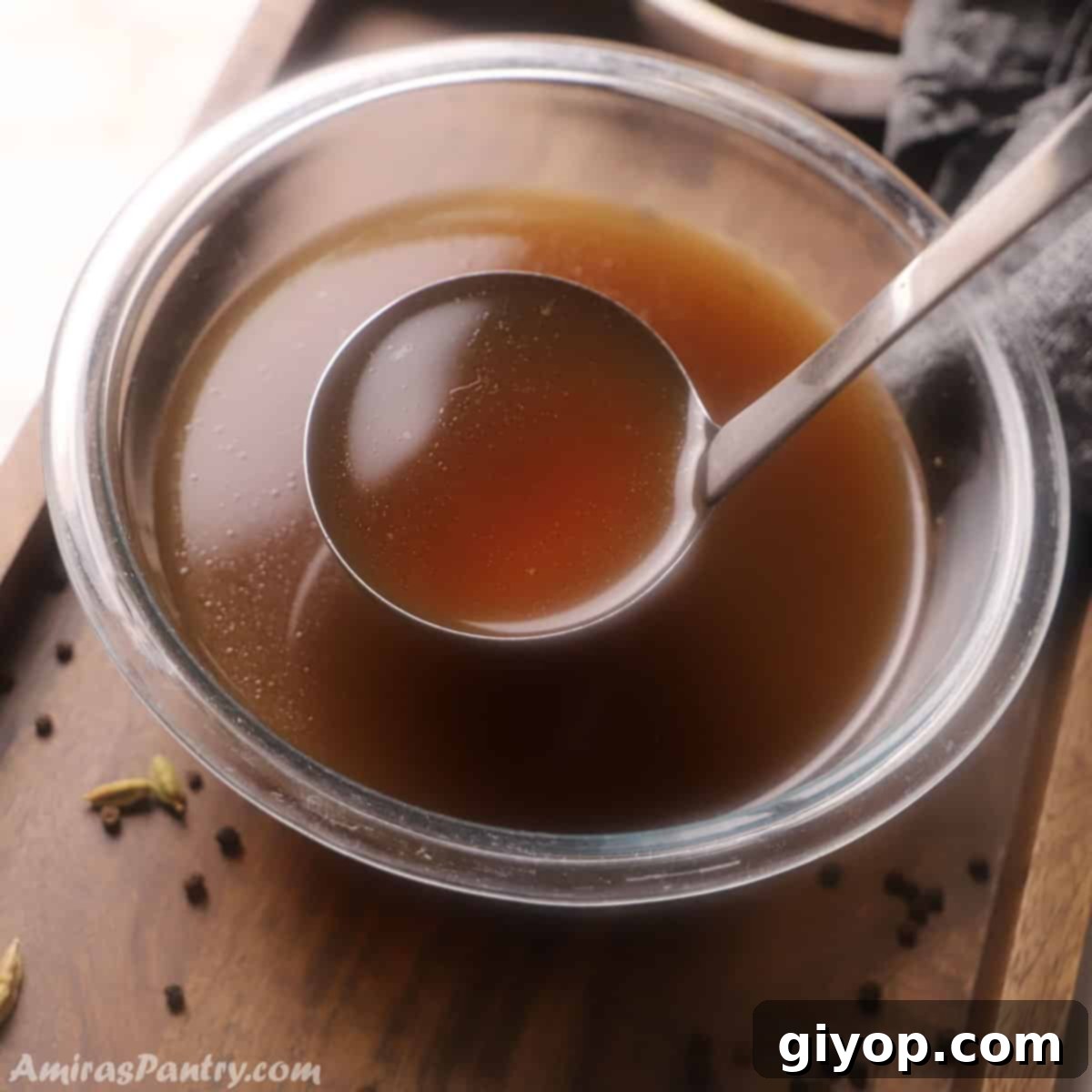
- Sip It Warm: A mug of warm bone broth is incredibly comforting and a great way to start or end your day, especially during colder months or when you need a gentle pick-me-up.
- Base for Soups and Stews: Use it as the liquid foundation for all your favorite soups, stews, and chili recipes for an incomparable depth of flavor.
- Sauces and Gravies: Replace water or other stocks with bone broth in your pan sauces and gravies to infuse them with rich, savory notes.
- Cooking Grains: Cook rice, quinoa, or other grains in bone broth instead of water for an added layer of flavor and nutrition.
- Braising Meats: It’s an ideal liquid for braising short ribs, pot roasts, or any cut of meat that benefits from slow, moist cooking.
More Comforting Recipes to Try
If you loved making this bone broth, you’ll surely enjoy these other delicious and comforting recipes:
- Instant Pot Rice Pudding: Need to use your Instant Pot for something sweet? Try this Instant Pot rice pudding. A simple, delicious, and quicker version of the classic dessert, ready in a fraction of the time. Creamy, sweetened to your liking, and perfect for any time of day.
- Ground Beef Goulash Phyllo Pie: This savory meat pie features a flaky, buttery phyllo crust encasing a delicious ground beef filling seasoned with a variety of aromatic herbs and spices. It’s incredibly easy to make and a guaranteed crowd-pleaser.
- Moroccan Beef Tagine with Butternut Squash: Warm spices, tender butternut squash, and succulent beef are the star ingredients in this Moroccan Beef Tagine. This filling and cozy dish is perfect for chilly evenings and offers a burst of exotic flavors.
- Gluten-Free Beef Stew: Indulge in a hearty gluten-free beef stew featuring fall-apart beef and tender vegetables swimming in a rich, savory sauce. A fantastic weeknight dinner your entire family will enjoy.
- Instant Pot Beef and Barley Soup: This Instant Pot beef barley soup is a comforting and hearty dish that’s surprisingly simple to prepare. In just 30 minutes, you’ll have a satisfying dinner, perfect for cool evenings or whenever you crave a warm bowl of soup.