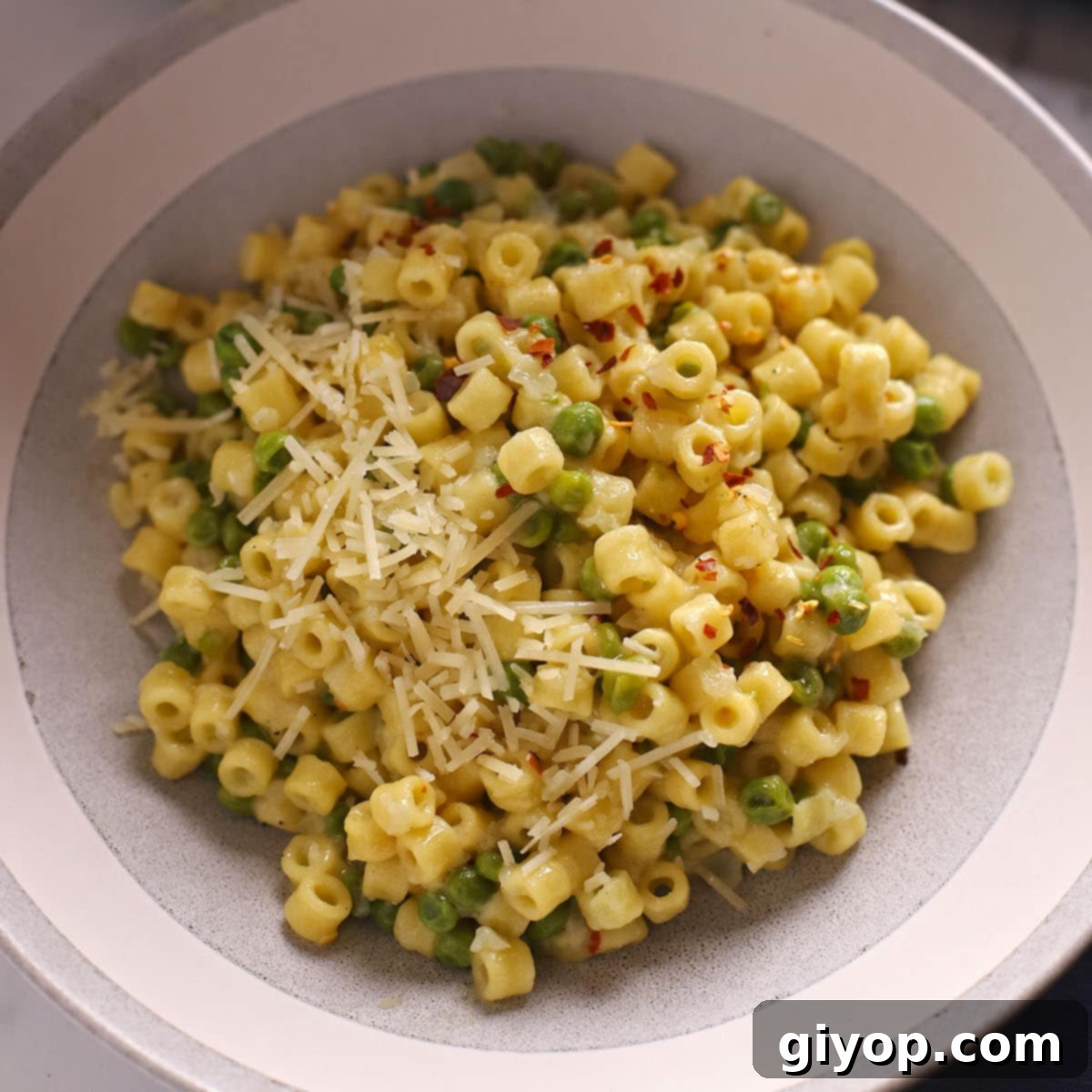
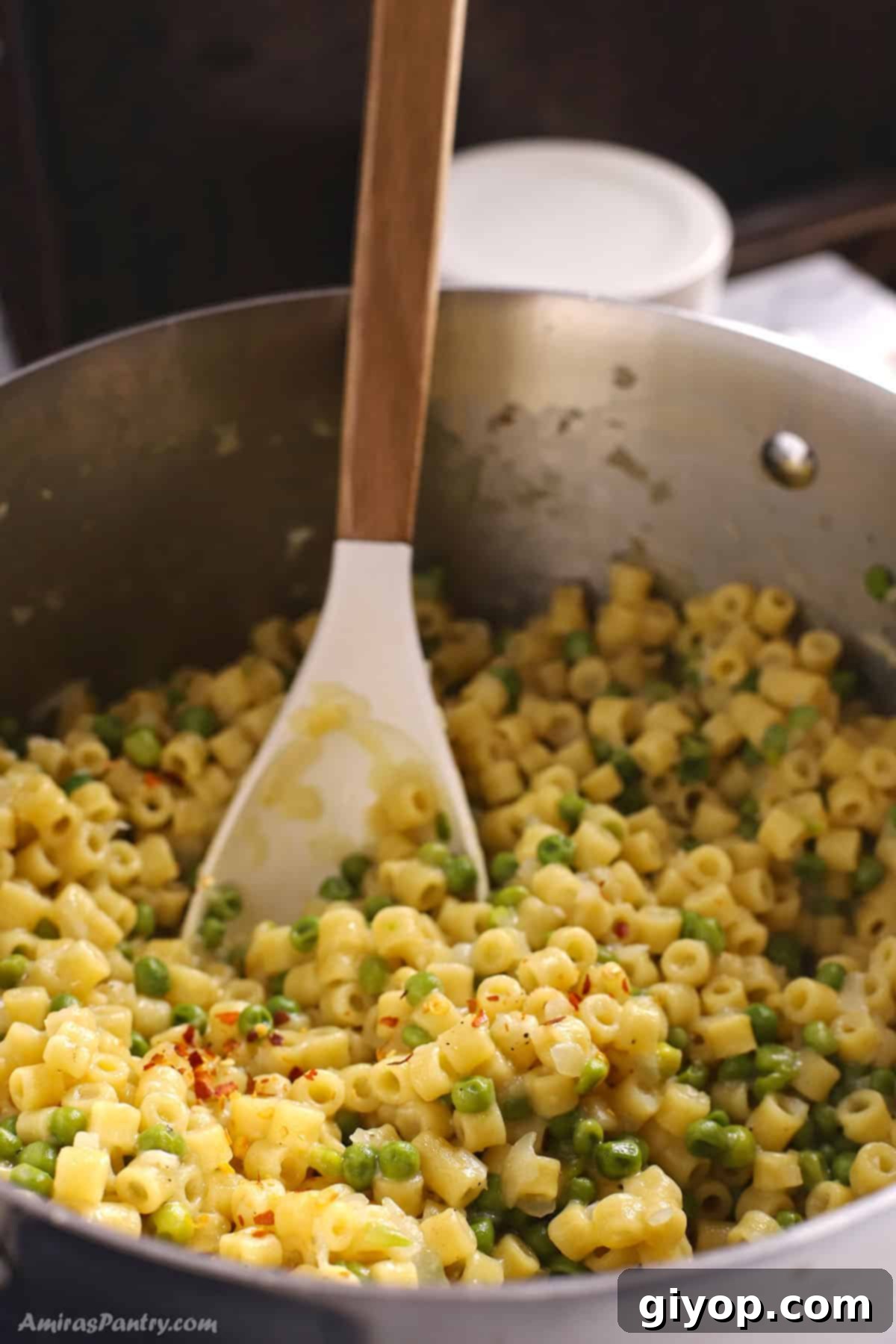
Welcome to the heartwarming world of Italian comfort food with a beloved classic: Pasta e Piselli, universally known as pasta with peas. This incredibly simple yet profoundly flavorful dish captures the essence of Italian home cooking, bringing together tender pasta, a delicately creamy sauce, and the sweet freshness of peas into a harmonious blend. Perfect for both bustling weeknights and leisurely weekend lunches, Pasta e Piselli is a truly versatile meal that consistently delights palates of all ages, from children to adults.
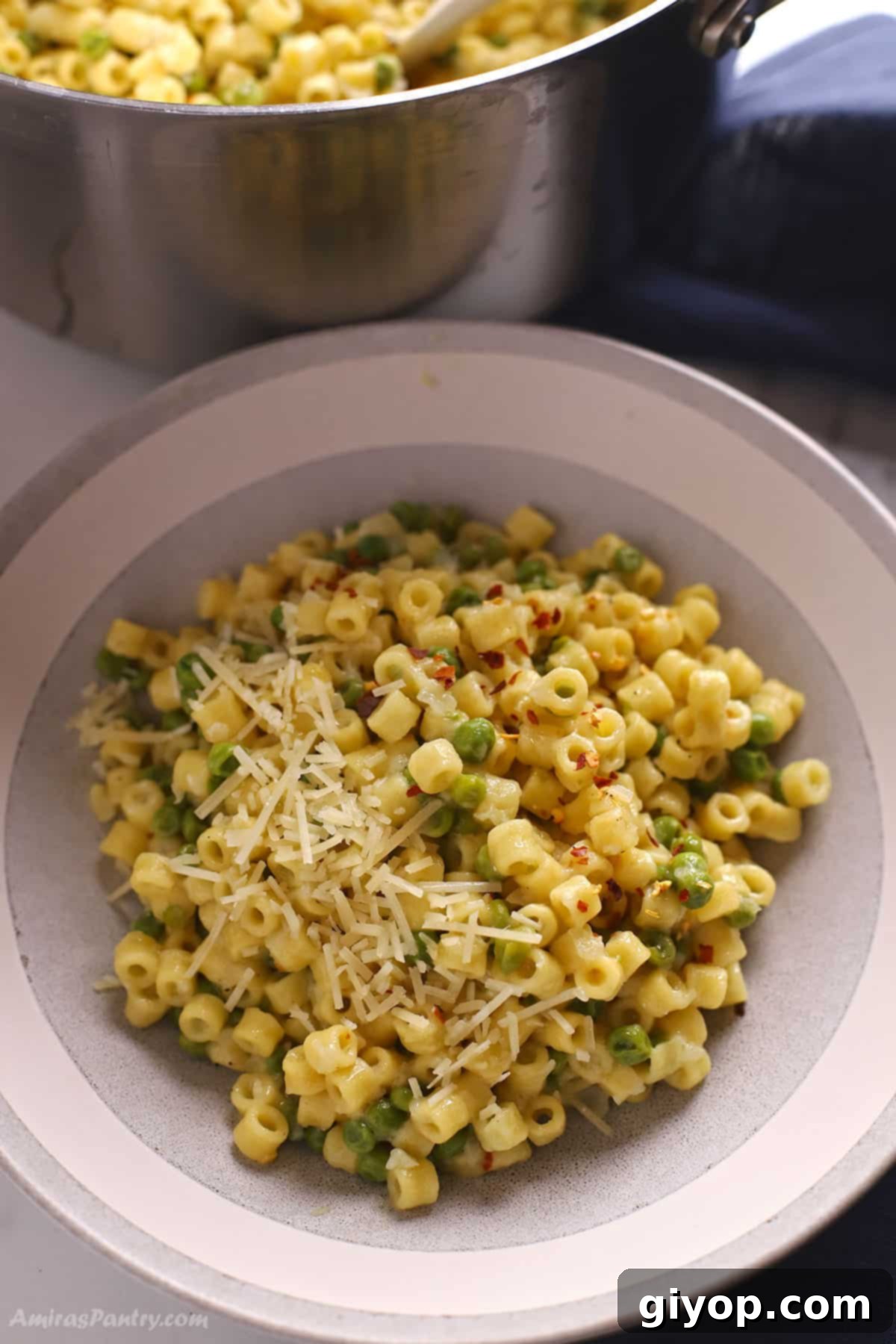
For families who cherish pasta dishes, especially those infused with the vibrant flavors of the Mediterranean, Pasta e Piselli stands out. Its appeal lies not only in its rich taste but also in its remarkable ease of preparation, often requiring just a handful of everyday ingredients you likely already have in your pantry. As a fan of efficient cooking, I particularly appreciate one-pot meals for their ability to streamline dinner time on busy evenings – fewer dishes to wash is always a win! If you’re looking for another quick and delicious one-pot wonder, my Creamy Tuscan Chicken Pasta is another family favorite that delivers flavor and convenience.
Why Pasta e Piselli is a Must-Try
Beyond its simple charm, Pasta e Piselli offers a delightful culinary experience that resonates with anyone who appreciates authentic Italian flavors. It’s more than just a dish; it’s a testament to how humble ingredients can transform into something truly extraordinary. The combination of sweet peas, aromatic onion, rich olive oil, and perfectly cooked pasta creates a texture and taste profile that is both comforting and satisfying. It’s a fantastic way to incorporate vegetables into your diet, especially for picky eaters, due to its appealing creaminess and mild flavor. This recipe is also budget-friendly and highly adaptable, making it a staple for many households seeking wholesome, flavorful meals without extensive effort.
The Simple Elegance of Italian Pasta and Peas
Pasta e Piselli, or “pasta with peas” in Italian, is a quintessential dish found across various regions of Italy, with slight variations in preparation and ingredients. It embodies the Italian philosophy of “cucina povera” – peasant cooking – where ingenuity transforms readily available, inexpensive ingredients into delicious and nourishing meals. While its exact origins are debated, it’s widely believed to have roots in southern Italy, particularly in regions like Campania, where fresh produce and simple pantry staples are key. This dish is celebrated for its comforting nature, often associated with springtime when fresh peas are abundant, though frozen peas make it accessible year-round. It’s a dish passed down through generations, cherished for its simplicity, heartwarming taste, and ability to bring families together around the dinner table.
Essential Ingredients for Authentic Pasta e Piselli
Ingredient Notes for the Best Pasta and Peas
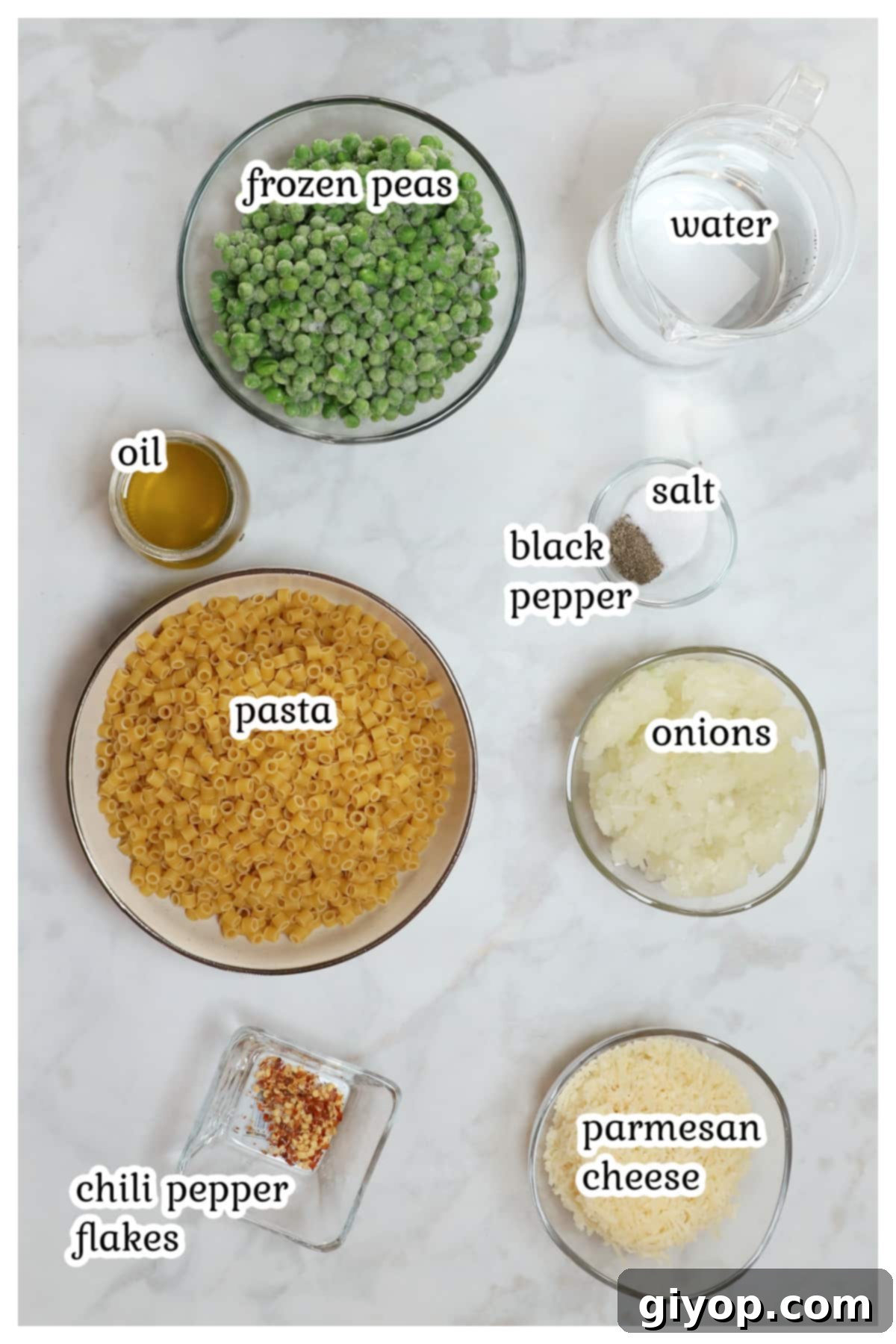
- Pasta: Ditalini pasta, with its small, tube-like shape, is traditionally favored for Pasta e Piselli as it perfectly cradles the peas and sauce. However, feel free to substitute with any other small-shaped pasta you have on hand, such as elbow macaroni, orzo, or even small shells. The key is a pasta that blends well with the peas rather than overpowering them.
- Extra Virgin Olive Oil: A cornerstone of Italian cuisine, good quality extra virgin olive oil is crucial. It provides a foundational richness and a distinctive fruity, peppery note that elevates the entire dish. Don’t skimp on quality here; it makes a significant difference.
- Onion: A large yellow onion is recommended for its balanced flavor, which sweetens beautifully when sautéed without becoming too pungent. Finely chopping the onion ensures it melts seamlessly into the sauce, creating a smooth, aromatic base.
- Seasonings: Simple yet effective. Salt and freshly ground black pepper are essential to taste. Crushed red pepper flakes add a subtle warmth and a touch of classic Italian zest. Adjust the quantity to your preference – a little goes a long way.
- Water: This is the primary liquid for cooking your pasta. For an even deeper layer of flavor, consider using chicken or vegetable broth instead of water. This simple swap can add a wonderful complexity to the finished dish.
- Peas: Frozen peas are a convenient and excellent choice for this recipe. They retain their vibrant color and sweet flavor when properly cooked. If you have access to fresh peas, they are also a fantastic option, though they may require a slightly different cooking time. Avoid canned peas, as their texture can be overly soft and mushy.
- Cheese: Freshly grated Parmesan cheese is a non-negotiable for its sharp, salty, and umami-rich qualities, which create the signature creamy texture of the sauce. Pecorino Romano, a sheep’s milk cheese with a saltier, tangier profile, also works wonderfully as an alternative or in combination with Parmesan for an extra punch of flavor.
Pasta e Piselli: Classic Pasta with Peas
Discover the enduring charm of Pasta e Piselli, a simple yet deeply satisfying Italian dish. With just a few humble ingredients, you can create a culinary masterpiece that has been treasured by generations, offering ultimate comfort in every spoonful.
Course: Side Dish, Main
Cuisine: Italian
Diet: Vegetarian, Halal-friendly (if using vegetable broth)
Prep Time: 5 minutes
Cook Time: 20 minutes
Total Time: 25 minutes
Servings: 6 Servings
Calories: 528 kcal per serving
Author: Amira
Ingredients
- 1 lb dry ditalini pasta (or any small pasta shape)
- ⅓ cup extra virgin olive oil
- 1 large onion, finely chopped
- ¼ teaspoon red pepper flakes (or more, to taste)
- 3 cups water (or chicken/vegetable broth for more flavor)
- 1 lb frozen peas
- Salt and freshly ground black pepper, to your liking
- 1 cup grated Parmesan cheese (or Pecorino Romano cheese)
Instructions
- In a large, heavy-bottomed pot or Dutch oven, heat the extra virgin olive oil over medium heat. Add the finely chopped onion and sauté for about 3 minutes, or until the onion is tender and fragrant. Be careful not to let it brown; you want it to be translucent.
- Stir in the red pepper flakes and cook for an additional 1 minute, allowing their aroma to develop.
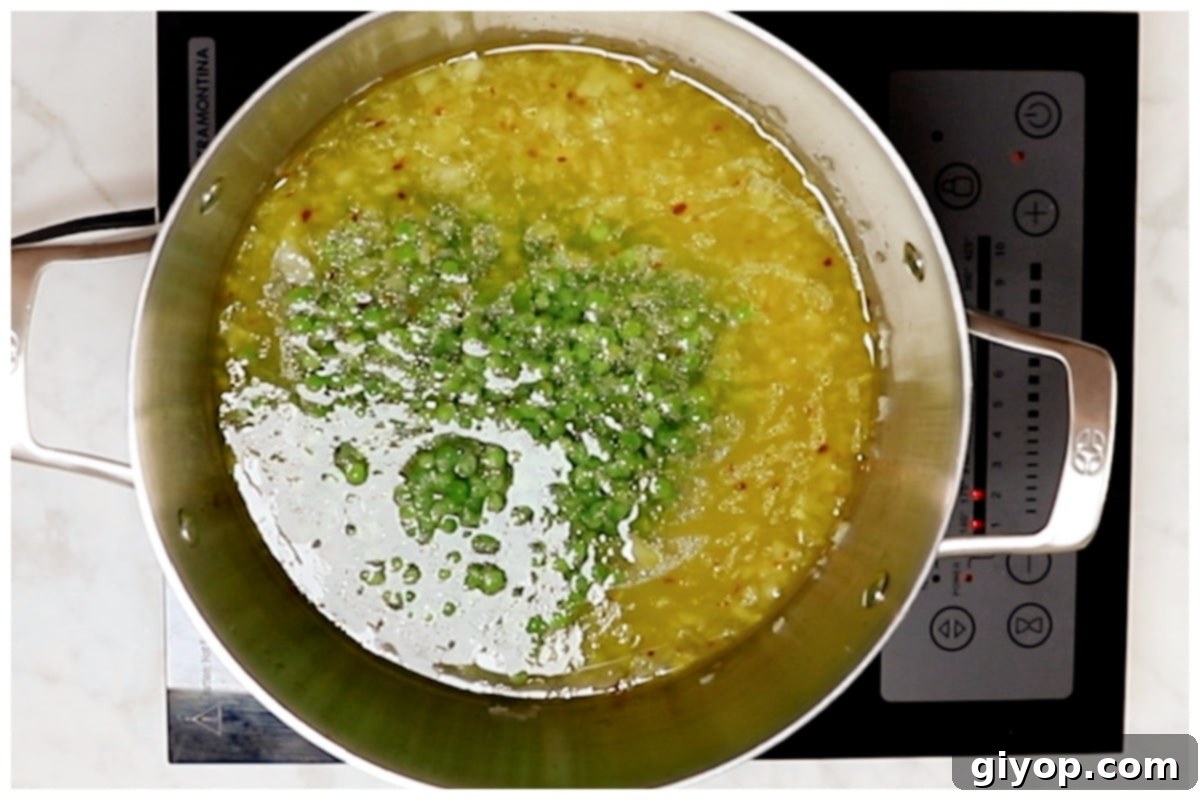
- Pour in the water (or broth) and stir in the frozen peas. Season generously with salt and pepper. Bring the mixture to a gentle boil.
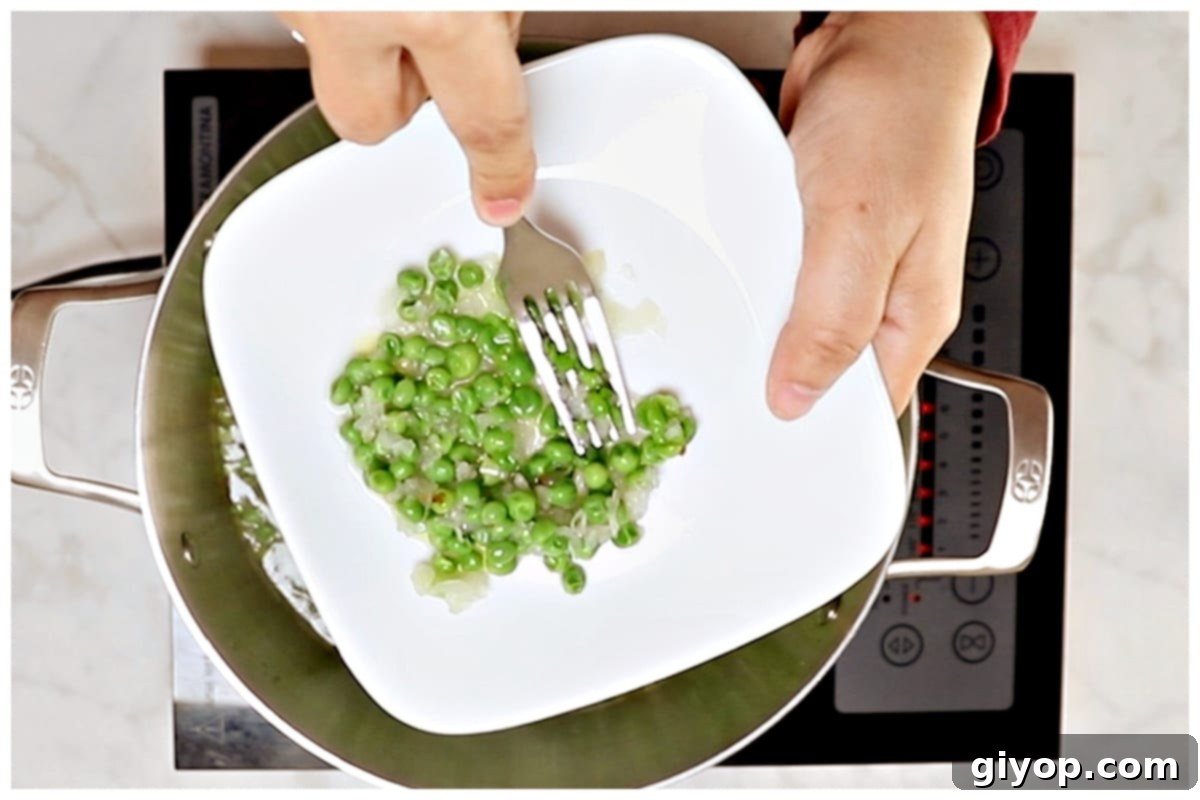
- Once the mixture boils and the peas have softened slightly, remove about ½ cup of the peas to a small plate. Using a fork, mash these peas thoroughly to create a creamy paste. Alternatively, you can mash some of the peas directly against the side of the pot with your spoon. This step adds a wonderful creaminess and texture to the sauce.
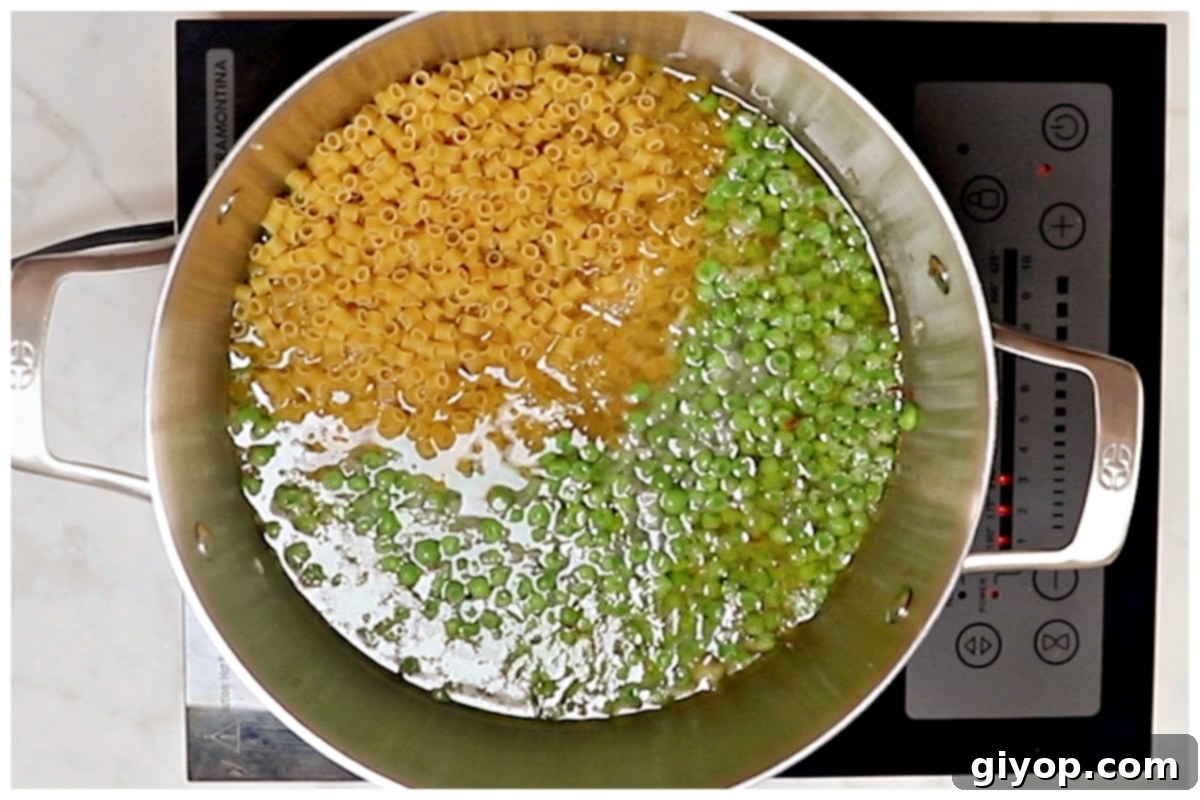
- Add the ditalini pasta to the pot, stirring well to ensure all pasta is submerged. Reduce the heat to medium-low to maintain a gentle simmer.
- Continue to cook the pasta, stirring frequently to prevent sticking and to ensure even cooking. Keep a close eye on the liquid level; if the pasta absorbs too much liquid before it’s al dente, add a small splash of additional water or broth, a little at a time, to achieve your desired consistency. The goal is a creamy, not watery, sauce.
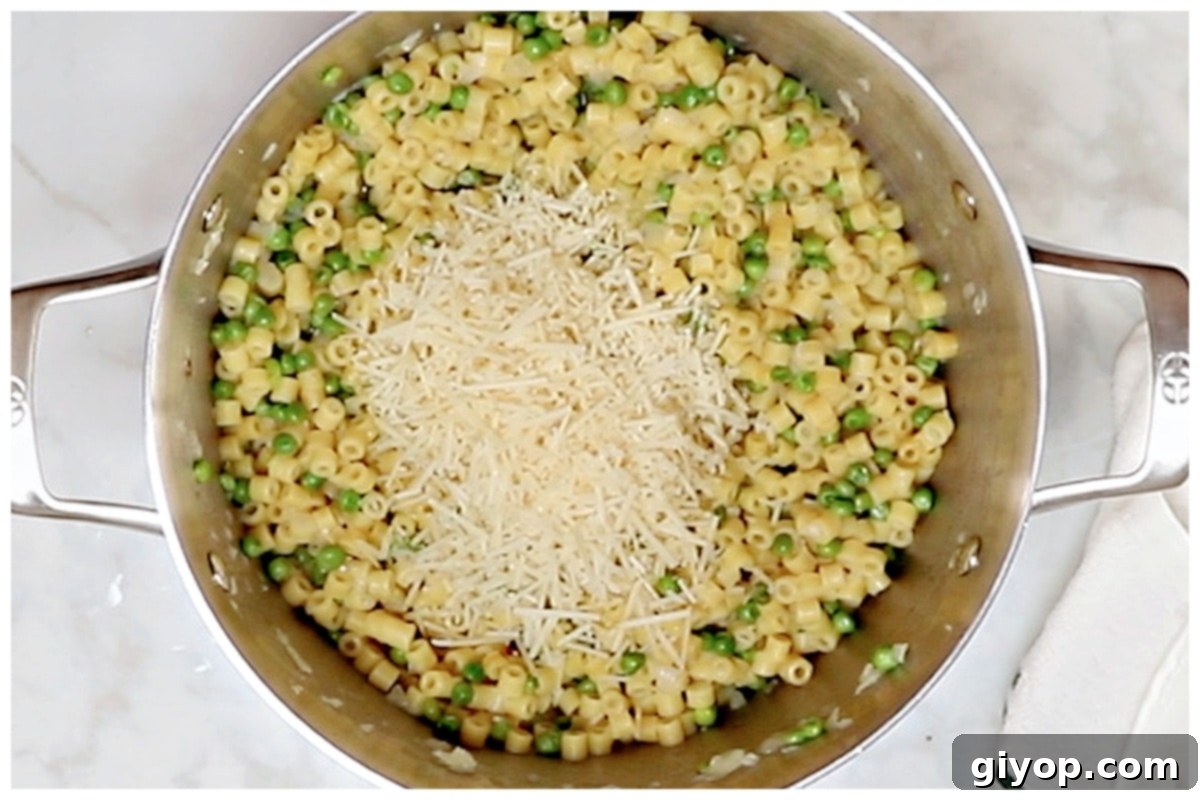
- Once the pasta is cooked al dente (tender but with a slight bite) and the sauce has reached your preferred consistency, remove the pot from the heat. Stir in the grated Parmesan (or Pecorino) cheese until it’s fully melted and incorporated, creating a rich, creamy sauce.
- Taste the dish and adjust the seasoning with more salt, pepper, or red pepper flakes if needed. Serve immediately with an extra drizzle of fresh extra virgin olive oil and an additional sprinkle of grated cheese, if desired.
Nutrition Facts (per serving)
- Calories: 528 kcal
- Carbohydrates: 71 g
- Protein: 19 g
- Fat: 18 g
- Saturated Fat: 5 g
- Polyunsaturated Fat: 2 g
- Monounsaturated Fat: 10 g
- Cholesterol: 15 mg
- Sodium: 313 mg
- Potassium: 413 mg
- Fiber: 7 g
- Sugar: 7 g
- Vitamin A: 750 IU
- Vitamin C: 32 mg
- Calcium: 192 mg
- Iron: 2 mg
Step-by-Step Guide to Crafting Your Pasta e Piselli
Creating this delightful Pasta e Piselli is a straightforward process that yields incredibly satisfying results. Follow these detailed steps to bring this authentic Italian experience to your kitchen:
1. Sauté the Aromatics: Begin by heating the extra virgin olive oil in a large pot or Dutch oven over medium heat. Once shimmering, add the finely chopped yellow onion. Sauté gently for approximately 3 minutes, stirring occasionally, until the onion becomes tender, translucent, and fragrant. It’s important not to brown the onion, as this can impart a bitter flavor; we’re aiming for a sweet, mellow base.
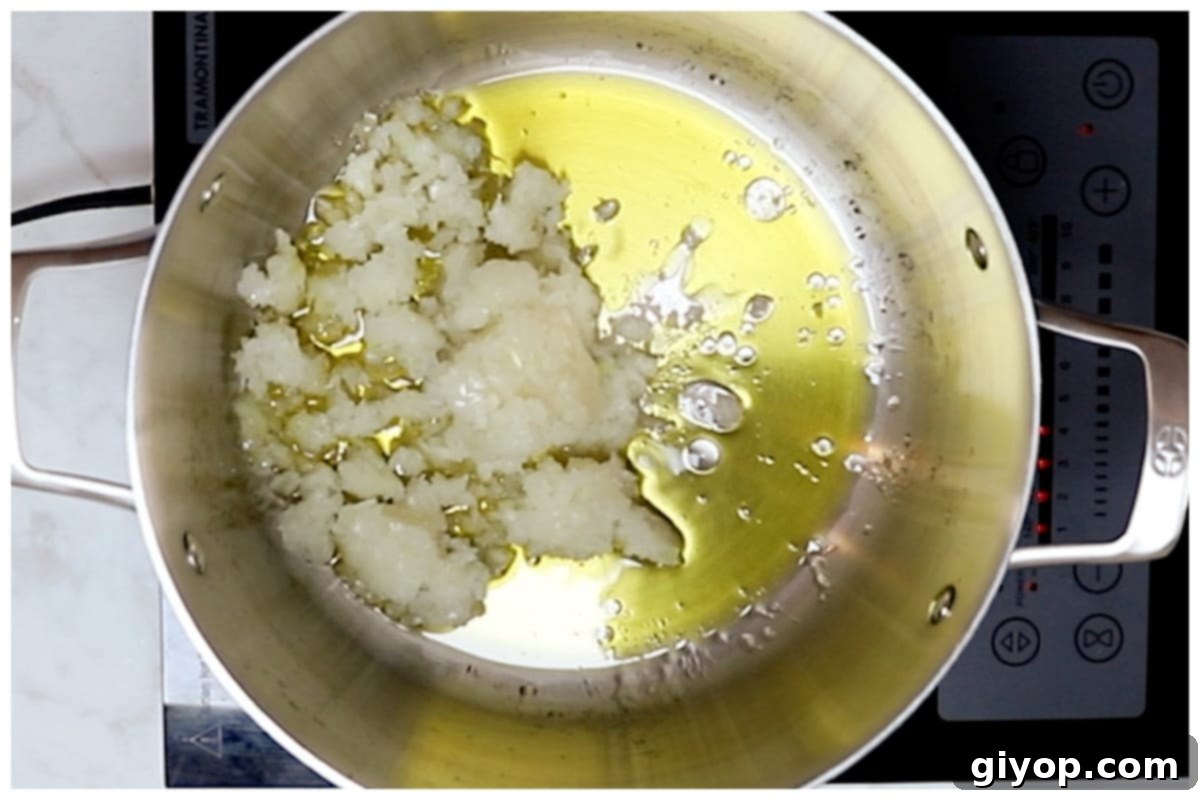
2. Build the Flavor Base: Next, stir in the crushed red pepper flakes. Cook for another minute, allowing the heat to release their subtle spice and deepen the flavor profile. This brief cooking step ensures the spice is evenly distributed throughout the dish.
3. Introduce Liquid and Peas: Pour in the water (or broth for richer flavor) and add the frozen peas. Season the mixture generously with salt and pepper to taste. Bring everything to a gentle, rolling boil. This will begin to cook the peas and create a flavorful liquid for the pasta.
4. Mash for Creaminess: Once the mixture boils and the peas have softened slightly, scoop out about half a cup of the peas onto a small plate. Using a fork, mash these peas until they form a smooth paste. Alternatively, you can use the back of your spoon to mash some of the peas directly against the side of the pot. This crucial step is what gives Pasta e Piselli its signature creamy texture without needing heavy cream, allowing the natural sweetness of the peas to shine.
5. Cook the Pasta: Stir the ditalini pasta (or your chosen small pasta shape) into the pot, ensuring all the pasta is submerged in the liquid. Reduce the heat to medium-low to maintain a steady simmer. Cook the pasta, stirring frequently to prevent it from sticking to the bottom of the pot or clumping together. This frequent stirring also helps to release starches, which contribute to the sauce’s creaminess.
6. Adjust Liquid as Needed: Keep an eye on the liquid level as the pasta cooks. If the pasta absorbs too much liquid before it reaches an al dente texture, add a small splash of additional water or broth, one ladleful at a time, until the pasta is cooked perfectly and the sauce has your desired consistency. The goal is a rich, creamy sauce, not a watery one.
7. Final Touches: Once the pasta is cooked al dente, remove the pot from the heat. Immediately stir in the grated Parmesan cheese. Continue stirring until the cheese is completely melted and beautifully incorporated into the sauce, creating a luxurious, creamy finish. The residual heat will melt the cheese perfectly.
8. Taste and Serve: Before serving, taste the Pasta e Piselli and adjust the seasonings as necessary. You might want to add more salt, pepper, or even a tiny squeeze of fresh lemon juice for brightness. Serve hot, garnished with an extra drizzle of good quality extra virgin olive oil and an additional sprinkle of fresh Parmesan cheese, if desired. Enjoy this simple yet exquisite dish!
Delicious Variations to Customize Your Pasta e Piselli
While Pasta e Piselli is perfect in its classic form, its simple nature makes it an excellent canvas for culinary experimentation. Here are some delightful variations to try:
- Add Protein: For a heartier meal, incorporate your favorite protein. Cooked shredded chicken, crispy bacon bits, pancetta, or even sautéed shrimp would pair beautifully with the creamy, cheesy goodness. For a vegetarian protein boost, consider adding chickpeas or white beans during the last few minutes of cooking.
- Adjust the Spice Level: If you’re a fan of a little extra kick, don’t hesitate to increase the amount of crushed red pepper flakes. For a milder flavor, or for younger palates, you can simply omit them entirely. You could also experiment with a pinch of cayenne pepper for a different kind of heat.
- Incorporate More Vegetables: Enhance the nutritional value and texture by adding other quick-cooking vegetables. Spinach or baby kale can be stirred in at the very end until wilted. Small florets of broccoli or zucchini can be added alongside the peas to cook.
- Herbaceous Twist: Fresh herbs can bring a new dimension to the dish. Stir in finely chopped fresh parsley, basil, or mint at the end for a burst of fresh aroma and flavor.
- Different Cheeses: While Parmesan and Pecorino are classic, don’t be afraid to experiment with other hard Italian cheeses like Grana Padano, or even a dollop of creamy ricotta stirred in at the end for an extra luxurious texture.
- Tomato Paste Boost: For a slightly richer, more savory sauce with a hint of tang, stir in a tablespoon of tomato paste with the onions before adding the water.
Amira’s Expert Tips for the Perfect Pasta e Piselli
- Pea Selection: I always recommend using frozen peas for convenience and consistent quality. They are readily available, budget-friendly, and retain their sweetness and vibrant color. If you’re lucky enough to find fresh peas, by all means, use them, but be mindful that their cooking time might differ slightly. However, I strongly advise against using canned peas, as they tend to be mushy, lack flavor, and can diminish the overall texture of the dish.
- Al Dente Perfection: The key to any great pasta dish is perfectly cooked pasta. Keep a close eye on your pasta as it cooks, stirring frequently. Aim for an “al dente” texture – tender but with a slight bite to it. Overcooked pasta can become soft and lose its structural integrity, resulting in a less appealing dish.
- The Magic of Pasta Water: Before draining the pasta (if you were to cook it separately, though this recipe is one-pot), always reserve a cup or two of the starchy cooking water. In this one-pot version, you’ll naturally have starchy water in the pot. This starchy liquid is invaluable for adjusting the consistency of your sauce. If the sauce becomes too thick, or if you want to make it extra silky and bind everything beautifully, gradually stir in a splash of this starchy water until you reach your desired creaminess.
- Seasoning is Key: Don’t be afraid to taste and adjust your seasonings throughout the cooking process. A pinch more salt, a grind of black pepper, or even a tiny squeeze of lemon juice at the end can brighten the flavors and balance the dish beautifully. Trust your palate!
- Quality Olive Oil Finish: A final drizzle of high-quality extra virgin olive oil just before serving adds a beautiful sheen, a fresh aroma, and a nuanced flavor that truly completes the dish.
Storage, Reheating, and Make-Ahead Tips
Pasta e Piselli is at its best when enjoyed fresh, but it reheats remarkably well, making it a fantastic option for meal prep or convenient leftovers.
Storage: Allow any leftover Pasta e Piselli to cool completely before transferring it to an airtight container. It can be stored safely in the refrigerator for up to 3 days. For longer storage, it can also be frozen for up to 3 months. If freezing, portion it into individual containers for easier reheating.
Reheating: If reheating from the refrigerator, transfer the pasta to a pot over medium heat. Add a splash of water or broth (about 2-4 tablespoons per serving) to help rehydrate the sauce and prevent it from drying out. Stir gently until heated through. Alternatively, you can microwave individual portions for about 1-2 minutes, stirring halfway, until piping hot.
If reheating from frozen, it’s best to let it thaw overnight in the refrigerator first. Then, follow the same reheating instructions as refrigerated leftovers, adding a bit of liquid to restore the sauce’s consistency.
How to Make Ahead
While this dish is delightful fresh, it can certainly be prepared a day in advance and reheated. The flavors often meld even further overnight. Just remember that pasta tends to absorb liquids as it sits, so when reheating, always add a small amount of water or vegetable/chicken broth. This extra liquid will help thin the sauce back out to its original creamy consistency, ensuring a delicious experience even when not freshly made.
Perfect Serving Suggestions for Pasta e Piselli
Pasta e Piselli, with its rich and comforting profile, pairs beautifully with a variety of side dishes that complement its flavors without overwhelming them. Here are some fantastic serving suggestions:
- Fresh Green Salad: A crisp, light green salad provides a refreshing counterpoint to the creamy pasta. Consider a simple vinaigrette-dressed salad like Tabouli, which offers bright, herbaceous notes, or a hearty Panera Bread Greek Salad for a burst of Mediterranean flavors. The acidity and freshness cut through the richness of the pasta perfectly.
- Crusty Bread or Garlic Bread: You simply cannot enjoy a pasta dish without some form of bread to sop up every last bit of that delicious sauce! A warm, crusty loaf of Italian bread is ideal, or elevate the experience with something flavorful like Air Fryer Garlic Bread. The crispy texture and garlicky aroma are irresistible.
- Cheesy Breadsticks: For an extra indulgence, serve with these delightful Cheese Stuffed Breadsticks. The added cheese perfectly complements the Parmesan in the pasta, creating a truly comforting meal.
- Roasted Vegetables: A simple side of roasted asparagus, broccoli, or cherry tomatoes can add extra nutrients and a lovely char flavor that contrasts nicely with the pasta.
Explore More Easy and Delicious Pasta Recipes
If your family adores pasta recipes as much as mine does, then you’re in for a treat! The world of pasta is vast and endlessly delicious. After savoring this delightful Pasta e Piselli, I highly recommend exploring other simple yet incredibly flavorful pasta creations that are sure to become new household favorites. Each of these recipes offers a unique twist and showcases the incredible versatility of pasta as a foundation for wholesome and satisfying meals:
- Baked Feta Pasta
- Ditalini Pasta Salad
- Creamy Pasta Bake
- Cream Cheese Pasta
- Pasta With Eggplant
- Broccoli Pasta
- Ricotta Cheese Pasta
Frequently Asked Questions (FAQ) About Pasta e Piselli
Here are answers to some common questions about making and enjoying Pasta e Piselli:
Q: Can I use fresh peas instead of frozen?
A: Absolutely! Fresh peas are wonderful when in season. If using fresh peas, you might need to adjust the cooking time slightly, as they can sometimes cook faster or slower than frozen ones depending on their ripeness. Taste them as they cook to ensure they are tender.
Q: What if my sauce is too thick or too thin?
A: If the sauce is too thick, gradually stir in a tablespoon or two of hot water or broth until you reach your desired consistency. If it’s too thin, you can continue to simmer it gently for a few more minutes to allow it to reduce, or stir in a little more grated Parmesan cheese, which will help thicken it.
Q: Can I make this dish gluten-free?
A: Yes, simply substitute the traditional ditalini pasta with your favorite gluten-free small-shaped pasta. Ensure you check the cooking time for the specific gluten-free pasta you choose, as it can vary from regular pasta.
Q: Is Pasta e Piselli a vegetarian dish?
A: In its basic form, yes, Pasta e Piselli is vegetarian. If you use vegetable broth instead of chicken broth, it becomes completely vegetarian-friendly. The recipe is also naturally halal, assuming no non-halal additions like bacon.
Q: How can I make this dish creamier without adding actual cream?
A: The secret to the natural creaminess in this recipe lies in mashing some of the peas and the starches released from the pasta during cooking. Using good quality olive oil and ample Parmesan cheese also contributes significantly to the creamy texture. If you desire even more creaminess, you can mash a larger portion of the peas.
Q: Can I add other seasonings or herbs?
A: Of course! Feel free to experiment with dried Italian herbs like oregano or thyme, added with the red pepper flakes. Fresh herbs like parsley or basil stirred in at the end can also add a wonderful aromatic touch. A pinch of nutmeg can also add an interesting depth of flavor often found in Italian pasta dishes.
Such a simple and amazing pasta recipe, and that, my friends, is the true beauty of Italian cooking. I genuinely hope you’ll give Pasta e Piselli a try and experience the comfort and flavor it brings to your table.