
Dive into the exquisite world of Lokma, a beloved traditional Turkish street food dessert that has captured hearts across the Mediterranean and Middle Eastern regions. These golden, bite-sized sweet dough balls are deep-fried to achieve a perfect crispy exterior and a soft, fluffy interior, then generously drenched in a fragrant, simple sugar syrup. Often referred to as Turkish doughnuts or sweet fritters, Lokma offers an irresistible combination of textures and flavors that makes it a true culinary delight.
Lokma, known by various names such as Loukoumades in Greece and Cyprus, or Zalabya (Luqmat al-Qadi) in many Arab countries, represents a cherished tradition of sweet fried dumplings. Each round ball is a golden nugget of happiness, offering a delightful crunch on the outside that yields to a tender, airy center. This wildly popular street dessert is not just a treat for the palate but also a journey through centuries of culinary heritage.
Embark on a culinary adventure to master the art of making Lokma right in your own kitchen. Our comprehensive guide features easy-to-follow, step-by-step photos and a detailed tutorial, ensuring you’ll create these delectable treats with confidence and ease. Get ready to impress your family and friends with this timeless dessert!
Why You’ll Adore This Lokma Recipe
There are countless reasons why this Lokma recipe will become a treasured favorite in your household. From its effortless preparation to its versatile serving options, these sweet dough balls are designed to bring joy to every bite.
- Simplicity at its Best: Crafted from readily available, everyday ingredients, these delicious dough balls prove that extraordinary flavors don’t require complex components. You likely have most of what you need in your pantry right now!
- A Family Favorite: Whether you’re a child or an adult, the unique texture and comforting sweetness of Lokma are universally appealing. It’s a dessert that transcends age, perfect for family gatherings, celebrations, or a cozy evening treat.
- Endless Versatility: While traditionally served with a simple sugar syrup, Lokma offers a canvas for creativity. Explore a variety of serving methods and toppings, from classic pistachio garnishes to modern chocolate drizzles, ensuring there’s a Lokma variation for every taste. We’ll dive deeper into these exciting options below.
- Cultural Experience: Making Lokma is more than just baking; it’s an opportunity to connect with rich culinary traditions of Turkey and the wider Middle Eastern region. Bring a piece of this vibrant culture into your home with every batch.
- Perfect Texture: Achieve the ideal balance of a shatteringly crisp golden crust and a light, airy, moist interior. This recipe guides you to attain that coveted texture that defines truly authentic Lokma.
Essential Ingredients for Perfect Lokma
Crafting authentic Lokma requires a selection of simple yet crucial ingredients that contribute to its distinctive taste and texture. Below is an overview of what you’ll need to create both the delectable dough and the irresistible syrup. You’ll find the complete, precise measurements and detailed instructions in the printable recipe card at the very bottom of this page.
- All-Purpose Flour: The foundation of our dough, providing structure and elasticity. Ensure it’s fresh for best results.
- Cornstarch (or similar starch): A secret ingredient for achieving that desirable golden, extra-crispy exterior. It helps create a delicate crust that shatters beautifully with every bite.
- Active Dry Yeast: Essential for the dough’s rise, imparting a light and airy texture to the Lokma balls.
- Granulated Sugar (for dough): Feeds the yeast, aiding in its activation and contributing a subtle sweetness to the dough itself.
- Full-Fat Plain Yogurt: A key ingredient that adds a wonderful depth of flavor, richness, and essential moistness to the dough. It also helps in achieving a tender crumb.
- Warm Water: Crucial for activating the yeast and bringing the dough together into the perfect consistency. The temperature should be warm to the touch, not hot, to avoid killing the yeast.
- For the Simple Syrup:
- Granulated Sugar: The primary component of our sweet syrup, creating the luscious coating for the fried dough.
- Water: Dissolves the sugar to form the syrup.
- Lemon Juice: A vital addition that prevents the syrup from crystallizing, ensuring a smooth, clear, and perfectly pourable consistency.
- Honey: Adds a beautiful sheen and a deeper, more complex sweetness to the syrup. It also helps in achieving a thicker, more clinging consistency.
- Flavorings: Enhance your syrup with traditional essences like vanilla extract, a cinnamon stick, orange blossom water, or rose water for an aromatic touch that elevates the entire dessert.
- For Optional Chocolate Syrup: If you choose a chocolate topping, you’ll need good quality chocolate, corn syrup (for gloss and smoothness), heavy cream, and additional sugar.
- For Cinnamon Sugar: A blend of ground cinnamon and granulated sugar offers a delightful alternative coating.
- Frying Oil: Choose a neutral-flavored oil with a high smoke point, such as vegetable, canola, or sunflower oil, for deep-frying the Lokma to a beautiful golden brown.
Step-by-Step Instructions for Making Lokma
Creating these delightful Turkish sweet dough balls is a rewarding experience. This section provides an overview of the process, guiding you through each stage from preparing the dough to frying and drenching your Lokma in syrup. For a detailed, comprehensive list of instructions and precise measurements, please refer to the printable recipe card located at the end of this page.
- Prepare the Dough Base: In the bowl of your stand mixer, combine all the dry ingredients (flour, sugar, yeast, cornstarch) and mix thoroughly for about 30 seconds. Gradually pour in the warm water, mixing until a cohesive, somewhat firm dough forms. If the dough appears too stiff or doesn’t come together easily, you may add an additional tablespoon of warm water, one at a time, until the desired consistency is achieved. This initial mix allows the flour to start hydrating.
- First Rest and Yogurt Incorporation: Cover the dough bowl and let it rest for a minimum of 30 minutes. This resting period allows the gluten to relax and the yeast to begin its work. Following this, add the full-fat yogurt to the dough mixture. Continue mixing with the flat beater attachment for at least 3-5 minutes, or until the yogurt is fully incorporated and the dough becomes incredibly smooth, stretchy, and elastic. This extensive mixing is crucial for developing the dough’s unique texture, as shown in the images above.
- Second Rise (Fermentation): Once the yogurt is fully integrated, cover the bowl again tightly. Allow the dough to rise in a warm place for at least one hour, or until it has noticeably doubled in size. For enhanced flavor and convenience, you can also cover and refrigerate the dough overnight (up to 24 hours), bringing it to room temperature before frying.
- Fry to Golden Perfection: Heat a generous amount of neutral-flavored oil in a deep pot or heavy-bottomed skillet over medium-high heat. Once the oil is hot (around 350-375°F or 175-190°C), reduce the heat slightly to medium. Using a small ice cream scoop (or a ½ tablespoon measuring spoon) that has been lightly dipped in oil, carefully form small, uniform dough balls and gently drop them into the hot oil. Frying in batches is essential to avoid overcrowding the pot and lowering the oil temperature.
- Even Frying Technique: To ensure the Lokma balls fry evenly and achieve a consistent golden color, continuously stir and gently push them around in the oil with a slotted spoon. This prevents them from sticking together and promotes uniform browning on all sides. As the Lokma fry, they will puff up and float, which is why this dessert is also sometimes called “Awamat,” meaning “floaties” in Arabic.
- Syrup Immersion: Once the fried dough balls are a beautiful golden brown and perfectly crispy, remove them immediately from the hot oil using a slotted spoon. Without delay, transfer them directly into a deep bowl filled with the pre-cooled sugar syrup. Stir gently to ensure each Lokma ball is thoroughly coated in the luscious syrup. Allow them to soak for 3-4 minutes to absorb the sweet flavors.
- Drip and Serve: After soaking, remove the Lokma from the syrup and place them in a colander set over a bowl to allow any excess syrup to drip off. This prevents them from becoming overly sweet or soggy. Serve your fresh Lokma immediately while they are still warm and at their crispiest.
- Optional Toppings: While the simple syrup is classic, feel free to experiment with other delicious toppings. Dust them lightly with powdered sugar for a softer sweetness, roll them in cinnamon sugar for a spiced crunch, or drizzle generously with homemade chocolate syrup for a decadent twist. (Refer to the “Variations” section for more ideas).
Expert Tips for Lokma Perfection
Achieving perfectly round and uniformly cooked Lokma balls is simpler than you think with these expert tips:
- The Oiled Scoop Trick: This is arguably the most important tip! Before scooping each ball of dough, dip your ice cream scoop (or measuring spoon) into a small plate of oil. This simple step creates a non-stick surface, allowing the sticky dough to glide effortlessly and cleanly off the scoop and into the hot oil, ensuring beautifully rounded shapes.
- Alternative Scooping Method: If you don’t have a dedicated small ice cream scoop, a ½ tablespoon measuring spoon works wonderfully. The principle remains the same: dip it in oil before each scoop.
- Mastering the Fry: Frying Lokma can seem tricky, as the balls tend to float and can brown unevenly. To combat this, consistent stirring is key. Use a slotted spoon to gently agitate and push the Lokma around in the hot oil. This ensures they cook evenly on all sides, resulting in a uniform golden color and crisp texture. Don’t be afraid to keep them moving!
- Shaping Challenges? Add Oil to Batter: If you find that your Lokma balls are not consistently round despite oiling your scoop, the dough might be too sticky or stiff. Try incorporating about 3 tablespoons of neutral oil directly into your dough batter during the final mixing stage. This can significantly improve the dough’s workability and help in forming more perfectly spherical Lokma.
- Optimal Oil Temperature: Maintain a consistent oil temperature, ideally between 350-375°F (175-190°C). If the oil is too cold, the Lokma will absorb too much oil and become greasy; if it’s too hot, they will brown too quickly on the outside while remaining raw inside. A kitchen thermometer is highly recommended.
- Don’t Overcrowd the Pan: Fry Lokma in small batches. Overcrowding the frying pot will lower the oil temperature dramatically, leading to soggy Lokma. Give them space to swim and brown properly.
- Cooled Syrup is Crucial: Ensure your sugar syrup is completely cooled before dunking the hot Lokma. The temperature difference is vital for the Lokma to absorb the syrup effectively and remain crispy. Hot Lokma into cold syrup creates the best results.
Make Ahead for Convenient Lokma Preparation
Preparing Lokma can be a delightful process, and thankfully, parts of it can be done in advance, offering you greater flexibility and saving time, especially when entertaining or preparing for a busy day. This makes enjoying fresh Lokma more accessible than ever!
- Dough Preparation: One of the biggest time-savers is preparing the Lokma dough ahead of time. You can mix the batter, allow it to complete its first rise, and then cover it tightly and refrigerate it for up to 24 hours. When you’re ready to fry, simply take the bowl out of the refrigerator and let the dough come back to room temperature. This might take anywhere from 30 minutes to an hour, depending on your kitchen’s ambient temperature. This cold fermentation can even enhance the flavor complexity of the dough!
- Sugar Syrup: The simple sugar syrup can (and should) also be made in advance. Prepare the syrup according to the instructions, allow it to come to a rolling boil, then reduce heat and simmer. Once done, remove it from the heat and let it cool down completely. For optimal crispiness and syrup absorption, it’s crucial that the syrup is at room temperature (or even slightly chilled) when the hot Lokma are added. Storing the syrup in an airtight container in the fridge can help preserve its freshness for several days.
By preparing these components ahead, you can minimize last-minute cooking stress and focus on the fun part: frying and enjoying your freshly made Lokma!
Delicious Lokma Variations and Serving Suggestions
While the classic Lokma drenched in simple sugar syrup is undeniably delicious, this versatile dessert lends itself beautifully to a myriad of creative variations and serving ideas. Explore these options to customize your Lokma experience:
- Traditional Sugar Syrup Infusions: The most common and beloved way to enjoy Lokma is immersed in a fragrant simple sugar syrup. Elevate this classic by flavoring your syrup with traditional aromatic additions like a cinnamon stick, crushed cardamom pods, a splash of orange blossom water, or a delicate hint of rose water. Pure vanilla extract is also a popular choice for a comforting, familiar flavor. Incorporating a touch of honey into the syrup also adds a beautiful richness and sheen.
- Cinnamon Sugar Roll: For a delightful textural contrast and warm spice, immediately after frying, roll the hot Lokma balls in a mixture of granulated sugar and ground cinnamon. This creates a crunchy, aromatic coating that’s simply irresistible.
- Powdered Sugar Dusting: A simpler, yet still popular, option is to lightly dust the fried Lokma with powdered sugar. While it doesn’t offer the deep syrupy sweetness, it provides a delicate coating that appeals to those who prefer a less intense sweetness.
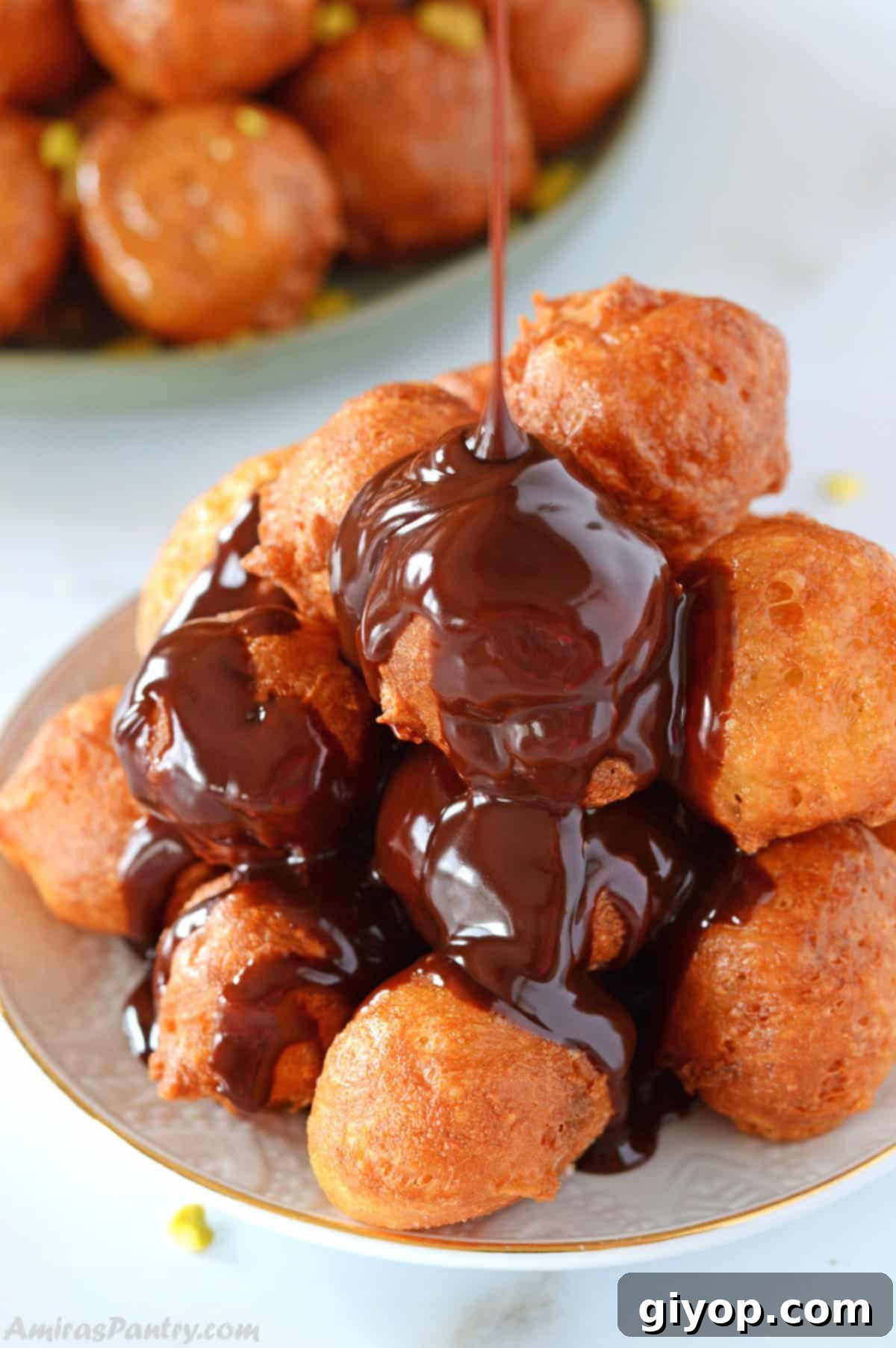
- Decadent Chocolate Covered Lokma: A modern and increasingly popular trend, especially in Egypt, is to serve Lokma lavishly covered in chocolate. You can easily make your own rich chocolate syrup (recipe below) or opt for a quick and delicious drizzle of melted Nutella or another favorite chocolate hazelnut spread.
- Savory Explorations: While primarily a sweet dish, some adventurous eaters have explored savory renditions of Lokma, serving them alongside a creamy cheese sauce. Though less conventional, this unexpected pairing showcases the versatility of the dough. It’s a culinary experiment waiting to be tried!
- Saffron Infusion: For an intriguing visual and aromatic twist, some recipes suggest adding a pinch of saffron threads to the dough. This not only imparts a subtle, luxurious flavor but also gives the Lokma a distinctive yellowish-orange hue, making them even more visually appealing.
- Nutty Toppings: Enhance the texture and flavor by sprinkling finely chopped nuts over your syruped Lokma. Pistachios, walnuts, and almonds are traditional favorites that add a delightful crunch and earthy undertone.
- Ice Cream Pairing: For an ultimate dessert experience, serve warm Lokma alongside a scoop of vanilla bean ice cream. The contrast of hot and cold, crispy and creamy, is simply divine.
Explore More Middle Eastern and Mediterranean Desserts
If you’ve fallen in love with the flavors and textures of Lokma, you’ll undoubtedly enjoy discovering other exquisite desserts from the rich culinary traditions of the Middle East and Mediterranean. These recipes offer a journey through diverse sweet treats, perfect for any occasion.
- Qatayef Asafiri with Ashta: A delightful Middle Eastern pancake-like dessert, often associated with Ramadan. These fluffy small pancakes are typically filled with a rich cream (ashta) and then drizzled with sweet syrup or honey, offering a delicate balance of textures and flavors. Discover another popular version of Qatayef filled with crunchy nuts, fried to golden perfection.
- Galaktoboureko: A beloved Greek custard pie that is a true masterpiece of texture and taste. It features layers of buttery, crisp phyllo pastry encasing a creamy, rich semolina custard filling, all generously drizzled with a fragrant sugar syrup. This is a must-try for phyllo dough enthusiasts.
- Revani (Basbousa): A classic Mediterranean semolina cake, known for its moist texture and comforting sweetness. This cake is typically drenched in a light, lemon-infused simple syrup, allowing it to soak up all the delicious flavors, and often topped with desiccated coconut flakes for an Tadded textural element.
- Ramadan Recipes: For those looking to explore a wider array of dishes, from savory Iftar feasts bursting with flavor to sweet treats that gracefully conclude your fast, here are some inspiring Ramadan Recipes to guide you through every meal and celebration during this holy month.
More Irresistible Dessert Ideas
Beyond Lokma, the Middle East offers a treasure trove of sweet delights. Here are more dessert ideas that promise to satisfy your sweet tooth with their unique flavors and preparations.
- Tulumba: A popular street food found across the Middle East and beyond. Tulumba pastries are made from choux pastry, piped into distinctive shapes, then fried until they achieve a glorious golden-brown crispness. They are immediately plunged into cold syrup, resulting in out-of-this-world sweet fritters that are crunchy on the outside and wonderfully fluffy on the inside.
- Basbousa: A traditional Egyptian dessert, renowned for its simple preparation and delightful taste. Made primarily from semolina flour, often combined with coconut and yogurt, it’s baked until golden and then soaked in a sweet, aromatic simple syrup. It’s incredibly moist, flavorful, and remarkably easy to make.
- Kunafa (Knafeh): A majestic and traditional Middle Eastern dessert that features a golden-brown layer of finely shredded phyllo dough (kataifi), a rich and creamy filling (often cheese or clotted cream), all drenched in a sweet, perfumed syrup. Kunafa is a festive and popular dessert enjoyed in many countries, especially during special occasions and holidays, celebrated for its intricate textures and harmonious flavors.
Recommended Kitchen Equipment
Having the right tools can make the Lokma-making process smoother and more enjoyable. Here are a few pieces of equipment that are particularly useful:
- Ice Cream Scoop: A small ice cream scoop with a release mechanism is invaluable for creating uniformly sized Lokma balls. This ensures even cooking and a beautiful presentation.
- Stand Mixer: While not strictly essential (you can mix by hand), a stand mixer significantly eases the dough preparation process, particularly when incorporating the yogurt and achieving the desired stretchy consistency. It saves time and effort.
- Deep Pot or Dutch Oven: Essential for safe and effective deep-frying. A heavy-bottomed pot helps maintain a consistent oil temperature.
- Slotted Spoon: Crucial for stirring the Lokma during frying and for safely transferring them from the oil to the syrup.
- Kitchen Thermometer: Highly recommended for accurately monitoring oil temperature, which is key to perfectly crispy, non-greasy Lokma.
I genuinely hope you find immense pleasure in preparing and savoring this authentic Lokma recipe! Should you decide to make it, please share your beautiful creations with me. Snap a picture and tag it with #amiraspantry on Instagram, Facebook, or Twitter. I absolutely love seeing your culinary masterpieces! Don’t want to miss out on any new recipes, helpful tips, or exciting surprises? Be sure to sign up for the FREE Amira’s Pantry newsletter, delivered directly to your inbox. And to stay even more connected, follow me on Facebook, Twitter, Pinterest, and Instagram for all the latest updates and delicious inspiration.

Lokma Recipe: Crispy Turkish Doughnuts
Print
Pin
Rate
Dessert
Middle East, Turkish, Greek
Vegetarian, Halal
20 minutes
20 minutes
1 hour 30 minutes
2 hours 10 minutes
15 servings
160kcal
Amira
Ingredients
For the Dough:
- 1 ½ cups all-purpose flour
- ½ Tablespoon granulated sugar
- ½ Tablespoon active dry yeast
- 1 Tablespoon cornstarch
- ½ cup warm water
- ½ cup plain full-fat yogurt
- Vegetable oil for deep frying
For the Simple Syrup:
- 2 cups granulated sugar
- 1 ¼ cups water
- 1 ½ teaspoons fresh lemon juice
- ¼ cup honey
Optional Flavorings for the Syrup (use any of the following):
- ½ teaspoon vanilla extract (or 1 cinnamon stick, or ½ teaspoon orange blossom water, or ½ teaspoon rose water)
Optional Garnishes:
- Roughly chopped pistachios or hazelnuts
- Powdered sugar (for dusting)
- Cinnamon sugar (for rolling)
Instructions
Step 1: Prepare the Dough
- In the bowl of a stand mixer fitted with a dough hook or paddle attachment, combine the all-purpose flour, granulated sugar, active dry yeast, and cornstarch. Mix for about 30 seconds on low speed to ensure all dry ingredients are well combined.
- Gradually add the warm water to the dry ingredients while mixing on low speed. Continue mixing until a shaggy, firm dough begins to form. If the dough seems too stiff and doesn’t come together, add an additional tablespoon of warm water, one at a time, until it reaches a manageable consistency.
- Cover the bowl with plastic wrap or a clean kitchen towel and let the dough rest in a warm place for 30 minutes. This resting period allows the flour to hydrate fully and the yeast to begin its initial activation.
- After the 30-minute rest, add the plain full-fat yogurt to the dough mixture. With the flat beater attachment (or dough hook), knead the dough on medium speed for approximately 5 minutes, or until the yogurt is completely incorporated and the dough becomes smooth, very stretchy, and elastic. It will be a sticky but manageable batter.
- Cover the bowl again and let the dough rise in a warm place for at least 1 hour, or until it has doubled in size. Alternatively, you can cover and refrigerate the dough for up to 24 hours. If refrigerated, allow it to come to room temperature for 30-60 minutes before proceeding to fry.
Step 2: Make the Simple Syrup
- In a medium saucepan, combine the granulated sugar, water, fresh lemon juice, honey, and your chosen flavoring (vanilla extract, cinnamon stick, orange blossom water, or rose water). Stir well to combine all ingredients.
- Bring the mixture to a rolling boil over medium-high heat, stirring occasionally. Once boiling, reduce the heat to low and simmer for 10 minutes. Remove the syrup from the heat and set it aside to cool down completely to room temperature. The syrup must be cold when the hot Lokma are added.
Step 3: Fry and Finish the Lokma
- Pour vegetable oil into a deep pot or heavy-bottomed skillet, filling it at least 2-3 inches deep. Heat the oil over medium-high heat until it reaches a temperature of 350-375°F (175-190°C).
- Once the oil is hot, reduce the heat to medium. Prepare a small bowl of oil for dipping your scoop. Using a small ice cream scoop (or ½ tablespoon measuring spoon) dipped into the small bowl of oil before each scoop, form small, uniform dough balls. Gently drop these into the hot oil, being careful not to overcrowd the pan. Fry in batches to maintain oil temperature.
- Continuously stir and gently push the dough balls in the oil with a slotted spoon. This ensures even cooking and browning on all sides, preventing them from sticking together and resulting in a uniform golden color.
- Fry the Lokma until they are beautifully golden brown and crispy all over, typically 3-5 minutes per batch. Once cooked, immediately remove them from the hot oil using a slotted spoon, allowing any excess oil to drip off for a moment.
- Immediately transfer the hot, fried Lokma directly into the deep bowl of cooled sugar syrup. Stir gently to ensure all the dumplings are thoroughly coated and allowed to soak for 3-4 minutes to absorb the sweet flavors.
- Using the slotted spoon, take the Lokma out of the syrup and place them in a colander positioned over a clean bowl. This allows any excess syrup to drip away, preventing them from becoming overly sweet or sticky.
- Serve your Lokma immediately while still warm for the best taste and texture. Garnish with optional chopped pistachios or hazelnuts, dust with powdered sugar, roll in cinnamon sugar, or drizzle with a rich chocolate syrup.
Video Tutorial
For a quick visual guide, watch our video tutorial on how to make Lokma:
Download Video (MP4)
Notes & Additional Tips
- Homemade Chocolate Syrup:
- Ingredients: 1 cup good quality chocolate chips or chopped dark chocolate, ¼ cup corn syrup, 1 cup heavy cream, 2 Tablespoons granulated sugar.
- Instructions: In a medium heatproof bowl, combine the chocolate chips and corn syrup. In a small saucepan, stir together the heavy cream and granulated sugar until the sugar dissolves. Heat this mixture over medium heat until it just begins to bubble around the edges. Pour the hot cream mixture immediately over the chocolate and corn syrup. Let it sit for 1-2 minutes, then stir gently with a spatula until completely smooth and well combined. Drizzle warm over your Lokma.
- Cinnamon Sugar Blend:
- Combine ½ cup granulated sugar with 2 Tablespoons of ground cinnamon. Mix well. Roll hot Lokma in this mixture immediately after frying for a delicious spiced coating.
- For more expert tips and detailed notes on dough consistency, oil temperature, and serving suggestions, please refer to the main article content above.
- Please be sure to review our nutrition disclaimer policy.
Nutrition Information (per serving)
This recipe was first published in June 2018. It was last updated on March 2, 2023, with important tips, clearer step-by-step instructions, and improved readability to ensure the best possible Lokma-making experience.
My Personal Journey with Lokma
There’s something truly special about homemade sweet dough balls—shatteringly crisp and golden on the outside, yet wonderfully pillowy and soft on the inside, just as they should be! These delightful treats, known as Loukoumades, Lokma, or Zalabya depending on the region, are distant relatives to various fried dough desserts around the world, such as doughnut holes, the Indian Gulab Jamun, the Italian Neapolitan Struffoli, and the Mongolian Boortsog. They hold a profound place in my heart, primarily because they were an absolute favorite of my late father. Whenever he spotted a shop or a street cart selling them, he simply had to stop and order a batch.
I distinctly remember a time, about eight years ago, when I was visiting Egypt and decided to surprise him by making Lokma myself. I meticulously prepared the batter, fried the balls, and then dunked them in the sweet syrup. The taste was fantastic, a perfect balance of sweetness and texture. However, their appearance was, shall we say, uniquely non-uniform! I recall him laughing heartily at their quirky shapes, a memory I cherish dearly. Despite their unconventional look, the love and effort put into them made them taste all the sweeter. This experience taught me that while presentation is a bonus, the joy of sharing a homemade dessert with loved ones is truly what matters most. And over the years, I’ve refined my technique to achieve both delicious taste and beautifully round Lokma, ensuring that every bite is a tribute to those cherished memories.