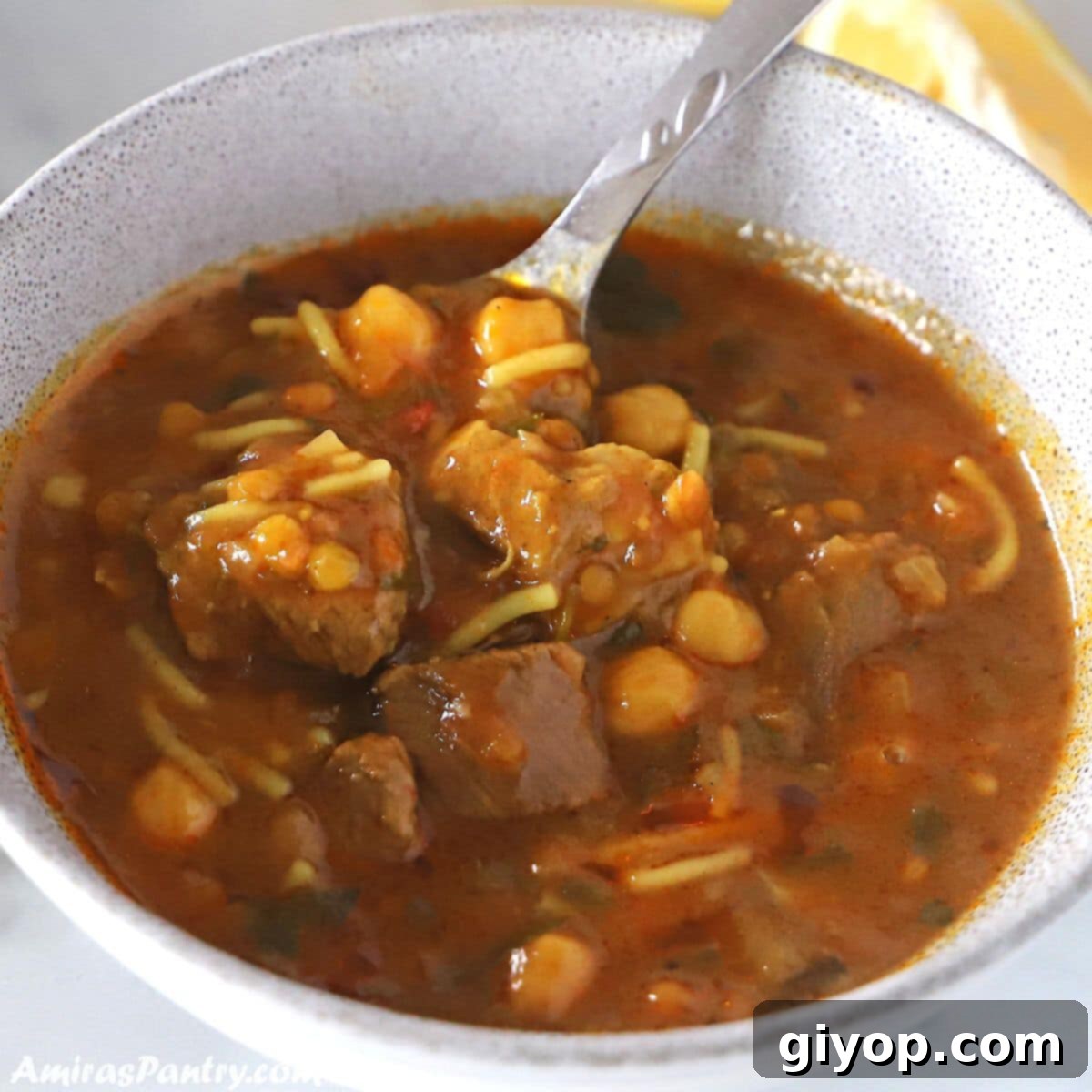
Embark on a culinary journey to the heart of Morocco with Harira, a soup that transcends mere sustenance to become a cultural cornerstone. More than just a dish, Harira is a warm embrace, a symbol of hospitality, and an indispensable part of family gatherings, especially during the holy month of Ramadan. This robust and aromatic soup is a meal in itself, brimming with tender chickpeas, earthy lentils, and succulent lamb (or your preferred protein), all simmered to perfection in a richly spiced tomato base. Each spoonful delivers a symphony of flavors, thick, zesty, and profoundly satisfying, embodying the vibrant spirit of Moroccan cuisine.
While often associated with Iftar – the breaking of the fast – during Ramadan, Harira is cherished throughout the year. It’s a testament to its comforting and nourishing qualities that many Moroccans consider no Iftar table complete without a steaming bowl of this beloved soup. Its versatility allows for various interpretations; traditional recipes often feature lamb, beef, or chicken, creating a hearty foundation. For those seeking a plant-based option, simply omit the meat for a delicious vegan Harira, or explore other delightful vegan soups like our Egyptian Red Lentil Soup.
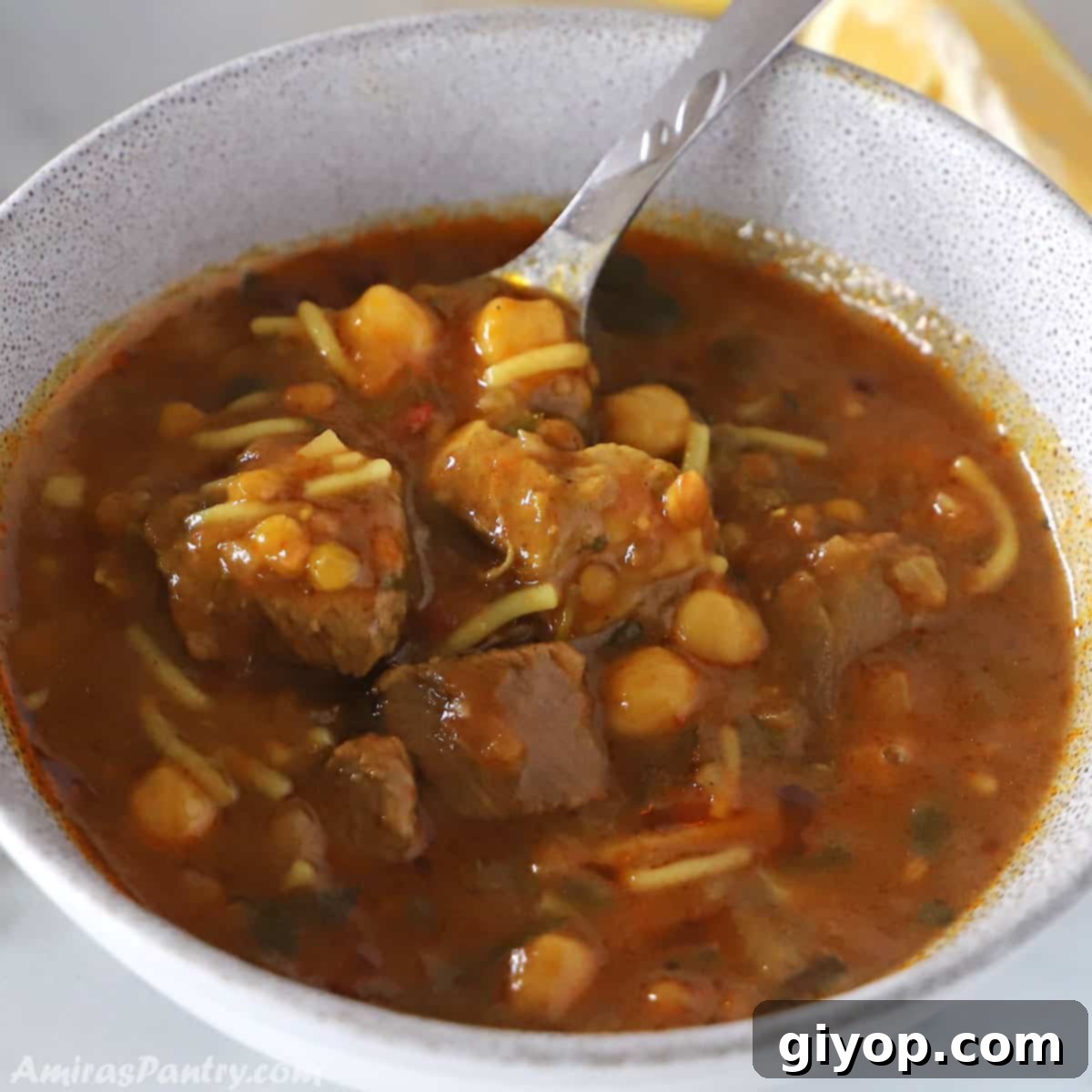
The name “Harira” itself, derived from the Arabic word “Hareer,” meaning silk, beautifully describes the soup’s rich, smooth, and luxurious texture. This traditional Moroccan lentil and chickpea soup is not only a feast for the senses but also a powerhouse of nutrition, packed with proteins, fibers, and essential vitamins, making it an ideal choice for a wholesome and restorative meal. Whether you’re familiar with Moroccan cuisine or discovering it for the first time, preparing Harira is a rewarding experience that brings authentic flavors and a touch of warmth to any table.
Why You’ll Love This Classic Moroccan Harira Soup
- Incredibly Filling & Satisfying: Harira is renowned for its hearty nature, combining protein-rich meats and legumes with nourishing vegetables and grains. It’s designed to be a complete meal, providing sustained energy and deep satisfaction, perfect for breaking a fast or a cozy evening dinner.
- Customizable to Your Taste: This recipe is wonderfully flexible. While lamb is traditional, you can easily substitute it with beef or chicken, or even create a fully vegetarian or vegan version by omitting meat entirely. Adjust spices to your preference for a milder or more robust flavor profile.
- Simple, Accessible Ingredients: You’ll find most of the ingredients for Harira readily available in any well-stocked pantry or local grocery store. No exotic items are strictly required, making this authentic Moroccan soup surprisingly approachable for home cooks.
- Tastes Even Better the Next Day: Like many stews and soups, Harira’s flavors meld and deepen overnight. This makes it an excellent candidate for meal prepping, allowing you to prepare a large batch and enjoy its enhanced taste in the days that follow, saving you precious time.
- Freezer-Friendly Convenience: Harira is a fantastic make-ahead option that freezes beautifully. Prepare it in advance, portion it out, and store it in your freezer for quick, healthy, and flavorful meals whenever you need them, offering unparalleled convenience.
This recipe provides you with the foundational techniques and ingredients for an authentic Harira, along with smart swaps to tailor it to your dietary needs or personal preferences. Don’t hesitate to experiment with the type of meat, or even embrace a vegetarian Harira for a lighter yet equally flavorful experience.
Essential Ingredients for Authentic Harira
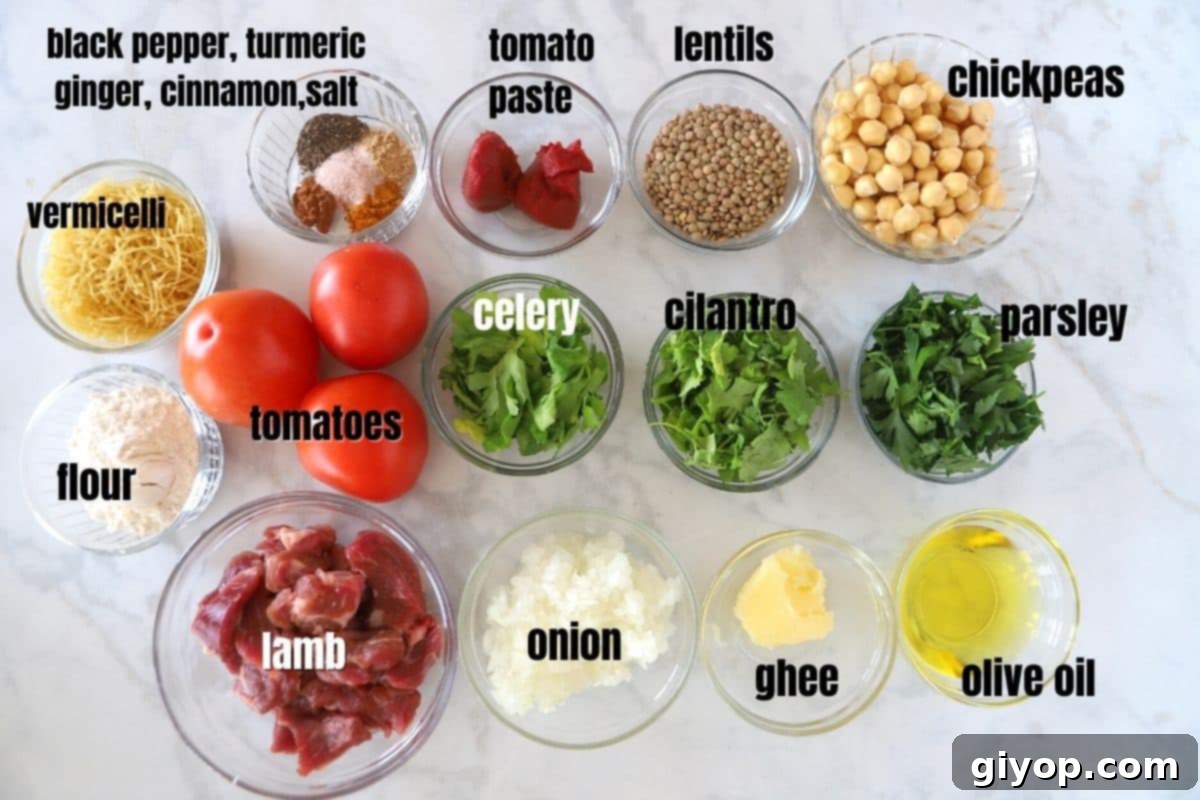
Crafting the perfect Harira begins with selecting fresh, high-quality ingredients that contribute to its distinctive taste and texture. Below is an overview of the key components. You’ll find the precise measurements and detailed instructions in the printable recipe card at the bottom of this page.
Ingredient Notes and Variations
- Meat: While lamb is traditionally favored for its rich flavor and tenderness, Harira is incredibly versatile. Many recipes feature beef or chicken. Using just bone marrow can also impart a profound depth of flavor. However, fish is not a conventional addition to Harira. For a vegetarian or vegan version, simply omit the meat entirely and increase the quantities of legumes and vegetables.
- Fresh Herbs: The aromatic backbone of Harira comes from a generous blend of fresh parsley, cilantro, and crucially, celery. Celery, especially its leaves, contributes a unique, subtle bitterness and freshness that is essential to the soup’s character. If celery leaves are scarce, you can certainly use the stalks, finely chopped.
- Fats: A combination of olive oil and ghee is often used to achieve an authentic depth of flavor. Ghee, clarified butter, adds a nutty, rich aroma. If you are preparing a vegan Harira, simply use olive oil or another plant-based oil exclusively.
- Thickener (Tedouira): Flour is the traditional thickening agent, creating the characteristic silky consistency of Harira. While some regional variations might use eggs, flour provides a more consistent and controllable thickness. For a gluten-free Harira, you can substitute the flour with a cornstarch slurry or finely ground gluten-free oats.
- Tomatoes: Fresh Roma tomatoes are preferred for their balance of sweetness and acidity. Traditionally, they are lightly boiled, then peeled and pureed. For convenience, peeling without boiling is also an option. A touch of tomato paste further intensifies the tomato flavor and color, contributing to the soup’s vibrant hue.
- Pasta/Grain: Fine vermicelli pasta is a common addition, adding a delicate texture. If you prefer a gluten-free alternative, small grains of dry rice or quinoa can be used instead. Ensure gluten-free options are cooked thoroughly within the soup.
- Aromatics & Spices: Onion forms the base, gently sautéed to release its sweetness without browning. A carefully selected blend of spices—cinnamon, turmeric, ginger, black pepper, and salt—infuses the soup with its signature warm, earthy, and fragrant profile. These spices are not just for flavor but also offer various health benefits.
- Legumes: Chickpeas and lentils are the stars of Harira, providing its substantial body and nutritional value. Dried chickpeas are ideal and require overnight soaking with a pinch of baking soda to soften them and aid in cooking. If using canned chickpeas for convenience, add them towards the end of the cooking process as they are already cooked. Green or brown lentils are traditionally used; a mix of green and red lentils can also add an interesting texture and color.
Step-by-Step Instructions for Cooking Harira
Making Harira is a methodical process that, while requiring a few steps, is straightforward and immensely rewarding. Here’s an overview of the cooking method; the comprehensive details are available in the recipe card below.
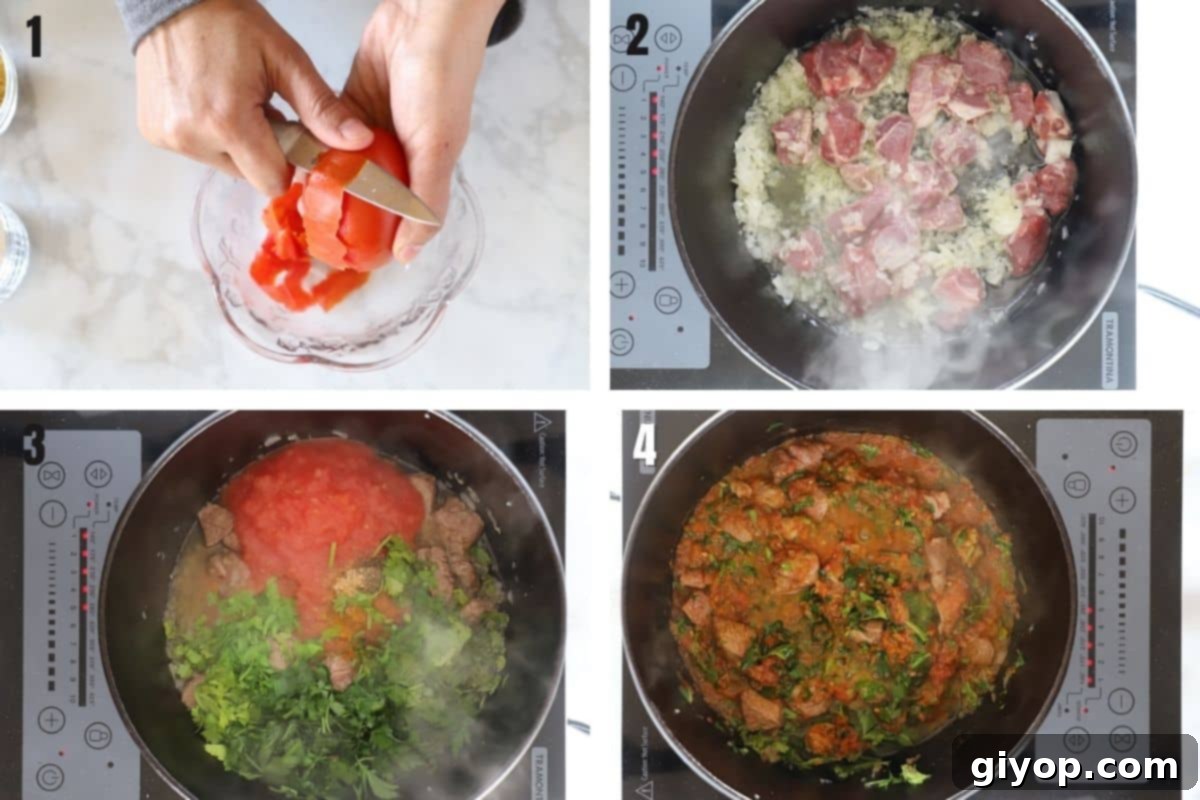
- Prepare the Tomatoes: Begin by peeling your Roma tomatoes. While a traditional method involves a quick boil before peeling, you can simply peel them raw for a quicker approach. Once peeled, puree the tomatoes in a food processor until smooth. This forms the fresh, bright base of your soup.
- Sauté Aromatics and Meat: In a large, heavy-bottomed pot or Dutch oven, heat olive oil and ghee over medium heat. Add the finely chopped onion and sauté gently for about one minute. It’s crucial not to brown the onion, as this would alter the soup’s delicate flavor profile. If using, add the lamb meat (or beef/chicken) and cook for another two minutes, allowing it to lightly sear.
- Build the Flavor Base: Introduce the pureed tomatoes, all the fragrant spices (cinnamon, ginger, turmeric, black pepper, salt), and the chopped fresh herbs (parsley, cilantro, celery) to the pot. Mix everything together thoroughly, ensuring the meat and onions are well coated in the aromatic mixture.
- Add Chickpeas and Simmer: Add the pre-soaked and drained chickpeas to the pot. Cover the ingredients generously with hot water (approximately 2 liters, or until everything is submerged with a few inches of liquid above). Bring the mixture to a boil, then reduce heat, cover, and let it cook for 20 minutes to allow the chickpeas to soften and flavors to meld.
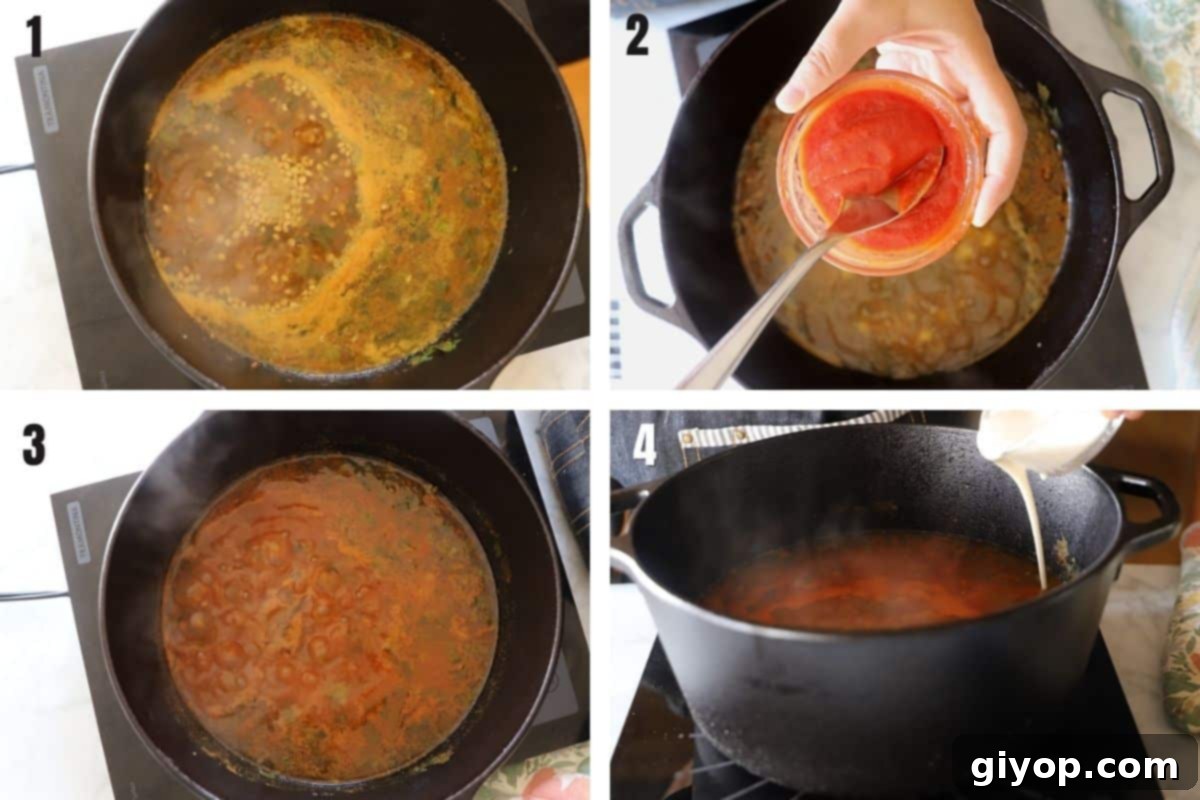
- Incorporate Lentils: After the initial simmer, add the lentils to the pot. Check the water level and add more hot water if necessary to maintain a soupy consistency. Cover the pot again and continue cooking for an additional 10-15 minutes, or until the lentils are tender.
- Prepare Tomato Paste Slurry: In a small bowl, dilute the tomato paste with a little water, stirring until it forms a smooth, pourable mixture. This prevents lumps and ensures it disperses evenly in the soup.
- Add Tomato Paste and Vermicelli: Pour the diluted tomato paste into the soup, followed by the vermicelli pasta. Stir well. Cover and cook for another 5 minutes. Throughout these steps, keep an eye on the water level, adding more hot water as needed to achieve your desired consistency.
- Thicken the Soup (Tedouira): Prepare the “tedouira” – the thickening mixture – by whisking flour with a small amount of water until a smooth, lump-free slurry is formed. Gradually pour this slurry into the simmering soup while continuously stirring. Continue stirring for a few minutes until the soup visibly thickens to a rich, silky consistency. You can adjust the thickness by adding more flour slurry, a little at a time, until it reaches your preferred richness.
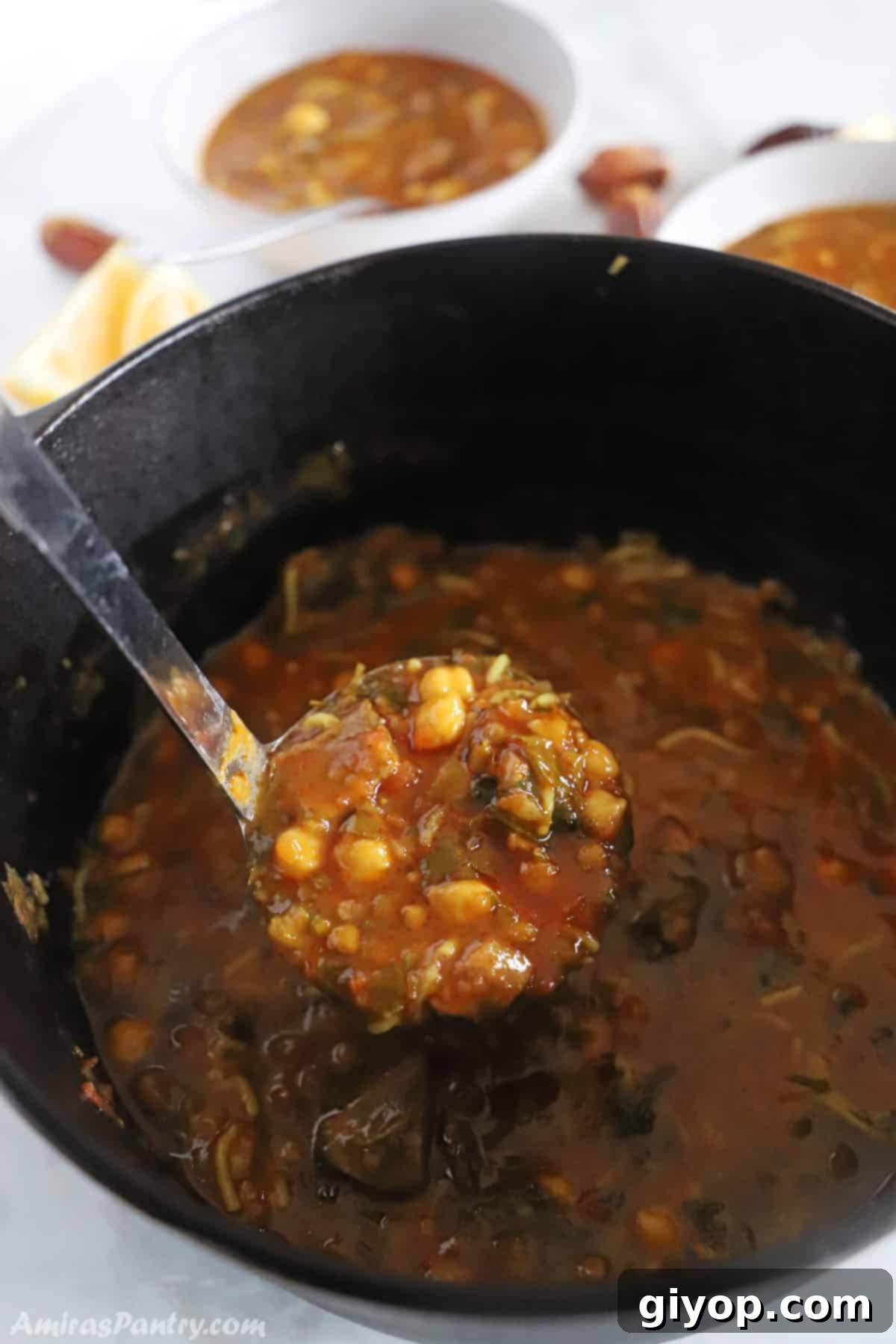
- Serve and Enjoy: Once the Harira has reached its perfect consistency, remove it from the heat. Ladle the hot soup into bowls and serve immediately. It’s traditionally garnished with fresh lemon wedges, which add a bright, zesty contrast to the savory flavors.
Amira’s Expert Tips for Perfect Harira
- Dried vs. Canned Chickpeas: For the most authentic flavor and texture, using dried chickpeas that have been soaked overnight is highly recommended. If you opt for canned chickpeas for convenience, ensure they are thoroughly rinsed and added towards the end of the cooking process, as they are already cooked and only need to warm through.
- Lentil Choices: Green or brown lentils are traditionally preferred for Harira due to their ability to hold shape during cooking. However, a combination of green and red lentils can also be used, with red lentils contributing a slightly creamier texture.
- Boosting Flavor with Broth: While plain water is often used in traditional Harira recipes, vegetable stock or chicken stock can be substituted for a richer and deeper flavor profile. Experiment to find what you prefer, but don’t underestimate the power of good quality water combined with fresh ingredients.
- Peeled Chickpeas: Some individuals prefer to peel their chickpeas after soaking for an even smoother soup texture. If this is a step you enjoy, by all means, incorporate it into your preparation process for an extra touch of refinement.
- The Art of Harira Variation: Harira is a deeply personal recipe, often passed down through generations, with each family having its own subtle variations. This means there are as many Harira recipes as there are families in Morocco! Feel empowered to adapt this recipe to your own palate, adjusting spices or ingredients to suit your taste.
- Smooth Thickener is Key: To avoid any undesirable lumps in your soup, it’s essential to ensure your flour slurry (tedouira) is perfectly smooth. After mixing flour with water, consider straining it through a fine-mesh sieve before adding it to the soup. This extra step guarantees a beautifully silky consistency.
- Making Ahead for Convenience: If you plan to make a large batch of Harira in advance, particularly for freezing, it’s best to omit the vermicelli or any other grain and the thickening agent (flour slurry). Cook the soup base, let it cool completely, and then freeze. When you’re ready to serve, thaw the soup, reheat it, and then proceed with adding the vermicelli and the thickener as per the recipe.
Frequently Asked Questions About Harira
Harira is most famously served during Iftar in the holy month of Ramadan. It’s typically accompanied by sweet treats such as dates, figs, and the intricate Moroccan pastry known as Chebakia. Beyond Ramadan, Harira makes a fantastic main course, often enjoyed with fresh crusty bread and bright lemon wedges, which add a refreshing tang to each spoonful.
The word “Hareer” in Arabic translates to “silk.” Thus, Harira refers to a soup that is rich, smooth, and has a silky texture, perfectly describing its characteristic consistency after the thickening agent is added.
Absolutely! While many traditional recipes include meat, Harira can easily be adapted to be vegetarian or vegan. Simply omit the lamb, beef, or chicken, and ensure you use olive oil instead of ghee. The combination of chickpeas and lentils still provides a robust and protein-packed meal, making it a delicious plant-based option.
Properly stored, leftover Harira soup can be refrigerated in an airtight container for up to 3-4 days. Its flavors tend to meld and deepen over time, often making it even more delicious the next day. Remember to add a little extra liquid when reheating, as it tends to thicken in the fridge.
Delicious Ways to Serve Harira
Harira is a versatile soup that pairs wonderfully with a variety of accompaniments, whether you’re enjoying it as a light starter or a fulfilling main course.
- Traditional Moroccan Sweets: As mentioned, during Ramadan, Harira is often served alongside Chebakia, dates, and figs, creating a beautiful balance of savory and sweet.
- Crusty Breads: For a simple yet satisfying meal, serve Harira with a side of warm, crusty bread. Classic Pita Bread is a great choice for dipping.
- Garlic Bread: Elevate your soup experience with a slice of Air Fryer Garlic Bread. Its savory, garlicky crunch provides a delightful contrast to the smooth, rich soup.
- Moroccan Bread Varieties: For an authentic experience, pair your Harira with traditional Moroccan breads such as Khobz (classic round bread), Batbout (Moroccan pita), or Harcha (semolina bread). These breads are perfect for soaking up every last drop of the flavorful broth.
- Fresh Lemon Wedges: Always serve Harira with fresh lemon wedges on the side. A squeeze of fresh lemon juice brightens the flavors and adds a vibrant, zesty finish to the rich soup.
Storage and Make-Ahead Tips for Harira
Refrigerating Leftover Harira
Leftover Harira soup is a fantastic meal prep option. Once cooled completely, transfer the soup to an airtight container and store it in the refrigerator for up to 3-4 days. The flavors will continue to develop, making it even more delicious on subsequent days.
Freezing Harira for Longer Storage
Harira soup freezes exceptionally well, allowing you to enjoy this comforting meal for months. To freeze, ensure the soup has cooled completely to room temperature. Divide it into freezer-safe containers or heavy-duty freezer bags, leaving some headspace for expansion. It can be stored in the freezer for up to 3 months. For best results when freezing, consider making the soup without the vermicelli and the thickening agent (flour slurry). These can be added fresh upon reheating.
Reheating Frozen or Refrigerated Harira
To reheat frozen Harira, thaw it overnight in the refrigerator. Once thawed (or directly from the fridge if chilled), reheat the soup gently on the stovetop over medium-low heat. Harira tends to thicken significantly as it cools and sits, so it’s advisable to add a little extra water or vegetable/chicken stock when reheating to restore its desired consistency. Individual portions can also be conveniently reheated in the microwave.
Prepare Harira in Advance
Harira is an ideal soup to prepare a day or two before serving, as its flavors mature beautifully. After cooking, let it cool completely and then refrigerate. When ready to serve, gently reheat on the stovetop, adding a splash of water or stock to adjust the thickness. For longer make-ahead planning, cook a large batch of the soup base without the thickening liquid, vermicelli, or rice (if using). After cooling, portion and freeze. Thaw overnight in the fridge, then reheat and complete the recipe by adding the vermicelli and thickener just before serving for the freshest texture.
More Comforting Soup Recipes to Explore
If you’ve enjoyed the wholesome goodness of Harira, you’ll love these other comforting and flavorful soup recipes from around the world:
- Molokhia (Egyptian Green Soup): Dive into the earthy and garlicky flavors of this traditional Egyptian green soup. Our easy Molokhia recipe is a fan favorite for its unique taste and nutritional benefits.
- Lebanese Lentil Soup: Discover a deliciously comforting and hearty Lebanese Lentil Soup. It’s a perfect, nourishing meal for any time, whether at home or on the go.
- Egyptian Lentil Soup: This warming and flavorful Egyptian Lentil Soup is fully loaded with vegetables and is a comforting, budget-friendly meal. Serve it with pita chips and fresh green onions for an authentic taste.
- Turkish Red Lentil Soup: Experience the vibrant and comforting flavors of this Turkish Red Lentil Soup. It’s a healthy and satisfying meal, especially perfect for a crisp fall day.
- Carrot Lentil Soup: For a quick and nutritious option, try this Carrot Lentil Soup. It’s a nourishing, soul-warming dish that can be ready in less than 30 minutes.
Quick and Easy Instant Pot Soups
For those busy days when you need a delicious meal in a flash, our Instant Pot soup recipes are a lifesaver. Explore these comforting options:
- Instant Pot Tortellini Soup: Looking for a comforting dinner that comes together effortlessly? This Instant Pot Tortellini Soup is hearty, creamy, and incredibly satisfying.
- Instant Pot Beef Barley Soup: Enjoy a truly comforting and hearty Instant Pot Beef Barley Soup. It’s remarkably simple to prepare, delivering a warm and satisfying bowl of soup in just about 30 minutes, perfect for chilly evenings.
- Instant Pot Chicken Potato Soup: Featuring tender potatoes and succulent chicken, this Instant Pot Chicken Potato Soup recipe offers a quick and delicious solution for a wholesome meal.
- Instant Pot Chicken and Rice Soup: Get a warm and comforting dish on the table in minutes with this Instant Pot Chicken and Rice Soup. Tender chicken, fluffy rice, and vibrant vegetables cooked in a flavorful broth create the perfect dinner to warm you up.
If you love this recipe, please leave a ⭐⭐⭐⭐⭐ rating! Thank you for your support and happy cooking.
Moroccan Harira Soup
Print
Pin
Rate
Ingredients
- 3 (300g) Roma tomatoes.
- ¼ cup olive oil.
- 1 Tablespoon ghee.
- 1 (150g) medium onion, finely chopped.
- 200 g lamb meat cut into small cubes.
- ½ cup (20g) parsley. chopped
- ½ cup (15g) cilantro. chopped
- ½ cup (10g) celery leaves. chopped
- ¼ teaspoon ground cinnamon.
- ½ teaspoon ground ginger.
- ½ teaspoon turmeric.
- ½ teaspoon black pepper
- 1 teaspoon salt or to taste.
- ⅓ cup (50g) dry chickpeas. soaked in water and a pinch of baking soda overnight.
- ⅓ cup lentils.
- 2 Tablespoons tomato paste.
- ¼ cup (25g) vermicelli pasta.
- 3 Tablespoons flour.
- Boiled water (approx. 2 liters).
Instructions
- Peel the tomatoes. Traditionally, tomatoes are lightly boiled and then peeled for ease, but you can also peel them raw. Puree the peeled tomatoes using your food processor until smooth.
- In a large, deep pot or Dutch oven, heat the olive oil and ghee over medium heat. Add the finely chopped onion and sauté for just 1 minute, being careful not to let it brown, as this will affect the soup’s final color and flavor. If you are using meat, add the cubed lamb (or beef/chicken) and cook for two minutes, stirring to lightly brown all sides.
- Add the pureed tomatoes, all the aromatic spices (cinnamon, ginger, turmeric, black pepper, and salt), and the fresh, chopped herbs (parsley, cilantro, and celery). Mix everything thoroughly to combine the flavors.
- Drain and thoroughly rinse the pre-soaked chickpeas. Add them to the pot and cover the mixture with hot water. Bring it to a boil, then reduce the heat, cover, and cook for 20 minutes to tenderize the chickpeas and infuse the base with flavor.
- Add the lentils to the pot. Check the water level; if it appears too thick, add more hot water as needed to maintain a soupy consistency.
- Cover the pot again and continue cooking for an additional 10-15 minutes, allowing the lentils to become tender.
- In a separate small bowl, dilute the tomato paste with a little water, stirring well to create a smooth, lump-free paste. This ensures even distribution in the soup.
- Pour the diluted tomato paste into the soup, along with the vermicelli pasta (or rice/quinoa for gluten-free). Cover the pot and cook for 5 more minutes. Always check the water level at each step, adding more hot water if the soup becomes too thick.
- Prepare the thickening mixture, known as “tedouira,” by mixing the flour with a small amount of water until it forms a smooth slurry. Gradually pour this mixture into the simmering soup while continuously stirring to prevent lumps. Continue to stir until the soup reaches your desired thick and silky consistency. You can add a bit more flour slurry if you prefer a thicker Harira.
- Serve your traditional Moroccan Harira soup hot, garnished with fresh lemon wedges on the side for a burst of refreshing flavor. Enjoy!
Notes
- When preparing Harira, it’s important not to brown the onions. They should be briefly sautéed to soften and release their flavor without taking on a caramelized color, which would alter the soup’s traditional taste.
- This recipe is highly adaptable. You can use lamb, beef, chicken, or even just bones for a flavorful broth. For a vegetarian or vegan version, simply omit the meat entirely. Rice can also be used as a gluten-free alternative to vermicelli pasta.
- For the best texture and absorption of flavors, it is recommended to use dried chickpeas that have been soaked overnight. If using canned chickpeas for convenience, ensure they are thoroughly rinsed and added towards the end of the cooking process, as they require less cooking time.
- Some traditionalists prefer to peel chickpeas after soaking to achieve an exceptionally smooth soup. If you wish to do so, by all means, incorporate this step into your preparation.
- Harira is a cherished, traditional recipe that is typically passed down through families, resulting in a multitude of variations across Morocco. Each family often has its unique touch, making it a very tasty and adaptable recipe that you can adjust to your own palate and preferences.
- To ensure a lump-free and silky smooth consistency for the soup, it is crucial that the thickener (flour slurry or “tedouira”) is completely smooth. After mixing the flour with water, consider straining it through a fine-mesh sieve before adding it to the soup for guaranteed smoothness.
- If you plan to make this soup ahead of time, especially for freezing, do not add the vermicelli (or other grains) or the thickener. Cook the soup base as directed, let it cool completely, and then freeze it. When you are ready to use, thaw the soup, reheat it, and then proceed with adding the vermicelli and the thickening agent. This method ensures the best texture and flavor upon serving.
Please check the nutrition disclaimer policy.
Nutrition
First published May 2, 2020. Last updated September 28, 2023, with important tips, clear step-by-step instructions, and improved readability.