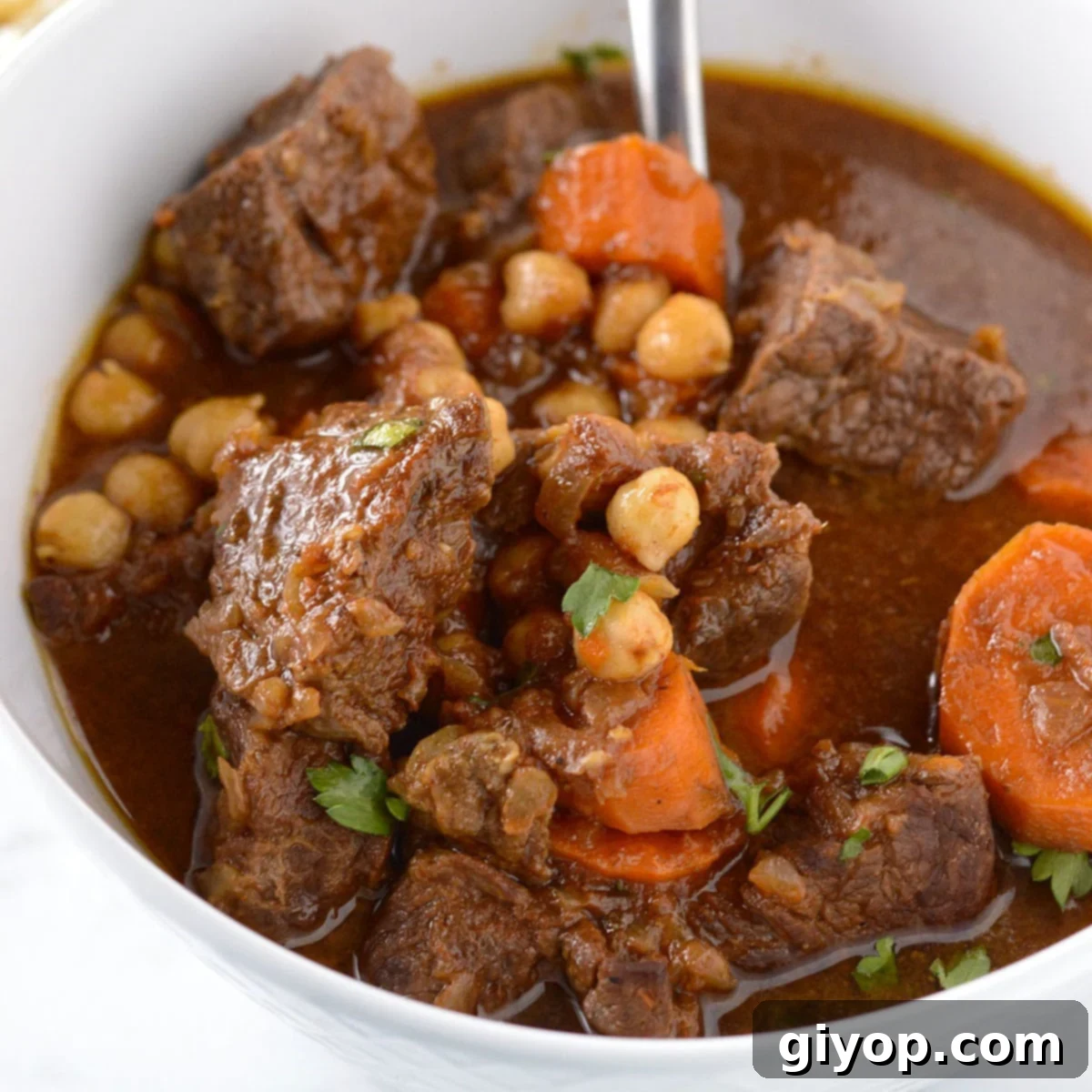
Welcome to the ultimate guide for crafting a truly exceptional slow cooker beef stew. This isn’t just a recipe; it’s an invitation to experience the pinnacle of comfort food, made effortlessly in your kitchen. Imagine tender, succulent beef chunks, perfectly complemented by an array of hearty vegetables, all bathed in a rich, deeply flavorful tomato sauce. This easy slow cooker beef stew recipe is destined to become a year-round favorite, perfect for busy weeknights or cozy weekend gatherings.
Why You’ll Love This Slow Cooker Beef Stew
- **Effortless & Convenient:** Slow cooker meals are a true lifesaver, especially on hectic days. This recipe allows you to set it and forget it, delivering a delicious dinner with minimal hands-on time.
- **Accessible Ingredients:** Featuring common pantry staples and readily available fresh produce, you likely have most of what you need right in your kitchen.
- **Wholesome & Nourishing:** This hearty beef stew is packed with protein and vegetables, making it a naturally gluten-free and incredibly healthy meal option for the entire family.
- **Rich, Deep Flavor:** The slow cooking process allows flavors to meld beautifully, creating an incredibly rich and comforting stew that tastes like it simmered all day.
- **Versatile & Customizable:** Easily adapt this recipe to include your favorite vegetables or adjust the spice levels, ensuring it’s always perfectly suited to your taste.
There’s something uniquely satisfying about slow cooker dinners. For me, Wednesdays often feel like the busiest day of the week. When the mid-week madness strikes, turning to my slow cooker or Instant Pot is my secret weapon to ensure a wholesome and delicious meal is ready without the stress.
Essential Ingredients for Your Perfect Beef Stew
Creating a truly flavorful beef stew begins with selecting the right ingredients. Here’s a detailed look at what you’ll need to bring this comforting dish to life, along with some helpful notes and potential substitutions.
Ingredient Notes & Tips
- **Beef Stew Meat:** The star of our stew is beef chuck roast, cut into 1-inch pieces. Chuck roast is an ideal cut for slow cooking because its marbling and connective tissues break down beautifully over time, resulting in incredibly tender, melt-in-your-mouth beef. You can buy pre-cut stew meat, or purchase a chuck roast and trim any excess fat before dicing it yourself.
- **Onions and Garlic:** These aromatics form the foundational flavor base of almost any great stew. Searing them lightly with the beef caramelizes the onions, enhancing their sweetness and depth, while the garlic releases its pungent, aromatic goodness. Don’t skip this crucial step!
- **Oil:** A good quality olive oil is my preference for searing the beef, but you can use any high-heat cooking oil you prefer, such as vegetable oil or grapeseed oil. Just a couple of tablespoons are needed for the initial browning, infusing the meat with a light, fragrant coating.
- **Vegetables:** This recipe features carrots and chickpeas for their hearty texture and nutritional benefits. Feel free to customize with your favorite stew-friendly vegetables.
- **Carrots:** Adds natural sweetness and a vibrant color. You can dice them or slice them into rounds.
- **Chickpeas (Garbanzo Beans):** Canned chickpeas should be rinsed and drained before adding. If using dry chickpeas, soak them overnight and add them to the slow cooker at the very beginning of the cooking process to ensure they become tender.
- **Other Options:** Consider adding potatoes (red or Yukon gold), celery, parsnips, or even bell peppers for more variety.
- **Beef Stock/Broth:** This is essential for building a rich, savory liquid base. For an even more profound meat flavor, I highly recommend using a homemade beef bone broth. If using store-bought, opt for a low-sodium version so you can control the salt content.
- **Tomato Paste:** This concentrated tomato product adds a wonderful depth of umami and a subtle sweetness, contributing to the stew’s beautiful color and robust flavor. It’s much more potent than regular canned tomatoes, offering a powerful flavor boost without excessive liquid.
- **Spices:** Our blend of bay leaves, paprika, and cumin offers a delightfully warm and aromatic profile that sets this stew apart.
- **Bay Leaves:** Infuse a subtle, earthy, and slightly floral note.
- **Paprika:** Adds a mild, sweet pepper flavor and a lovely reddish hue.
- **Ground Cumin:** Provides a distinctive warm, earthy aroma that pairs wonderfully with beef and Middle Eastern-inspired flavors.
- **Salt and Ground Black Pepper:** Essential for seasoning and balancing all the flavors. Always adjust to your personal taste.
Recommended Equipment
Having the right tools can make your slow cooking experience even smoother. Here’s what you’ll need for this delicious beef stew:
- 6-Quart Slow Cooker: The star appliance for this recipe, allowing for long, gentle cooking.
- Large Skillet: Essential for searing the beef and sautéing the aromatics before transferring them to the slow cooker.
Step-by-Step Instructions for Slow Cooker Beef Stew
Follow these simple steps to prepare your hearty and flavorful beef stew. The beauty of slow cooking is in its simplicity and the incredible results it delivers with minimal effort.
- **Brown the Beef:** Begin by heating the olive oil in a large skillet over medium-high heat. Add your beef cubes and brown them thoroughly on all sides. This searing step is absolutely critical, as it develops deep, rich flavors (the Maillard reaction) that will permeate your entire stew. The more color you get on the beef, the more depth of flavor your stew will have.
- **Sauté Aromatics:** To the same skillet, add the diced onions and minced garlic. Sauté them for 1-2 minutes until fragrant and slightly softened, scraping up any delicious brown bits from the bottom of the pan. These “fond” bits are packed with flavor!
- **Transfer to Slow Cooker:** Carefully transfer the browned beef, sautéed onions, and garlic from the skillet into your slow cooker.
- **Add Remaining Ingredients (Except Chickpeas):** Now, add the carrots (if using), beef broth, tomato paste, bay leaves, paprika, ground black pepper, salt, and ground cumin to the slow cooker. Stir everything together gently to combine.
- **Slow Cook:** Cover your slow cooker with its lid. Cook on high for 4 hours or on low for 7 hours, or until the beef is fork-tender and easily pulls apart.
- **Introduce Chickpeas:** Approximately 30 minutes before the end of the cooking time, uncover the slow cooker and stir in the washed and drained chickpeas. Re-cover and allow the stew to finish cooking, giving the chickpeas time to heat through and absorb some of the wonderful flavors.
- **Serve:** Once cooked, remove the bay leaves. Garnish your savory beef stew with fresh herbs like parsley or cilantro, if desired, and serve hot.
Expert Tips for the Best Slow Cooker Beef Stew
Achieving a truly outstanding beef stew is all about a few key techniques and considerations. Here are some pro tips to ensure your slow cooker beef stew is incredibly delicious every time:
- **Don’t Skip the Searing:** As mentioned in the instructions, searing the beef before slow cooking is paramount. It creates a beautiful crust and locks in moisture, resulting in a more flavorful and tender final product. This step adds layers of savory depth that can’t be achieved otherwise.
- **Thickening the Sauce:** While this recipe naturally produces a deliciously rich sauce, some prefer a thicker, more gravy-like consistency. If this is your preference, you can easily create a cornstarch slurry. In a small bowl, whisk together 1 tablespoon of cornstarch with 2 tablespoons of cold water until smooth. Stir this mixture into the slow cooker during the last 30 minutes of cooking. This will gently thicken the stew without altering its flavor.
- **Choosing Your Fat:** I typically use olive oil for its health benefits and mild flavor. However, feel free to experiment with other fats for searing, such as butter for a rich, nutty flavor, or ghee, which offers a unique browned butter taste with a higher smoke point.
- **Vegetable Timing:** While root vegetables like carrots and small potatoes (if using) can often be added from the beginning with the beef, softer vegetables or those that cook quickly should be added later. For example, if you’re incorporating frozen peas or green beans, stir them in during the last 30 minutes of cooking to prevent them from becoming mushy.
- **Resist the Urge to Peek:** Opening the slow cooker lid frequently releases heat and extends the cooking time. Try to keep the lid on as much as possible to maintain a consistent temperature and ensure your beef cooks thoroughly and becomes perfectly tender.
- **Adjust Seasoning at the End:** Salt levels can vary depending on your broth. It’s best to taste and adjust the salt and pepper towards the end of the cooking process, after the flavors have fully developed.
Storage Solutions for Your Leftover Stew
One of the best things about slow cooker beef stew is how well it stores, making it ideal for meal prep or enjoying delicious leftovers.
**Refrigerate:** Store any leftover beef stew in an airtight container in the refrigerator for up to 3-4 days. The flavors often deepen overnight, making it even more delicious the next day.
**Freeze:** This hearty stew freezes exceptionally well for longer storage. Transfer cooled stew to freezer-safe containers, leaving about an inch or two of headspace to allow for expansion. It can be frozen for up to 3 months. Note that if you’ve added potatoes, their texture might become slightly softer or mealy after freezing and thawing, but the stew will still be delicious.
**Reheat:** To reheat frozen stew, allow it to thaw in the refrigerator overnight. Once thawed (or if reheating from the fridge), gently warm it on the stovetop over low heat, stirring occasionally, until it’s thoroughly heated through. You can also reheat individual portions in the microwave.
Delicious Variations to Customize Your Stew
This slow cooker beef stew recipe is incredibly versatile. Feel free to get creative and customize it to suit your preferences or what you have on hand:
- **Spice It Up:** For those who enjoy a kick, add a pinch of cayenne pepper, a diced jalapeño, or simply increase the amount of black pepper for a spicier gluten-free beef stew.
- **Heartier Root Vegetables:** Enhance the stew’s heartiness by adding various root vegetables. Diced russet potatoes, sweet potatoes, or Yukon gold potatoes are excellent choices that will soak up all the rich flavors. Add them along with the carrots.
- **Seasonal Vegetable Medley:** Incorporate your favorite seasonal vegetables! Green beans, peas, zucchini, or eggplant are all naturally safe and delicious additions to this gluten-free beef stew. Add softer vegetables like peas or zucchini in the last 30-60 minutes of cooking to prevent them from becoming too soft.
- **Herbs and Zest:** A squeeze of fresh lemon juice or a handful of fresh parsley or cilantro stirred in at the end can brighten the entire dish.
- **Wine Infusion:** For an even richer, more complex flavor profile, consider deglazing the pan with a splash of dry red wine after browning the beef and before adding the broth. Allow it to simmer for a minute or two to cook off the alcohol.
What to Serve with Beef Stew
A classic beef stew is a complete meal on its own, but it truly shines when paired with the right accompaniments:
- **Rice:** There’s nothing more comforting than serving your stew over a bed of fluffy white rice, especially delicious Lebanese rice.
- **Crusty Bread:** A warm, crusty loaf of bread is perfect for soaking up every last drop of the rich, savory sauce.
- **Mashed Potatoes:** Creamy mashed potatoes make an excellent pairing, offering a smooth counterpoint to the tender beef and vegetables.
- **Pasta or Egg Noodles:** For a different texture, serve your beef stew over wide egg noodles or your favorite pasta shape.
- **Green Salad:** A simple, crisp green salad provides a refreshing contrast to the richness of the stew.
- For even more ideas, check out what to serve with beef stew.
Frequently Asked Questions (FAQs)
Beef chuck roast is widely considered the best cut for stew. It’s affordable, readily available, and its good marbling and connective tissues break down beautifully during long, slow cooking, yielding incredibly tender, flavorful results. Just trim any excessive fat and cut it into 1-inch chunks.
While boiling can eventually make meat tender, this slow cooker recipe relies on gentle, prolonged simmering at a lower temperature. Chuck meat is a tough cut and needs significant time for its connective tissues to break down into gelatin, which makes it fork-tender. Rushing the cooking process will result in chewy and tough meat. The slow cooker provides the perfect environment for this transformation.
Absolutely! Diced russet, Yukon gold, or baby red potatoes are fantastic additions. Add them at the beginning of the cooking process along with the carrots to ensure they cook through and become tender.
To deepen the flavor, consider adding a tablespoon of Worcestershire sauce or a splash of red wine during the searing process. Using homemade beef bone broth also significantly enhances richness.
Beef Stew vs Pot Roast
While both are comforting beef dishes, beef stew and pot roast differ in preparation and presentation. A pot roast typically features a single, large cut of beef (often chuck roast) cooked slowly until tender, then sliced and served with a rich gravy. Beef stew, on the other hand, consists of smaller, bite-sized chunks of beef simmered with a variety of vegetables in a flavorful broth, creating a cohesive, spoonable dish. Due to the larger cut of meat, pot roasts generally require a longer cooking time compared to beef stew.
Related Recipes to Explore
- Bamya: A delicious okra stew in a savory tomato and pepper sauce, a popular Middle Eastern dish enjoyed year-round.
- Easy Baked Ziti with Ground Beef: A satisfying and easy-to-make comfort food that can be prepared ahead for a convenient weeknight dinner.
- Mulukhia: A traditional and healthy Egyptian soup, known for its unique texture and vibrant green color.
- Shrimp Stew: A quick 20-minute healthy weeknight dinner featuring succulent shrimp in a rich, bold tomato sauce, perfect with rice or crusty bread.
More Delicious Slow Cooker Recipes
Embrace the ease and flavor of slow cooking with these additional recipes:
- Crock Pot Cornish Hens: A delightful and hearty meal perfect for special occasions or a satisfying weeknight dinner.
- Slow Cooker Moroccan Beef Tagine with Butternut Squash: A cozy and filling dish featuring warm spices, tender beef, and sweet butternut squash, ideal for chilly evenings.
- Slow Cooker Corned Beef without Cabbage: Achieve melt-in-your-mouth tender corned beef effortlessly in your crockpot, suitable for any time of the year.
- Easy Crock Pot Lasagna Soup: All the flavors of lasagna without the hassle – just brown the beef and let your slow cooker do the rest!
- Slow Cooker Stuffed Onions: A comforting dish of tender onion layers filled with a delicious rice and meat mixture, cooked in a simple tomato broth.
Hearty Beef Recipes to Savor
If you’re a fan of beef, explore these other fantastic recipes:
- Juicy Shish Kabob: Easy to prepare beef steak marinated in herbs and warm spices, then grilled or baked to perfection.
- Kofta Kebabs: Delicious and popular Middle Eastern meatballs, perfect for grilling or baking.
- Egyptian Fattah: A traditional Middle Eastern dish, often enjoyed for celebrations, featuring layers of rice, bread, and beef in a savory sauce.
- Slow Cooker Honey Garlic Steak Bites: A hands-off dinner with a perfect blend of sweet and savory flavors.
- Slow Cooker Mongolian Beef: Tender flank steak in a sweet and savory sauce, ideal with chow mein noodles and broccoli.
- Slow Cooker Pot Roast with Gravy: An easy and satisfying meal, perfect for busy weeknights, resulting in tender, succulent pot roast.
If you love this recipe, please leave a ⭐⭐⭐⭐⭐ rating! Thank you.
Slow Cooker Beef Stew Recipe
A comforting slow cooker beef stew recipe featuring tender beef, chickpeas, and carrots, infused with a delightful blend of Middle Eastern spices for an ultimate year-round comfort meal.
Rating: 4.79 from 14 votes
Course: Main Course
Cuisine: American, Mediterranean, Middle East
Diet: Gluten Free, Halal
Prep Time: 10 minutes
Cook Time: 4 hours
Total Time: 4 hours 10 minutes
Servings: 6 Servings
Calories: 288 kcal
Author: Amira
Ingredients
- 2 Tablespoons olive oil
- 2 pounds chuck roast beef, trimmed and cut into 1-inch cubes
- 1 medium onion, diced
- 3 garlic cloves, minced
- 2 carrots, diced or sliced (optional)
- 2 cups beef broth or water
- ¼ cup tomato paste
- 2-3 bay leaves
- 1 teaspoon paprika
- ½ teaspoon ground black pepper
- 1 teaspoon salt, or to taste
- ¼ teaspoon ground cumin
- 1 can garbanzo beans, washed and drained (Note: If using dry chickpeas, add them from the start after soaking overnight.)
Instructions
- In a large non-stick skillet over medium-high heat, add olive oil.
- Add the beef cubes and brown them well on all sides, ensuring a rich crust develops.
- Add the diced onion and minced garlic to the skillet, cooking for another 1-2 minutes until fragrant, scraping up any browned bits from the pan.
- Transfer the skillet’s content (beef, onions, garlic) to the slow cooker.
- Add the rest of the ingredients, except for the garbanzo beans, to the slow cooker. Stir gently to combine.
- Cover and cook on high for 4 hours or on low for 7 hours, until the beef is fork-tender.
- Approximately 30 minutes before the end of the cooking time, uncover and stir in the chickpeas.
- Cover again and allow the stew to finish cooking. Serve hot, garnished with fresh herbs if desired.
Notes
- You can use dry chickpeas; just ensure they are soaked overnight and added at the beginning of the cooking process. Feel free to incorporate any other vegetables you like.
- For more detailed tips and variations, please refer to the sections above.
- Please check the nutrition disclaimer policy for dietary information.
Nutrition
Calories: 288kcal | Carbohydrates: 7g | Protein: 36g | Fat: 13g | Saturated Fat: 3g | Polyunsaturated Fat: 1g | Monounsaturated Fat: 7g | Cholesterol: 94mg | Sodium: 878mg | Potassium: 781mg | Fiber: 2g | Sugar: 3g | Vitamin A: 3735IU | Vitamin C: 5mg | Calcium: 54mg | Iron: 4mg
First published Oct 4, 2019. Last updated January 23, 2024, with important tips, clear step-by-step instructions, and enhanced readability for an even better cooking experience.
My Personal Journey with Beef Stew
Growing up, beef stew was a constant presence at our family table, a cherished staple that appeared year-round, adapted with whatever seasonal vegetables my mom had on hand. From potatoes and green beans to peas and zucchini, each variation brought its own unique comfort. I particularly adored the okra version, though I confess, the taro stew was never quite my favorite!
This particular recipe, featuring chickpeas, holds a special place in my heart. In our culture, it’s known as “tagine hummus bel lahma,” directly translating to “chickpeas and beef tagine.” It’s a wonderful example of how simple ingredients can come together to create something truly extraordinary and deeply satisfying.
My mom’s method involved cooking the meat separately before combining it with vegetables, beef broth, and tomato sauce in a large pot. While that method yields delicious results, today, we embrace the efficiency of the slow cooker. The core principle remains: start by browning the beef with onions and garlic. This crucial searing step, which only takes about 10 minutes, is a game-changer. It builds incredible depth of flavor that elevates the entire stew, creating a richness that truly makes all the difference. After that, the slow cooker takes over, allowing you to enjoy your day while it transforms simple ingredients into a magnificent meal.