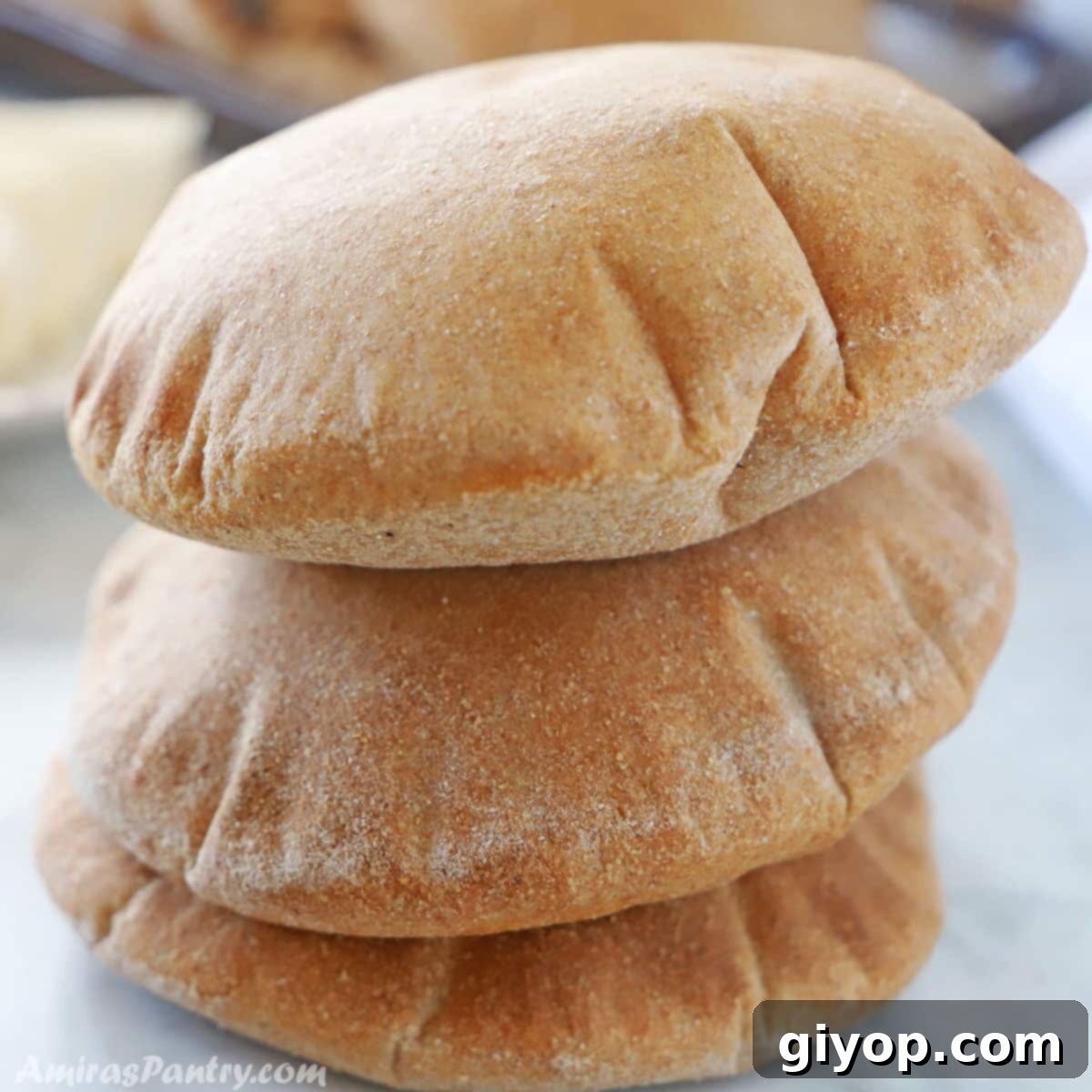
Imagine pulling warm, fluffy, and delightfully chewy whole wheat pita bread directly from your oven. The aroma of freshly baked bread fills your kitchen, promising a taste experience far superior to any store-bought alternative. For anyone who has lived in the Middle East, this isn’t just bread; it’s a staple, a tradition, and a comforting taste of home. The rich, nutty flavor and satisfying texture of homemade whole wheat pita are simply unparalleled.
While you might be familiar with the process of making traditional pita, this guide takes your baking skills to the next level by incorporating wholesome whole wheat flour. This not only imbues your pita with a distinct, desirable texture but also enhances its nutritional value and adds a deeper, more complex nutty flavor that truly elevates the experience. Prepare to embark on a rewarding culinary journey that will transform your appreciation for this ancient bread.
Why You’ll Love This Homemade Whole Wheat Pita Bread Recipe
Baking your own pita bread is an incredibly rewarding experience, offering benefits that extend far beyond the delicious taste. Here’s why this whole wheat pita recipe is about to become your new kitchen favorite:
- **Unmatched Freshness:** There’s truly nothing comparable to hot, fresh pita pockets straight out of your oven. The tender interior, the slightly crisp exterior, and the intoxicating aroma create a sensory experience that store-bought versions simply cannot replicate. Each bite delivers warmth and freshness that will make you question why you ever bought it from a grocery store.
- **Effortlessly Delicious:** You’ll be surprised at how easy it is to create these perfect pita pockets at home. With just a few simple steps and a little patience, you’ll master the art of making fluffy, pocket-forming pita. Once you taste the difference, you’ll likely never return to pre-packaged pitas.
- **Simple, Wholesome Ingredients:** This recipe relies on readily available pantry staples, making it accessible for any home baker. Using whole wheat flour adds a healthy boost, providing fiber and nutrients that white flour lacks, without sacrificing taste or texture. You’re in control of what goes into your bread, ensuring a wholesome and natural product free from preservatives.
- **A Healthier Choice:** Incorporating whole wheat flour significantly increases the fiber content of your pita, aiding digestion and providing sustained energy. It’s a delicious way to enjoy your favorite bread while making a healthier dietary choice for yourself and your family.
- **Versatility in Every Bite:** Beyond its incredible taste, homemade whole wheat pita is incredibly versatile. It’s the perfect canvas for a myriad of dishes, from traditional Middle Eastern dips and sandwiches to innovative wraps and pizza bases.
Essential Ingredients for Whole Wheat Pita Bread
Crafting the perfect whole wheat pita requires a thoughtful selection of ingredients, each playing a crucial role in achieving that coveted texture and flavor. This is an overview of what you’ll need, with full measurements detailed in the recipe card at the end of this page.
- **Whole Wheat Flour:** As the name suggests, this is the star of our recipe. Whole wheat flour provides a nutty, robust flavor and adds significant fiber, making your pita a more nutritious option. Its unique composition contributes to the desirable texture of these loaves.
- **Bread Flour:** This is a crucial addition for achieving the classic pita pocket. Bread flour has a higher protein content than all-purpose flour, which means it develops more gluten. This gluten network is essential for creating an elastic dough that can trap steam during baking, leading to those wonderful, billowy pockets. While you can use all-purpose flour, bread flour truly ensures superior pocket formation and a chewier texture.
- **Salt:** A fundamental ingredient in all bread making, salt is vital for enhancing the flavor of your pita. It prevents the bread from tasting bland and also plays a role in regulating yeast activity.
- **Yeast (Instant or Active Dry):** Yeast is the leavening agent that gives our pita its characteristic lift and texture. Instant yeast is convenient as it can be mixed directly with the dry ingredients. If you’re using active dry yeast, remember to activate it first by dissolving it in a portion of the warm water with a pinch of sugar until foamy, typically for 5-10 minutes, before adding it to the other ingredients.
- **Sugar:** A small amount of sugar acts as food for the yeast, helping to activate it and encourage a robust rise. It also contributes to the slight browning of the crust.
- **Olive Oil:** A touch of olive oil adds richness to the dough, contributing to a softer, more pliable texture and a subtle, savory flavor. It also helps with the dough’s elasticity and overall mouthfeel.
- **Warm Water:** The hydration element of the dough, warm water (ideally between 105-115°F or 40-46°C) is essential for activating the yeast. The exact amount can vary slightly depending on the humidity and your flour, so you may need to adjust gradually.
Before You Begin: Essential Tools for Pita Perfection
While making pita bread is a simple process, having the right tools can make a significant difference in ease and outcome. You don’t need a professional bakery setup, but these items will greatly assist your journey to perfectly puffed pita:
- **Pizza Baking Stone or a Sturdy Baking Sheet:** This is perhaps the most critical tool for achieving that high heat environment essential for pita pockets. A preheated pizza stone or a heavy-duty baking sheet in a very hot oven mimics the conditions of a traditional taboon oven, allowing the pita to puff up rapidly. The intense, direct heat from the hot surface causes the moisture in the dough to quickly turn to steam, creating the internal pocket.
- **Stand Mixer with Dough Hook (Optional, but Recommended):** While you can certainly knead the dough by hand, a stand mixer significantly reduces the effort and ensures consistent kneading for optimal gluten development. The dough hook attachment is specifically designed for bread making.
- **Large Mixing Bowl:** For combining ingredients and, if kneading by hand, for the initial mixing stages.
- **Plastic Wrap or a Clean Tea Towel:** Essential for covering the dough during its rising periods, keeping it from drying out and creating a warm, humid environment for the yeast to thrive.
- **Rolling Pin:** To achieve uniform thickness when shaping your pita discs, which is vital for even baking and pocket formation.
- **Measuring Cups and Spoons:** For accurate ingredient measurements, crucial for consistent results in baking.
- **Kitchen Scale:** For precise measurement of flour and dough portions, especially helpful for consistency.
- **Oven Mitts or Heat-Resistant Gloves:** Absolutely necessary for safely handling the extremely hot baking stone or sheet.
- **Clean Kitchen Towels:** For covering the baked pita immediately after removing it from the oven to keep it soft and pliable.
Step-by-Step Instructions for Homemade Whole Wheat Pita Bread
This section provides a detailed walkthrough of the process. For precise measurements, please refer to the comprehensive recipe card at the bottom of this page.
- **Combine Dry Ingredients:** In the bowl of a stand mixer fitted with a dough hook attachment, combine your whole wheat flour, bread flour, salt, sugar, and instant yeast. If using active dry yeast, ensure it’s proofed first as described in the ingredients section.
- **Initial Mix:** Use a spoon or the mixer on a very low speed to gently mix these dry ingredients together, ensuring they are well combined.
- **Add Liquids and Knead:** Pour in the olive oil. Start your mixer on a low speed with the dough hook attached. Gradually add the warm water, a little at a time, until the dough begins to come together. Continue kneading with the mixer for approximately 8 minutes. If kneading by hand, this process will take a bit longer, usually 12-15 minutes, until the dough is smooth and elastic. The dough should be slightly sticky but manageable.
- **First Rise (Bulk Fermentation):** Once kneaded, remove the dough from the bowl. Add about one teaspoon of olive oil to the mixer bowl, then return the dough ball to the bowl, turning it to coat all sides with oil. Cover the bowl tightly with plastic wrap or a clean, damp tea towel. Place it in a warm spot in your kitchen (away from drafts) and let it rise for about 1 hour, or until it has visibly doubled in size. This first rise allows the yeast to develop flavor and strength.
- **Preheat Oven and Prepare Dough:** While the dough is rising towards the end of its cycle (around the 45-minute mark), place your pizza stone or sturdy baking sheet in the middle rack of your oven. Preheat the oven to its highest possible temperature, ideally 550°F (288°C). This extremely high heat is crucial for the pita to puff up properly.
- **Divide and Shape Dough:** Once the dough has doubled, gently punch it down to release the air. Take the dough out onto a lightly floured surface and divide it into four equal pieces. Each piece should weigh roughly 105g for consistent results. Form each piece into a smooth ball. Cover these dough balls with plastic wrap to prevent them from drying out.
- **Roll Out Pita Discs:** Take one dough ball at a time and, using a rolling pin, roll it into a uniform disc approximately ¼ inch (0.6 cm) thick. Aim for an even thickness across the entire disc – this is key to forming an even pocket.
- **Second Rest (Proofing):** Carefully place each rolled pita disc onto a piece of parchment paper or a clean paper kitchen towel. This prevents sticking and helps with transfer. Cover the rolled pitas with plastic wrap and let them rest for an additional 30 minutes. This short rest allows the gluten to relax, making the dough easier to handle and ensuring a good puff.
- **Bake the Pita:** After the 30-minute rest, working carefully and quickly, take the hot baking sheet or pizza stone from the oven. Gently transfer one rolled pita onto the hot surface, flipping it off the paper towel. This method helps to ensure both sides of the pita bake evenly.
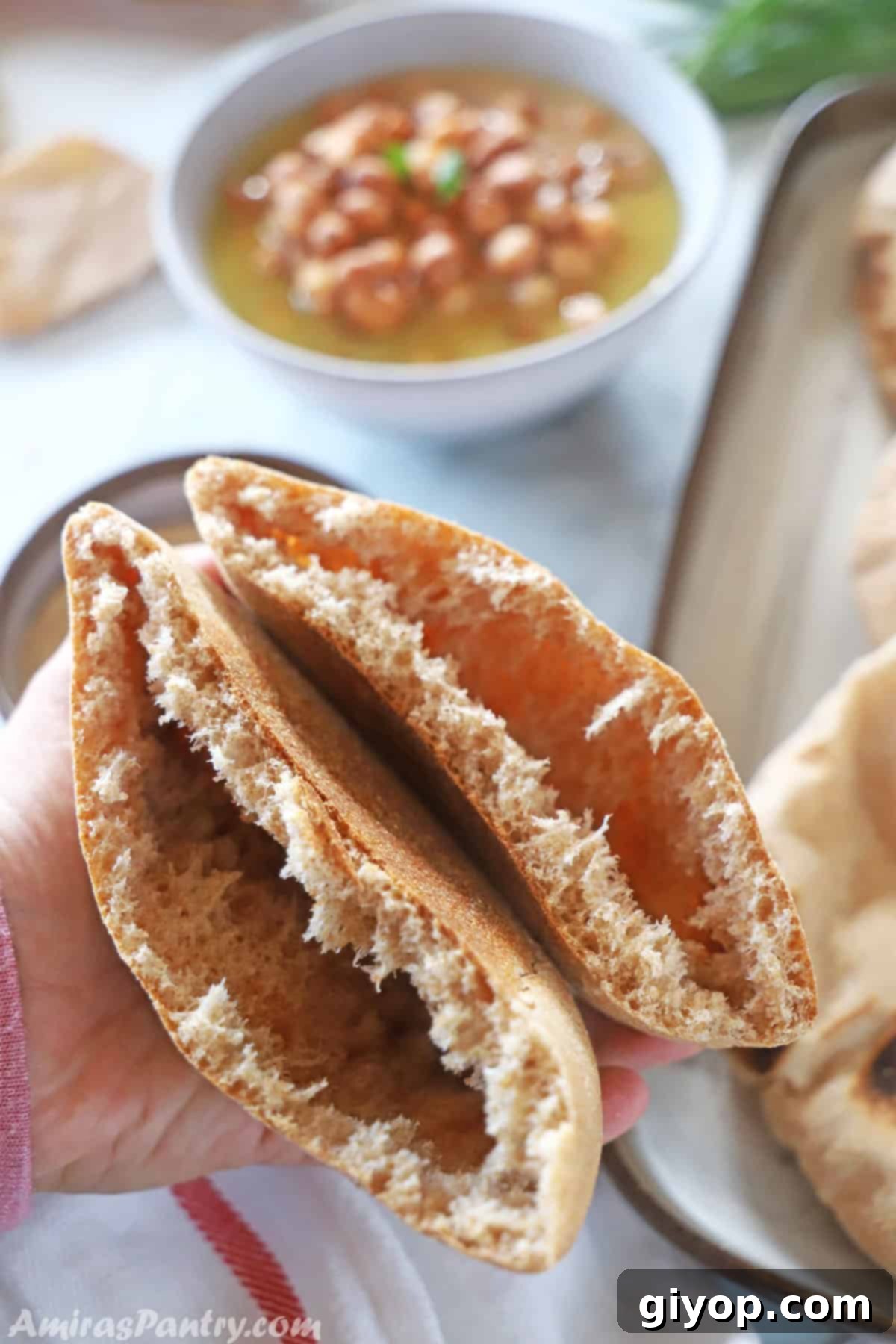
- **Watch Them Puff!** Bake for 3-4 minutes. You’ll observe the magical transformation as your pita puffs up beautifully, creating that iconic pocket. Once fully puffed and lightly golden, remove it from the oven.
- **Optional Browning:** If you prefer a slightly browner top, you can turn on the broiler for a minute or two, watching carefully to prevent burning. Be aware that this might result in a slightly harder crust.
- **Keep Them Soft:** As you remove each baked pita from the oven, immediately cover it with a clean kitchen towel. This traps the steam, keeping the pita soft and pliable until serving time. Continue this process with the remaining dough balls.
Amira’s Expert Tips for Perfect Whole Wheat Pita
Achieving consistently puffed, soft, and delicious pita bread is an art, but one that’s easily mastered with a few key insights. Here are some indispensable tips and tricks to ensure your homemade whole wheat pita turns out perfectly every time:
- **The Role of Bread Flour:** Many bakers wonder why not use 100% whole wheat flour. The answer lies in gluten development. While whole wheat flour is nutritious, its bran content can interfere with gluten formation. Whole wheat flour alone often struggles to generate a strong enough gluten network to trap the steam necessary for pocket formation. By adding a portion of bread flour, which is rich in protein, we significantly enhance the dough’s elasticity and strength. This ensures ample gluten is available to stretch and hold the steam, resulting in those desired hollow pockets.
- **Thorough Kneading is Key:** Kneading is not just about mixing ingredients; it’s about developing gluten. When you knead the dough for an extended period (8 minutes by mixer, 12-15 by hand), you are building a robust gluten structure. This strong network is what allows the pita to stretch thin without rupturing when exposed to high heat in the oven, effectively containing the steam and creating the pocket. An under-kneaded dough will be tough and less likely to puff.
- **The Importance of Extreme Oven Temperature:** Baking pita bread requires an extremely hot oven, ideally 500-550°F (260-288°C). This high temperature is critical for a phenomenon called “oven spring.” The intense heat rapidly sets the outer crust of the pita while simultaneously causing the moisture inside the dough to instantly vaporize into steam. Because the crust has set quickly, the steam becomes trapped, inflating the pita like a balloon and forming the characteristic pocket. A lower oven temperature will result in a tougher, flatter pita that may not puff properly. Ensure your baking stone or sheet is preheated along with the oven for at least 30-60 minutes to reach the optimal temperature.
- **The Clever Kitchen Towel Flip Trick:** This technique, passed down through generations of bakers, is a game-changer. When pitas are rolled and left to rest, the bottom side often becomes slightly stickier and thicker. If you place this side directly onto the hot baking surface, one side of the pita can become significantly thicker or thinner than the other, and it might not puff as evenly. By flipping the pita onto the hot stone using a paper kitchen towel, you introduce the slightly thicker, often less-developed side to the direct heat first. While one side of pita will always be marginally thinner, this trick minimizes the difference and ensures a more uniform puff and softer texture throughout. It also prevents the delicate dough from tearing when transferring, preserving its ability to create a perfect pocket.
- **Listen to Your Dough:** Dough consistency is vital. The ideal dough should be slightly sticky but still manageable. If it feels too wet, add a tiny bit more whole wheat flour (one tablespoon at a time, up to two tablespoons). If it’s too dry, a few drops of water can help. Humidity and flour types can vary, so trust your judgment and the feel of the dough.
Storing and Reheating Your Homemade Pita
One of the best things about homemade whole wheat pita is its superior freshness, but proper storage ensures you can enjoy it for days to come. Knowing how to store and reheat your pita will keep it tasting as fresh as the day it was baked.
Refrigerate
For short-term storage, place cooled leftover pita bread in an airtight bag or container on your counter for up to 3-4 days. If you need to store it for a bit longer, transferring it to the refrigerator can extend its freshness for up to a week. Make sure it’s completely cooled before storing to prevent condensation, which can make the pita soggy.
Freeze
Whole wheat pita bread freezes beautifully, allowing you to enjoy fresh-tasting pita anytime. Once the pitas have cooled down completely, stack them with a piece of parchment paper between each loaf to prevent sticking. Place the stack in a freezer-safe bag or airtight container and freeze for up to 2-3 months. Freezing is an excellent option for meal prepping or simply having a batch of homemade pita readily available.
Reheat
To reheat frozen pita, you have a few excellent options to restore its soft, pliable texture:
- **Microwave:** For a quick reheat, wrap a pita in a clean, damp kitchen towel and microwave it for 15-30 seconds, or until warmed through and soft. This method works well for one or two pitas.
- **Oven/Toaster Oven:** For multiple pitas or for a slightly crisper exterior, preheat your oven to 350°F (175°C). Wrap the pitas loosely in foil (to retain moisture) and heat for 5-10 minutes, or until warmed through. Alternatively, a toaster oven can be used for individual pitas.
- **Stovetop:** Place a pita directly on a dry, hot skillet over medium heat for 30-60 seconds per side, until soft and warm. This method can also add a pleasant slight crispness.
Perfect Pairings: What to Serve with Whole Wheat Pita
The versatility of homemade whole wheat pita bread is truly endless. Its sturdy yet soft pockets and delicious nutty flavor make it the perfect accompaniment for a wide array of dishes, particularly those from Mediterranean and Middle Eastern cuisines. Here are some perfect pairings to inspire your next meal:
- **Classic Dips:** Pita is the quintessential vehicle for dipping. Enjoy it with creamy hummus (chickpea dip), rich tahini (sesame paste dip), or smoky baba ganoush (roasted eggplant dip). The wholesome flavor of whole wheat pita beautifully complements these savory spreads.
- **Hearty Sandwiches and Wraps:** Turn your pita into a convenient and delicious pocket sandwich. It makes an excellent base for falafel (fried chickpea patties) sandwiches, loaded with fresh vegetables and tahini sauce, or roasted eggplant with garlic yogurt. For a simple lunch, fill it with grilled chicken, salad, or even deli meats and cheese.
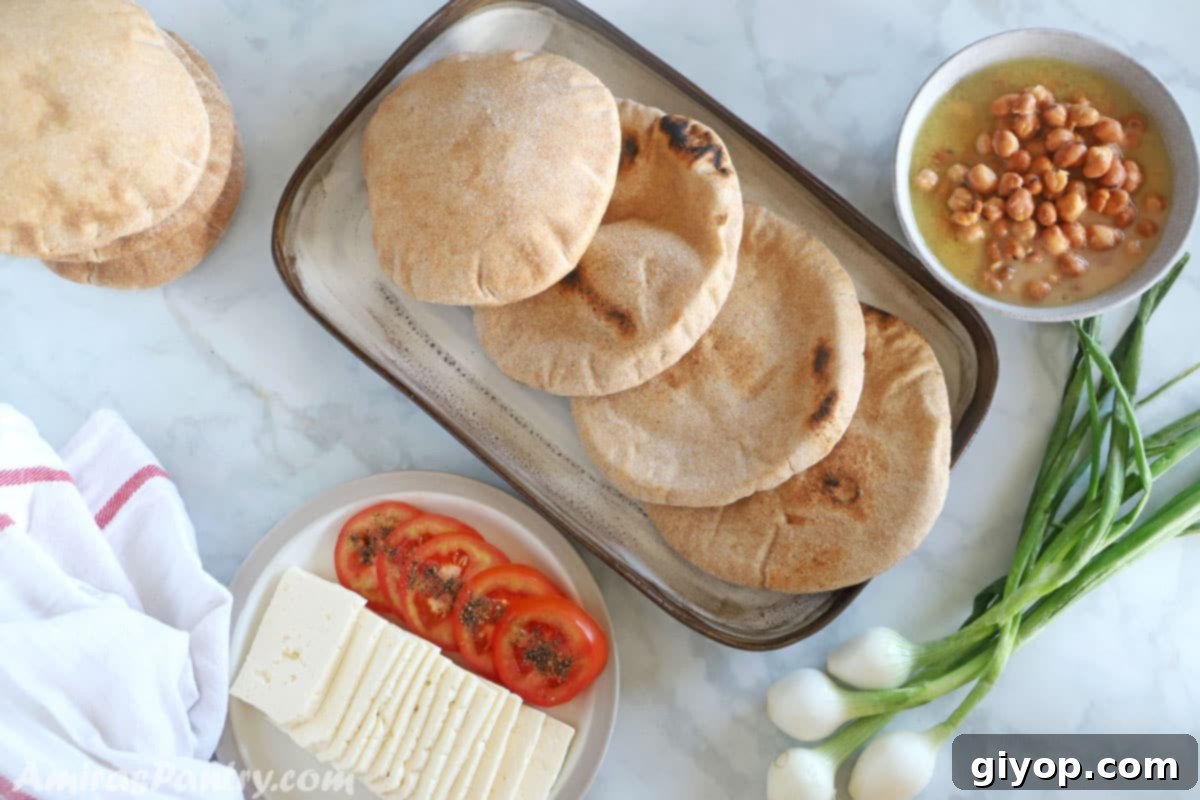
- **Traditional Breakfast Staples:** In many cultures, pita is a breakfast essential. Use it to scoop up warm and comforting ful medammes (stewed fava beans), often served with olive oil, lemon, and spices.
- **Flavorful Bowls and Salads:** Pita bread is an integral component of various layered dishes. Crumble it and use it as a base or topping for fatteh (a layered dish often with rice, yogurt, and chickpeas), vibrant chicken shawarma bowls, or refreshing fattoush salad, where toasted or fried pita pieces add a delightful crunch.
- **Pizza Base:** For a quick and easy personal pizza, spread some sauce, cheese, and your favorite toppings onto a pita and bake until bubbly.
- **Soup Accompaniment:** Tear off pieces of warm pita to dip into hearty lentil soups, stews, or chilies.
Time-Saving Tips: Make Ahead and Shortcuts
Even with busy schedules, you can enjoy the deliciousness of homemade whole wheat pita bread. Strategic planning and a few clever shortcuts can make the baking process much more manageable, allowing you to fit fresh bread into your routine.
- **Overnight Dough Rise (Cold Fermentation):** Many enthusiastic home bakers swear by preparing the dough the day before. After the initial kneading (step 4), instead of letting it rise on the counter for 1 hour, place the oiled dough ball in a lightly oiled bowl, cover it tightly with plastic wrap, and refrigerate it overnight (up to 24 hours). The cold temperature slows down the yeast activity, allowing for a longer, slower fermentation that develops a deeper flavor in the bread. The next day, simply take the dough out of the refrigerator a couple of hours before you plan to bake. Let it come to room temperature and increase slightly in size, then proceed with the dividing, shaping, and baking steps (from step 5 onward).
- **Freeze Half the Dough:** If you’re only baking for a small household or want fresh pita in smaller batches, you can easily divide the dough after the first rise. Freeze half of the dough in a well-oiled, airtight container or freezer bag. When ready to use, thaw it overnight in the refrigerator, then bring it to room temperature for 1-2 hours before proceeding with the recipe.
- **Batch Baking and Freezing Cooked Pita:** Bake a larger batch of pita when you have the time, then allow the cooked pitas to cool completely. Stack them with parchment paper in between and freeze in a freezer-safe bag. This way, you always have homemade pita ready to be reheated in minutes, offering the ultimate convenience without sacrificing quality.
- **Streamline Your Workspace:** Before you start, gather all your ingredients and tools. This mise en place approach ensures a smoother process and prevents frantic searching mid-recipe, saving you valuable time and stress.
- **Use a Stand Mixer:** While hand kneading is therapeutic, a stand mixer with a dough hook is a fantastic time-saver, doing the strenuous work for you in a fraction of the time and ensuring consistent gluten development.
More Delicious Bread Recipes to Explore
If you’ve enjoyed the journey of making whole wheat pita, you might be interested in exploring other homemade bread creations. Baking bread from scratch is a rewarding endeavor, and there’s a world of flavors and textures waiting to be discovered:
- Unleavened Flatbread: Discover the simplicity of unleavened bread, an ancient and versatile flatbread that requires no yeast or special equipment. All you need are basic ingredients like flour, water, olive oil, and salt to create this easy and delicious staple.
- Palestinian Taboon Bread: Dive into the rich culinary heritage of Palestine with Taboon bread, a famous traditional recipe typically baked in a specialized oven. Learn a clever trick to replicate this authentic, chewy, and flavorful bread right in your regular home oven.
- Poori (Indian Fried Bread): Explore the vibrant flavors of Indian cuisine with Poori, a delightful fried bread. Made with simple everyday ingredients, Poori is often enjoyed alongside savory potato curry or chana masala for a truly comforting meal.
- Homemade Hot Dog Buns: Elevate your hot dog or burger experience with this recipe for incredibly soft and fluffy hot dog buns. Crafted with simple ingredients, these freshly baked buns provide the perfect housing for your favorite fillings.
Craving Something a Little Different? Try These Bread Rolls!
Beyond flatbreads, the world of baked goods offers a plethora of delightful rolls, perfect for any meal or snack:
- Crusty Kaiser Rolls: Master the art of baking crusty yet fluffy Kaiser Rolls with this straightforward recipe. These perfectly shaped rolls make an ideal accompaniment for any meal, adding a touch of bakery-quality goodness to your table.
- Sweet Bread Rolls: Indulge in incredibly delicious and satisfying sweet bread rolls, perfect for pairing with your morning coffee or as a delightful afternoon snack. This cherished recipe, passed down from my grandma’s kitchen, is a true family favorite for a reason.
Have you embarked on the satisfying journey of making your own pita bread? We’d love to hear about your experiences! Please share your favorite tips or any clever tricks you’ve discovered in the comments below. Your insights could help fellow bakers achieve pita perfection!
If you tried and loved this recipe, please consider leaving a ⭐⭐⭐⭐⭐ rating! Your feedback is greatly appreciated.
Whole Wheat Pita Bread
Easy whole wheat pita bread with expert tips to get you the pockets you are looking for. A step by step tutorial for homemade pita bread with all your questions answered.
Rating: 4.93 from 28 votes
Print Recipe
Course: bread
Cuisine: Mediterranean, Middle East
Diet: Halal, Vegan, Vegetarian
Prep Time: 15 minutes
Cook Time: 3 minutes
Resting Time: 1 hour 30 minutes
Total Time: 1 hour 48 minutes
Servings: 4 loaves
Calories: 224 kcal
Author: Amira
Ingredients
- 1 ¼ cup (178g) whole wheat flour.
- ½ cup (64g) bread flour. (Note 1)
- 1 teaspoon sugar.
- ¼ teaspoon salt.
- 1 teaspoon instant yeast
- 1 Tablespoon olive oil
- ¾ cup warm water.
Instructions
Making the dough:
- In your mixer bowl, add the first 5 ingredients (whole wheat flour, bread flour, sugar, salt, and yeast).
- Mix well with a spoon.
- Pour in olive oil and start your mixer with a dough hook attached.
- Gradually add water and continue kneading. (Note 2)
- You should continue kneading for 8 minutes using a mixer and about 12-15 minutes if kneading by hand. (Note 3)
- Take the dough out, add a little bit of oil (1 teaspoon) to your mixer bowl. Place the dough ball back in the bowl and turn it around to cover with oil from all sides. Cover with plastic wrap and let it rise for 1 hour or until doubled in size.
Shaping and baking:
- Place a pizza stone or a sturdy baking sheet in the middle of your oven and preheat oven to 550F or as high as it can go.
- Punch the dough lightly then take it out and cut into 4 equal parts, each part roughly weighs 105g.
- Lightly flour your working surface with whole wheat flour and form each part into a ball. Cover with plastic wrap.
- Take the first ball and roll using a rolling pin into a disc that is ¼” thickness.
- Place the rolled pita on a piece of paper kitchen towel, set aside covered with plastic wrap, and let it rest for 30 minutes.
- Continue with the rest of the balls until you’ve formed 4 pitas, each placed on a piece of paper kitchen towel and covered with plastic wrap. (Note 4)
- After 30 minutes, carefully take the hot baking sheet/pizza stone from the oven and carefully flip the pita on using the kitchen towel.
- Bake for 3-4 minutes, your pitas are done when they have puffed nicely.
- If you want, you can brown the top by turning the broiler on, or leave them in the oven for another 2 minutes. Notice that this will make the pita harder.
- Take the pita out and cover with a clean kitchen towel until serving time.
Video
Notes
- Note 1: You can use all-purpose flour but it might not give you the pockets that you want in some loaves. It will still taste delicious though.
- Note 2: Gradually add water until you get a dough that is a little sticky. Dough might stick to the bottom of the mixing bowl. You will probably need anywhere from ¾ cup of water minus two tablespoons to ¾ cup of water. However, if it seems too wet add more flour by the tablespoons but not more than 2 tablespoons.
- Note 3: We need gluten to develop, so make sure to knead the dough long enough to develop the gluten we want.
- Note 4: Using a paper kitchen towel is a trick I have learned long ago. This is done so you’ll not end with one side of pita that it too thick while the other is paper-thin. Although pita always has one side thinner than the other but this trick makes the thin side not too thin. Also, it helps you not rupture the surface while transferring the loaves to the baking sheet to help develop the pocket.
- **Serving suggestion**:
- Dip in hummus, tahini, or baba ganoush. Pita bread makes a greatfalafel sandwich. You can also use it for fatteh, chicken shawarma bowls or fattoush.
Please check the nutrition disclaimer policy.
Nutrition
Calories: 224 kcal |
Carbohydrates: 40g |
Protein: 7g |
Fat: 5g |
Saturated Fat: 1g |
Polyunsaturated Fat: 1g |
Monounsaturated Fat: 3g |
Sodium: 149mg |
Potassium: 161mg |
Fiber: 5g |
Sugar: 1g |
Vitamin A: 4IU |
Vitamin C: 0.003mg |
Calcium: 17mg |
Iron: 2mg