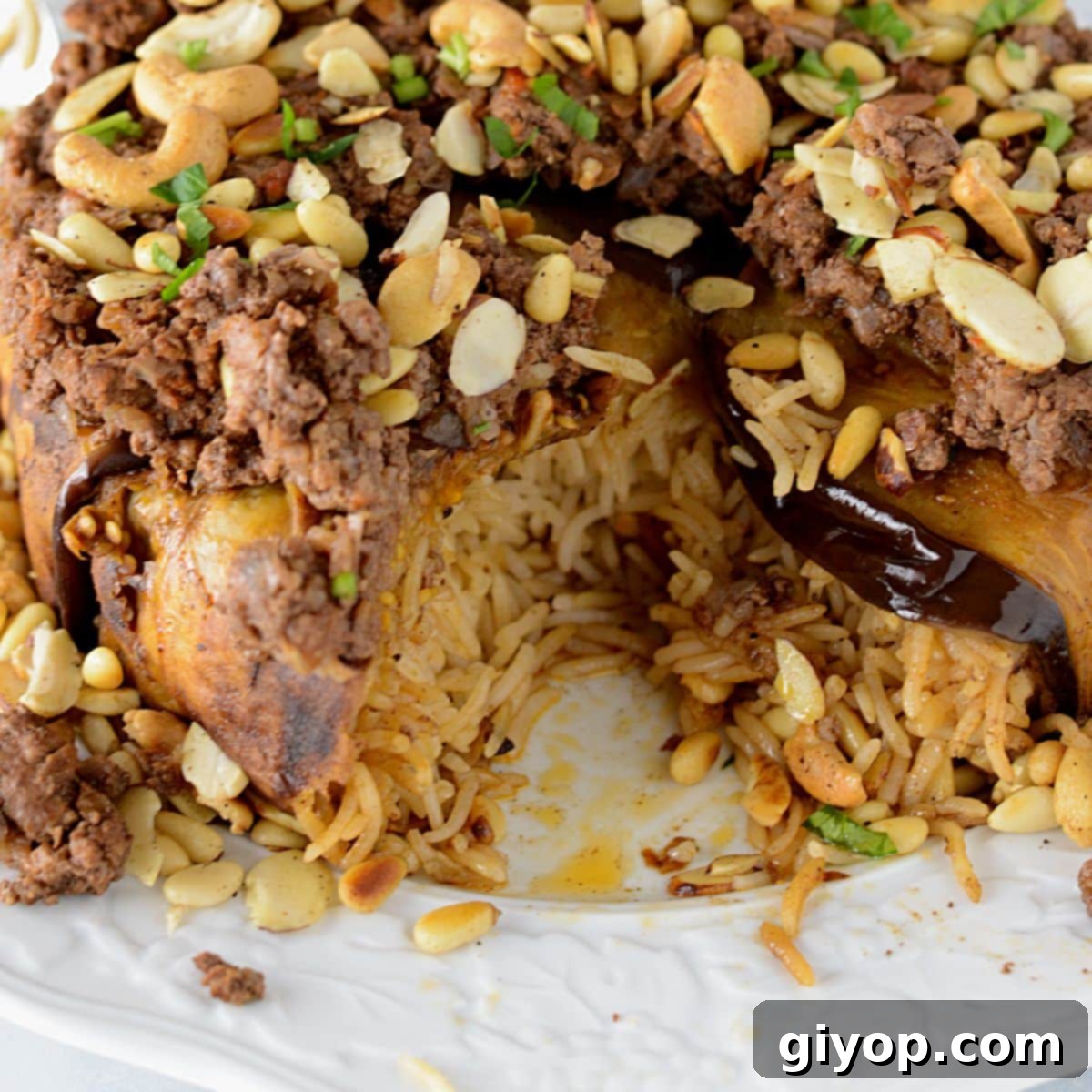
Maqluba, also known as Maqlooba, Makloubeh, or Maqlouba, is a celebrated Middle Eastern culinary masterpiece. This iconic “upside-down” rice dish captivates with its dramatic presentation and rich, aromatic flavors. It’s not just a meal; it’s a sensory experience, bringing together layers of tender vegetables, perfectly spiced rice, and succulent meat, all cooked harmoniously in a single pot. The grand finale involves an impressive flip, revealing a beautifully layered tower of comfort food that is both visually stunning and incredibly delicious, making it a staple in homes across the region for special occasions and everyday indulgence.
For those eager to explore the diverse tapestry of Middle Eastern cuisine, consider trying the Jordanian Mansaf next. This national dish offers a distinct flavor profile with its delicious lamb and rice cooked in a fermented dried yogurt sauce, providing another authentic taste of the region’s rich culinary heritage.
Traditionally, Maqluba is a heartwarming one-pot meal featuring a delightful trio of vegetables: crisp cauliflower, tender eggplants, and hearty potatoes. While these vegetables form the classic foundation, the beauty of Maqluba lies in its adaptability. Across the Middle East, countless variations exist, each family or region infusing the dish with its unique touch, yet the core method of layering and inverting remains consistent. In this particular recipe, we’ll focus on the exquisite combination of roasted eggplants and savory ground beef, offering a lighter, healthier take on the traditional preparation while ensuring a dish that’s bursting with authentic flavor. We will also delve into various other delicious variations and provide clear instructions on how to prepare them, allowing you to customize your Maqluba to perfection.
Unlocking the Secrets of a Perfect Maqluba: Why This Recipe Works
Crafting an exquisite Maqluba doesn’t have to be daunting. This recipe is designed to ensure success, offering a method that is both healthier and foolproof, guaranteeing a stunning result every time. Here’s why this approach stands out:
- Healthier Preparation with Roasted Vegetables: Unlike many traditional recipes that call for deep-frying vegetables, this version advocates for oven-roasting. By gently baking the eggplants, cauliflower, or potatoes, we drastically reduce the oil content, making the dish significantly lighter without sacrificing flavor or texture. This healthier alternative allows the natural sweetness and earthiness of the vegetables to shine through.
- Foolproof Flipping for a Beautiful Presentation: The iconic “flip” can be the most intimidating part of Maqluba. This recipe incorporates clever tips, such as lining the pot with parchment paper and strategically arranging vegetables, to ensure your Maqluba turns out beautifully structured and intact every single time. Say goodbye to scattered rice and messy countertops, and hello to a perfectly formed, impressive culinary tower.
- Perfectly Spiced Rice, Not Overpowering: Achieving the ideal balance of spices is crucial for an authentic Maqluba. This recipe guides you to a perfectly seasoned rice layer that is aromatic and flavorful without being overwhelming. The blend of traditional Middle Eastern spices complements the meat and vegetables, creating a cohesive and delightful taste experience that will transport you to the heart of the region.
My lifelong journey with Maqluba began early, fueled by my late father’s profound love for this magnificent dish. While traditional Maqluba recipes often rely on deep-frying vegetables for texture, I’ve found a way to achieve an equally delightful outcome with a healthier twist. By oven-roasting the eggplants, I create a lighter version that uses significantly less oil, yet still delivers that desired tenderness and rich flavor. The specific method I employ for layering and preparing this dish is a testament to years of perfecting, offering a truly foolproof way to create the best Maqluba recipe – one that ensures a clean, elegant flip without any mess, allowing your culinary creation to truly shine.
Essential Ingredients for an Authentic Maqluba
To embark on your Maqluba journey, gathering the right ingredients is key. Below is an overview of what you’ll need. For precise measurements and detailed instructions, please refer to the comprehensive printable recipe card located at the bottom of this page.
Ingredient Notes
Understanding the nuances of each ingredient will elevate your Maqluba from good to exceptional:
- Browned Seasoned Ground Beef: This flavorful mixture forms a crucial layer in our Maqluba. It’s prepared by browning high-quality ground beef and then infusing it with a blend of aromatic spices, creating a savory foundation. You can find detailed instructions for preparing this mixture in the recipe card below, ensuring perfect seasoning every time. For more general guidance on preparing seasoned ground beef, refer to our Seasoned Ground Beef Recipe.
- Eggplants (Oven-Baked or Fried): My preferred method for preparing eggplants in this recipe is oven baking, which yields beautifully tender slices with a fraction of the oil used in traditional frying. This approach contributes to a lighter, healthier dish while retaining all the essential flavor and texture. However, if you prefer the classic taste and crispness of fried eggplant, you are absolutely welcome to prepare them that way. Both methods will result in a delicious Maqluba.
- Rice: Basmati rice is recommended for its long grains and ability to maintain texture without becoming mushy during the extended cooking process. You may also use medium to short-grain rice, common in traditional recipes.
- Spices: A blend of Middle Eastern 7-spice mix, along with salt and black pepper, forms the aromatic backbone of the dish.
- Boiling Liquid: Use water or a rich broth (chicken, beef, or vegetable) to cook the rice and infuse it with deeper flavor.
- Tomatoes: Sliced tomatoes create a protective and flavorful base layer, preventing sticking and adding a subtle tang.
- Butter: A touch of butter added to the rice mixture enhances its richness and aroma.
- Optional Garnishes: Fresh chopped parsley and toasted nuts (like pine nuts or almonds) add a beautiful finish and textural contrast.
Step-by-Step Guide to Crafting Your Maqluba
This overview provides the essential steps for assembling your Maqluba. For complete, detailed instructions, including precise measurements and helpful tips, please consult the full recipe card at the bottom of this page.
- Prepare the Rice: Begin by washing your chosen rice thoroughly, typically two or three rinses, until the water runs clear. Drain the rice and then place it in a deep bowl, covering it with cold water. Allow it to soak for at least 30 minutes. This step helps the rice cook more evenly and prevents it from becoming overly sticky. While the rice soaks, you can prepare the other components of your Maqluba, such as frying or oven-baking your eggplant slices. Once ready to assemble, drain the soaked rice completely and transfer it to a separate bowl. Combine it with the butter and your preferred spices (7-spice mix, salt, pepper), mixing everything thoroughly to ensure the rice is evenly coated and flavored.
- Line the Pot: To ensure a successful flip and prevent sticking, carefully line the bottom and sides of a large, heavy-bottomed pot or Dutch oven with parchment paper. This parchment barrier acts as a non-stick layer, making the final inversion much smoother.
- Layer the Base: Begin building the foundation of your Maqluba by arranging a single layer of fresh tomato slices at the very bottom of the pot, directly on top of the parchment paper. These tomatoes will prevent sticking and add a subtle acidity. Next, evenly spread the seasoned, browned ground meat mixture over the tomato slices, creating a savory layer.
- Add the Eggplant and Rice: Carefully arrange the cooked eggplant slices around the sides of the pot, allowing them to overlap slightly and hang over the rim. Ensure the entire bottom layer of the pot is well covered by the eggplant slices. This creates a beautiful “wrapper” for the rice and helps hold the shape when flipped. Once the eggplant is in place, gently add the seasoned rice mixture into the center of the pot, spreading it evenly.
- Pour Liquid and Cook: Pour the boiling cooking liquid (water or broth) over the rice. The liquid should just barely cover the rice. Then, carefully fold the hanging eggplant slices over the top of the rice, essentially “closing” the dish. This technique helps to compact the layers and protect the rice. Cover the pot tightly with a lid or foil and bake the dish in a preheated 400°F (200°C) oven until the rice is fully cooked and tender, absorbing all the liquid.
- Rest and Flip: Once cooked, remove the pot from the oven and let it rest, covered, for at least 15 minutes. This crucial resting period allows the steam to redistribute, preventing the rice from becoming dry and ensuring the layers set properly. After resting, place a large serving platter upside down over the pot. With a swift, confident motion, carefully flip the pot and platter together. Gently lift the pot, and behold your magnificent, perfectly shaped Maqluba. Remove the parchment paper and any top tomato slices (they are edible but often discarded for presentation). Garnish with fresh chopped parsley and roasted nuts, then serve immediately with your favorite accompaniments.
Expert Tips for a Flawless Maqluba
Achieving the perfect Maqluba requires a few key insights. These tips will help you navigate the cooking process, ensuring your dish is both delicious and visually stunning:
- Choose the Right Pot: Opt for a non-stick pot with a wide mouth for even cooking. Avoid using overly tall pots, as they can hinder proper steam circulation to the upper layers of rice, leading to uneven cooking. If a tall pot is your only option, ensure you do not fill it to the very top, leaving enough space for the steam to penetrate and cook the top rice layer thoroughly.
- Secure the Parchment Paper: Before placing the parchment paper, lightly brush the bottom and sides of your pot or baking dish with a thin layer of oil. This simple trick creates a mild adhesive, helping the parchment paper stay firmly in place as you meticulously arrange your layers of vegetables, meat, and rice.
- The Art of the Flip – Ensuring No Sticking: The moment of truth in any Maqluba preparation is the flip. To eliminate any fear of the dish sticking to the bottom, I highly recommend lining the cooking vessel with parchment paper. This extra precaution acts as a foolproof barrier, ensuring that your beautifully layered Maqluba effortlessly releases from the pot, maintaining its impressive structure for a picture-perfect presentation.
- Creative Eggplant Arrangement: While many traditional recipes place eggplant slices directly on the bottom of the pot, this recipe suggests a more advanced technique: wrapping the eggplant slices around the rice. By carefully arranging them to overlap and hang over the sides of the pot before adding the rice, and then folding them back over, you create a protective “cage” for the rice. This not only adds to a stunning presentation when inverted but also crucially prevents the rice from scattering everywhere during the flip, ensuring a neat, compact cylinder.
- Stovetop Cooking Option: Don’t have an oven or prefer stovetop cooking? Maqluba can be prepared just as wonderfully on the stove. Simply follow all the layering instructions, including the parchment paper (don’t worry, it won’t burn!), then place your pot over medium-high heat until the liquid comes to a boil. Once boiling, reduce the heat to low, cover the pot tightly, and continue to simmer until the rice is fully cooked and has absorbed all the liquid. The cooking time will be similar to oven baking, but you’ll need to monitor the heat more closely.
- Rice to Liquid Ratio: Pay close attention to the rice-to-liquid ratio. Too much liquid will result in mushy rice, while too little will leave it undercooked. Basmati rice typically requires 1 ¼ to 1 ½ cups of liquid for every cup of rice, but always check your specific rice package for recommendations.
Planning Ahead: Make-Ahead and Storage Solutions
Maqluba, while a labor of love, can be made more convenient with some clever planning and proper storage. Prepare components in advance to streamline your cooking process, and save leftovers to enjoy this delightful meal again.
- Make Ahead: To simplify your cooking day, you can prepare the individual components of Maqluba in advance. This includes browning and seasoning the ground beef, and cooking the vegetables (either by roasting or frying the eggplant, cauliflower, and potatoes). Store these prepared ingredients separately in airtight containers in your refrigerator for up to two days before you plan to assemble and cook the complete dish. This pre-preparation significantly cuts down on active cooking time, allowing for a quicker and more relaxed meal assembly.
Storage:
- Refrigerate: Any leftover Maqluba should be transferred to an airtight container and stored in the refrigerator. It will maintain its delicious flavor and texture for up to 2-3 days, making for excellent next-day meals.
- Freeze: For longer storage, allow the cooked Maqluba to cool completely. Then, place individual portions or the entire dish (if it fits) into freezer-safe containers. Properly frozen Maqluba can be stored for up to 3 months, ensuring you always have a comforting meal on hand.
- Reheat: To reheat refrigerated Maqluba, you can gently warm it on the stovetop. Add a small splash of water or broth to prevent drying and cover the pot, heating until warmed through. Individual portions can also be conveniently reheated in the microwave; simply cover the dish and heat in short intervals until thoroughly warm.
Serving Suggestions and Perfect Pairings for Maqluba
Maqluba is a hearty and complete meal on its own, but its flavors are beautifully enhanced when served with complementary side dishes. These pairings add freshness, contrast, and balance to the rich, aromatic main course:
- Yogurt-Based Sauces: The creamy tang of a yogurt sauce provides a wonderful contrast to the savory richness of Maqluba. Consider serving it with a refreshing Greek yogurt dill sauce (Tzatziki), which adds a cooling element with hints of garlic and cucumber. Alternatively, a simple plain yogurt or labneh can also cut through the richness beautifully.
- Fresh Green Salads: A vibrant, crisp green salad offers a delightful textural and flavor counterpoint. Traditional Middle Eastern salads like Tabbouleh, with its fresh parsley, mint, bulgur, and lemon dressing, or Fattoush, featuring mixed greens, vegetables, crispy pita, and a sumac-lemon dressing, are excellent choices. Their bright, zesty notes cleanse the palate and complement the spices in Maqluba.
- Refreshing Beverages: To conclude such a satisfying meal, a cool, invigorating drink is ideal. Try sips of this refreshing Mojito Mocktail, which offers a burst of mint and lime that perfectly rounds off the meal, leaving a fresh taste.
- Pickles (Muhammar): Middle Eastern pickled vegetables, often referred to as Muhammar, add a sharp, briny kick that can awaken the palate and provide an exciting contrast to the Maqluba.
Troubleshooting Common Maqluba Challenges
Even seasoned cooks can encounter small hiccups when preparing Maqluba. Don’t worry, these common issues are easily fixed:
- Under-cooked Top Rice Layer: If, upon checking, the top layer of your rice appears undercooked or slightly firm, there’s an easy fix. Splash approximately ¼ cup of hot water or broth evenly over the surface of the rice. Cover the pot tightly again and return it to the oven for an additional 10-15 minutes. The added moisture and steam will help the remaining rice grains cook through to perfection.
- Bland Flavor: If you taste your Maqluba and find the rice lacks the expected depth of flavor, it’s not too late to enhance it. In a small bowl, dissolve a little more salt, black pepper, and a dash more of your 7-spice mix in about ¼ cup of hot water. Gently pour this seasoned liquid over the rice in the pot. Cover tightly and continue to bake for another 5-10 minutes, allowing the rice to absorb the additional seasoning. This method helps to infuse more flavor without over-wetting the dish.
- Mushy Rice: If your rice turns out mushy, it’s often due to too much liquid or overcooking. Next time, slightly reduce the liquid, or adjust cooking time. If it’s already mushy, gently fluff it with a fork after resting to improve texture.
Exploring Delightful Maqluba Variations
One of the most appealing aspects of Maqluba is its incredible versatility. While the core “upside-down” concept remains, you can easily customize the protein, rice, and vegetables to suit your preferences or what you have on hand, creating a truly personalized culinary experience.
- Meat Options: Maqluba can be prepared with almost any type of meat, including lamb, beef, or chicken. This recipe specifically utilizes ground beef for its ease and quick preparation. However, feel free to substitute with your preferred cut. When using whole pieces of meat, it’s crucial to pre-cook them until tender, typically by boiling them in a flavorful liquid. I often use my Instant Pot for this step as it significantly reduces cooking time, but stovetop directions are equally effective:
- Beef Stew Meat: To prepare beef stew pieces, brown the meat in a couple of tablespoons of oil until nicely seared. Then, add aromatic ingredients such as a small quartered onion, a few green cardamom pods, a cinnamon stick, a pinch of ground black pepper, and two bay leaves. Cover the meat with water or broth, bring it to a boil, then reduce the heat and simmer until the beef is fork-tender. This usually takes about 1.5 hours on the stovetop or approximately 40 minutes in an Instant Pot.
- Lamb Pieces: For lamb Maqluba, shoulder or leg cuts are generally recommended for their flavor and tenderness, but any cut you enjoy will work. You can follow a similar cooking method as detailed in our Okra Stew recipe, ensuring the lamb is perfectly cooked before layering.
- Chicken: Bone-in, skin-on chicken pieces are commonly used for Maqluba, providing rich flavor and moisture. However, feel free to use boneless cuts if you prefer. Boil the chicken following the method used in our Musakhan recipe, ensuring it’s tender and easily separates from the bone.
- Rice Selection: While short-grain rice is traditionally used, I personally favor Basmati rice for its superior ability to withstand longer cooking times without becoming mushy. Its distinct fragrance and separate grains contribute to a more elegant texture. However, feel free to use short or medium-grain rice if that’s your preference or what you have available.
- Additional Aromatics: For an extra layer of flavor and aroma, consider adding a sliced onion and bell pepper after arranging the tomato slices at the bottom of the pot. The bell pepper, in particular, will infuse the entire dish with a heavenly fragrance and enrich its taste profile.
- Vegetable Combinations: The traditional vegetables for Maqluba are eggplant, cauliflower, and potato. You can use any one of these, a combination of two, or all three. The beauty is you can also incorporate other vegetables you enjoy, such as carrots, zucchini, or bell peppers.
- Preparing Potatoes or Cauliflower: If using potatoes or cauliflower, toss them with a little olive oil, salt, and pepper before roasting them in the oven or air fryer until tender and lightly browned. This step enhances their flavor and texture before they are layered into the dish.
- Layering Multiple Vegetables: When incorporating all three traditional vegetables, here is a suggested layering sequence after the tomatoes and ground beef: start with a layer of sliced potatoes, followed by eggplant, then cauliflower, and finally the seasoned rice. This order is practical because cauliflower florets are smaller and can easily fall through if placed at the very bottom without a more solid layer beneath them to hold them in place.
- Vegan Maqluba: For a delightful vegan version, simply substitute olive oil for butter and omit the ground beef entirely. You can introduce any plant-based protein of your choice, such as lentils, chickpeas, or spiced tofu, to add substance and flavor, creating a hearty and satisfying meat-free meal.
Frequently Asked Questions About Maqluba
Traditionally, Maqluba is often prepared with Egyptian rice, which is a medium to short-grain variety known for its starchiness. However, modern adaptations frequently use Basmati or other long-grain rice varieties due to their wider availability and ability to remain separate and fluffy, even after prolonged cooking. Basmati rice is an excellent choice for a Maqluba that maintains a lighter texture.
The primary vegetables featured in Maqluba are eggplant and cauliflower, or sometimes potatoes. These are usually fried or roasted until tender. Beyond these staples, you can also incorporate bell peppers, chili peppers for a kick, onions for added sweetness, or diced tomatoes for moisture and flavor. The choice of vegetables often depends on regional preferences and personal taste.
Maqluba is incredibly versatile when it comes to meat choices. While ground beef is used in this recipe for its simplicity and quick preparation, you can absolutely use chicken (whole pieces or shredded), beef cubes, lamb pieces (shoulder or leg are popular), or even ground turkey. The key is to pre-cook any whole meat pieces until tender before layering them into the pot to ensure they are fully cooked and infused with flavor.
Recommended Equipment for Maqluba Preparation
Having the right tools can make your Maqluba preparation smoother and more enjoyable. Here’s what I recommend for this recipe:
For this recipe, I’ve specifically used Aahu Barah Basmati rice. It was a friend’s recommendation, and I found it readily available at my local Middle Eastern grocery store. Its quality significantly contributes to the final texture and aroma of the dish.
- Large Non-Stick Pot or Dutch Oven: Essential for layering and cooking, and crucial for an easy flip. A wide-mouthed pot is preferred for even cooking.
- Parchment Paper: A must-have for lining the pot, ensuring a clean release when flipping the Maqluba.
- Large Serving Platter: You’ll need a platter large enough to cover the mouth of your cooking pot for the dramatic upside-down reveal.
- Sharp Knife and Cutting Board: For preparing vegetables and meat.
- Large Bowl: For mixing the rice with butter and spices.
- Skillet: For browning the ground beef.
- Measuring Cups and Spoons: For accurate ingredient proportions.
- Spatula or Spoon: For layering ingredients.
Explore More Middle Eastern Culinary Delights: Related Recipes
If you’ve enjoyed the rich flavors and unique preparation of Maqluba, you’ll love diving into other staple dishes from the Middle East. Each recipe offers a glimpse into the region’s diverse and aromatic culinary traditions:
- Discover this Saudi Chicken Kabsa, a fragrant one-pot chicken and rice dish that is impeccably spiced, offering a comforting and flavorful meal.
- Journey to Yemen with Mandi, another traditional chicken and rice dish celebrated for its smoky flavor and tender meat, often cooked in a tandoor-like oven.
- Experience the national dish of Jordan, Mansaf, a grand platter of tender lamb, aromatic rice pilaf, and a distinctive fermented dried yogurt sauce, Jameed.
- Elevate your dinner table with this elegant Mediterranean Rice Pilaf. This side dish is bursting with vibrant flavors and a touch of sweetness, sure to impress any guest.
- For the ultimate comfort food on a cozy night in, try this Moussaka recipe. It features layers of rich, meaty sauce, tender eggplant, and a creamy, custardy béchamel topping – a truly irresistible combination!
- Fattah is a traditional and celebratory dish found throughout the Middle East, and this Egyptian version is a personal favorite, often prepared for special occasions.
- Master the art of Baba Ganoush, an authentic recipe for a creamy roasted eggplant dip. Learn how to achieve that signature smoky flavor and velvety texture, rivaling your favorite restaurant’s rendition.
Discover More Rice Recipes
Rice is a cornerstone of Middle Eastern cuisine, and its versatility shines in a multitude of dishes beyond Maqluba. Explore these additional rice-based recipes that are perfect for any occasion:
- Whip up Hashweh, a delightful Middle Eastern ground beef stuffing infused with aromatic spices. This easy 20-minute recipe makes for a perfect weeknight meal or a flavorful side dish.
- Try my simplified take on Lebanese Vermicelli Rice, a fuss-free version that cuts the usual preparation time in half without compromising on its classic, buttery taste.
- Indulge in a dish you can make entirely in one pot: this Creamy Baked Chicken and Rice. Rich, lightly seasoned, and featuring incredibly tender chicken, you’ll be tempted to lick the pot clean!
- This Chicken and Yellow Rice with Peas recipe is not only simple to prepare but also tastes fantastic. It’s an ideal choice for both intimate family dinners and larger gatherings.
If you love this recipe, please leave a ⭐⭐⭐⭐⭐ rating! Thank you.
Maqluba
Print
Pin
Rate
SaveSaved!
Ingredients
- 1 cup (198g) Basmati rice , uncooked rice
- 1 Tablespoon butter
- 1 teaspoon 7 spices
- ½ teaspoon salt.
- ½ teaspoon black pepper.
- 1 ¼ cup boiling water or broth
For the ground beef mixture:
- ½ pound ground beef. (230g)
- 1 small onion. chopped
- ½ teaspoon all spice.
- 1 teaspoon tomato paste.
- ¼ teaspoon black pepper.
- Salt to taste.
- 1 (450g) medium firm eggplant cut into ½ inch slices lengthwise and fried or baked in the oven.
- 1 medium tomato, sliced.
- Optional: Chopped parsley roasted nuts for garnishing.
Instructions
- Wash rice twice or 3 times, drain then place in a deep bowl, cover with cold water and soak for 30 minutes.
- Meanwhile fry or oven bake the eggplants.
Brown the ground meat:
- In a skillet over medium heat, sauté onions in oil then add ground beef and spices, mix well. Add the tomato paste and mix everything well, cook until browned all around. Set aside.
- Preheat oven to 400F (200°C).
- Line an oven safe dish with parchment paper.
- Arrange tomato slice at the bottom of the pan.
- Top that with a layer of the browned ground beef.
- Arrange eggplant slices over the ground beef, skin side out, allowing them to hang over the sides of the pot.
- Drain rice then add it to a large bowl, with butter and spices. Mix them well.
- Add the seasoned rice into the center, then pour boiling water or broth over.
- Fold the hanging eggplant slices over the rice to close.
- Cover the pot tightly and cook in the oven for 40 minutes.
- Take the dish out, gently fluff the rice on top with a fork and taste to make sure it is completely cooked through.
- If you feel it needs more water or broth, add a quarter cup, cover then return to oven for another 10-15 minutes.
- Let it cool down for 10-15 minutes before carefully flipping it over onto a large serving plate.
- Remove the parchment paper and any top tomato slices (you can eat them or discard).
- Garnish the top generously with chopped fresh parsley and roasted nuts.
- Serve immediately with Tzatziki or a plain yogurt sauce.
Video
Notes
- Use a non-stick pot with a wide mouth; it is better not to use tall pots for even cooking. If tall pots are all you have, do not fill it to the top so the top layer of rice can get enough steam to cook.
- Brush the bottom and sides of the dish/pot with oil before adding parchment paper; this helps keep them in place while you are filling your pot.
- For more notes and variations, check out the post above.
- Please check nutrition disclaimer policy here.
“This recipe has been featured in Twinkl, as part of their Ramadan recipes from around the world campaign.”
Nutrition
First published August 5, 2015. Last updated December 20, 2021 with important tips, clear step-by-step instructions, and improved readability.
My Personal Maqluba Journey and Experience
Growing up, my life was enriched by a vibrant tapestry of friendships from Palestine, Jordan, and Lebanon. My late father worked in KSA (Kingdom of Saudi Arabia) for many years, and our summer breaks there were filled with joyous weekly gatherings, always accompanied by an abundance of incredible food. It was in this setting, at an early age, that I was first introduced to the wonders of Maqluba. I instantly fell in love with its rich flavors and unique presentation, especially when prepared with succulent chicken or savory ground beef.
My late father was a truly devoted admirer of this beautiful dish, and his enthusiasm inspired me to master it. Over the years, through countless attempts and refinements, I’ve finally perfected the recipe. My goal was not just to capture the authentic taste, but also to develop a method that made the challenging “flip” easier and more reliable, ensuring a consistently beautiful and impressive dish. It’s a culmination of cherished memories, culinary exploration, and a desire to share this exquisite Middle Eastern comfort food with others.