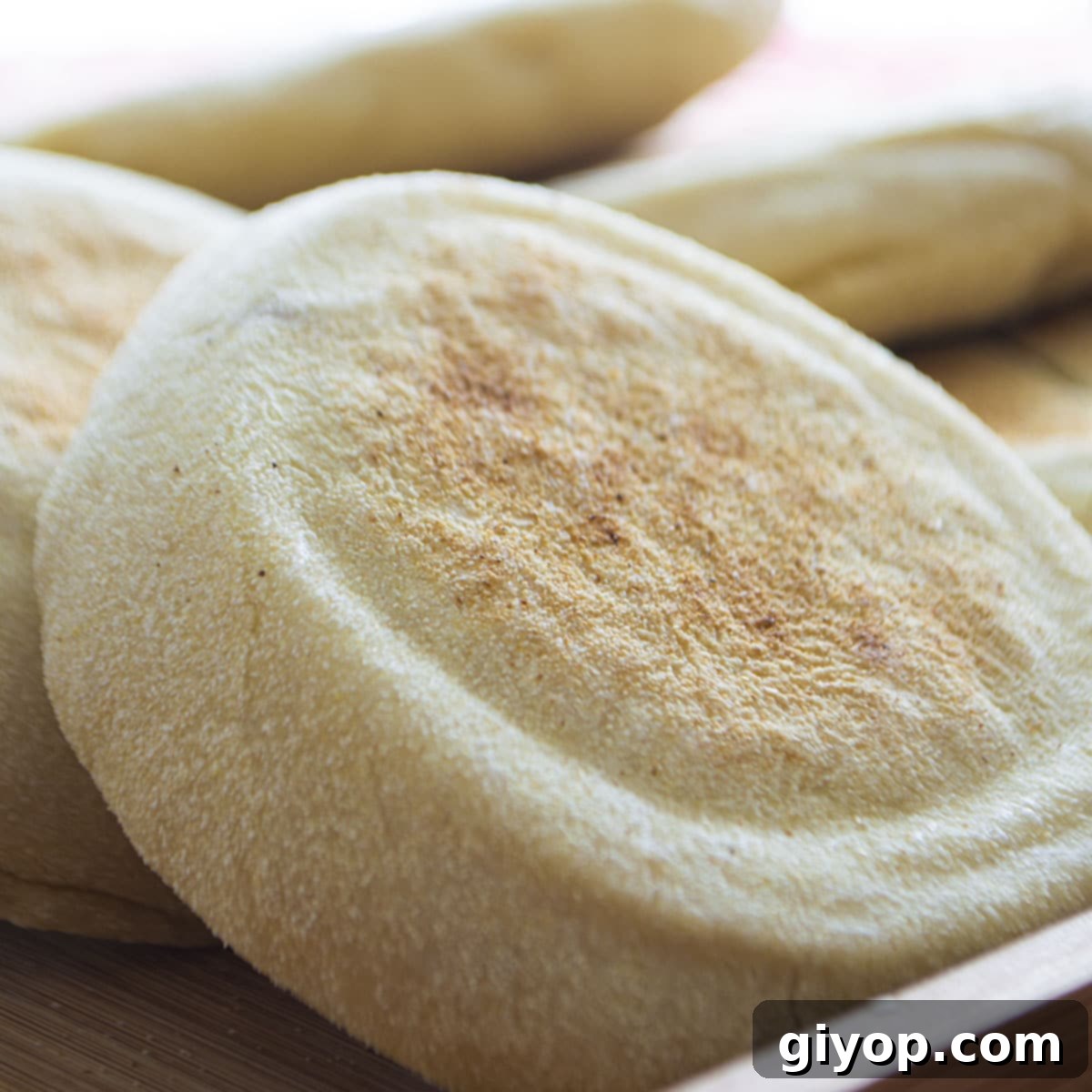
Delve into the heart of Moroccan culinary tradition with Batbout, a truly extraordinary flatbread that captivates with its unique texture and incredible versatility. Often referred to as Mekhmar in some regions, this beloved bread holds a special place in Moroccan households, gracing breakfast tables, lunch spreads, and dinner accompaniments alike. Its name, Batbout, carries a delightful and somewhat whimsical origin; in Arabic, “Battah” means duck, leading to playful speculations about whether this bread might make one resemble a “couch potato” (a common cultural idiom associated with ducks in some contexts). While the etymology remains a charming mystery, what is undeniable is the sheer deliciousness and widespread appeal of this Moroccan staple. This article will guide you through the art of making Batbout, exploring both its simple, classic form and its rich, stuffed variations, ensuring a delightful journey into the flavors of North Africa.
The beauty of Batbout lies in its dual identity. At its simplest, it is a single layer of fluffy, airy dough, known as plain Batbout. This version is perfect for serving alongside various dips, spreads, or as a complement to main dishes. However, its true potential often shines through in its stuffed counterpart, Batbout Moamer (also called Mekhmar Moamer). This delectable variation features a savory filling nestled between two layers of dough, creating a warm, satisfying sandwich-like experience. The stuffing possibilities are endless, making Batbout Moamer a canvas for culinary creativity.
What sets Batbout apart is its remarkably soft, light, and chewy interior. Unlike traditional oven-baked breads, Batbout is cooked on a stovetop, typically on a flat pan or griddle, which contributes to its distinctive texture and slightly crisp exterior. Working with Batbout dough is an experience in itself; it’s designed to be wonderfully sticky, a characteristic that might initially seem challenging but ultimately yields a bread that is incredibly moist and tender. Many home bakers, especially those with little helpers in the kitchen, find the process enjoyable and rewarding, as the dough’s forgiving nature allows for easy manipulation and excellent results.
The secret to Batbout’s unique character lies in its preparation: a sticky all-purpose flour dough is gently flattened in a generous bed of fine semolina. This not only prevents sticking but also imparts a subtle grainy texture and flavor that complements the soft interior. While traditionally stuffed with seasoned ground meat, Batbout is incredibly adaptable to a myriad of fillings. Leftover chicken, mixed vegetables, or even a medley of beans and chilies for a Moroccan-Mexican fusion can transform this bread into a delightful meal. The versatility doesn’t stop at savory fillings; plain Batbout is a fantastic vehicle for sweet accompaniments like honey, butter, jam, or various cheeses. Imagine a warm piece of Batbout, fresh off the griddle, spread with your favorite topping – truly a comforting treat. Don’t hesitate to let your imagination soar; Batbout is a forgiving bread that will turn out fantastic with almost any combination you can dream up.
Beyond its culinary appeal, Batbout represents warmth and hospitality in Moroccan culture. It’s often prepared for family gatherings, shared during special occasions, and enjoyed as a daily staple. Learning to make Batbout is more than just following a recipe; it’s an embrace of a rich culinary heritage, a connection to generations of bakers who have perfected this simple yet profound bread. Whether you’re a seasoned baker or a curious beginner, the journey of creating Batbout promises to be a rewarding one, filling your home with the enticing aroma of freshly baked bread and your palate with its unforgettable taste.
Related Recipes
- Unleavened bread is an excellent choice for those looking for a quick and simple bread recipe. It requires no special ingredients or equipment, just flour, water, olive oil, and salt, making it accessible and fast.
- For another delightful Moroccan treat, explore the world of Msemen, a flaky, square-shaped pancake that’s often enjoyed with honey or cheese, similar in versatility to Batbout but with a distinctly different layered texture.
- If you enjoy the idea of flatbreads, consider trying a traditional Pita bread recipe. While Batbout offers a unique chewiness, pita provides that classic pocket for all your favorite fillings, expanding your flatbread repertoire.
Moroccan Batbout (Stove-Top Flatbread)
Print
Pin
Rate
Save
Saved!
Prevent your screen from going dark
Breakfast, Brunch, Snack, Side Dish
Moroccan, North African
Halal, Vegetarian (if plain or with vegetable filling)
15 minutes
35 minutes
1 hour
30 minutes
50 minutes
5
stuffed batbout (or 10 plain)
474
kcal
Amira
Ingredients
For the Dough:
- 2 cups all-purpose flour
- ½ cup whole wheat flour
- ½ cup fine semolina plus extra for dusting work surface
- 1 Tablespoon active dry yeast
- 2 teaspoons sugar
- ½ teaspoon salt
- 1 Tablespoon olive oil
- 1 ½ cups warm water (approx. 105-115°F / 40-46°C, adjust as needed)
Optional: For the Filling (Batbout Moamer)
- 1 Tablespoon olive oil
- 1 small onion finely chopped
- ½ cup diced bell pepper (any color)
- ½ pound lean ground beef
- ¼ cup fresh parsley chopped
- Salt and freshly ground black pepper to taste
- ½ teaspoon ground cumin (optional, for added Moroccan flavor)
- ¼ teaspoon turmeric (optional, for color and subtle flavor)
Instructions
Preparing the Dough:
- In a large mixing bowl, or the bowl of your stand mixer equipped with a dough hook, combine the all-purpose flour, whole wheat flour, semolina, dry yeast, sugar, and salt. Whisk these dry ingredients thoroughly to ensure an even distribution.
- With the mixer running on low speed (or by hand), pour in the olive oil. Gradually add the warm water, starting with one cup. Continue to add more water, a little at a time, until a very soft, consistent, and sticky dough forms. The stickiness is crucial for the final soft texture of the Batbout.
- Transfer the sticky dough onto a lightly oiled, clean counter. Knead the dough by hand for 2-3 minutes. Resist the urge to add more flour, as this will toughen the bread. The stickiness is a desirable quality for Batbout. If it’s too difficult to handle, lightly oil your hands.
- Lightly grease a clean bowl with a touch of olive oil. Place the dough into the bowl, turning it several times to coat it completely with oil. This prevents it from drying out during rising.
- Cover the bowl tightly with plastic wrap or a damp kitchen towel. Let the dough rise in a warm place for about 1 to 1.5 hours, or until it has noticeably doubled in size. This proofing stage is vital for a light and airy bread.
Meanwhile, Prepare the Filling (if making Batbout Moamer):
- In a large skillet, heat 1 tablespoon of olive oil over medium heat. Add the chopped onion and sauté for about 3 minutes, or until the onion becomes translucent and softened, releasing its sweet aroma.
- Add the ground beef (or other protein like chicken) to the skillet. Use a spoon to break it apart, cooking and browning the meat thoroughly on all sides. Drain any excess fat if necessary.
- Stir in the diced bell pepper, fresh parsley, salt, pepper, cumin, and turmeric (if using). Cook for another 5-7 minutes, allowing the flavors to meld and the bell pepper to soften slightly. Remove from heat and let cool completely before stuffing.
Shaping the Batbout:
- Once the dough has doubled in size, gently deflate it and turn it out onto a lightly semolina-dusted surface. Divide the dough into 10 equal portions, forming each into a smooth ball. For plain Batbout, these will be the finished bread. For stuffed Batbout, you will need two balls per stuffed bread.
- Lightly dust each dough ball with more semolina and place them on a semolina-dusted surface or baking sheet. Cover them with a clean kitchen towel and let them rest for an additional 10-15 minutes. This relaxation period makes the dough easier to roll.
- Sprinkle your clean working surface generously with semolina. Take one dough ball and flatten it into a disc, approximately ⅛ inch (about 3 mm) thick, using your hands or a rolling pin. The semolina prevents sticking and adds texture.
- Carefully transfer the rolled disc to a baking sheet lined with parchment paper or dusted with semolina. Cover it and continue rolling the remaining dough balls.
- If you are preparing plain Batbout, let these flattened discs rise again for approximately 30 minutes in a warm spot, still covered.
If you are Filling the Batbout (Batbout Moamer):
- Place about 2-3 tablespoons of the cooled filling mixture in the center of one rolled dough disc. Ensure the filling is not too wet, as this can make sealing difficult.
- Lightly moisten the edges of the dough around the filling with water. This will help the two dough layers adhere properly.
- Carefully place another rolled dough disc directly over the first one, creating a ‘sandwich’ with the filling in between. Gently press down around the filling to remove any air pockets.
- Using a round cookie cutter or the rim of a bowl, cut the sandwiched dough into a neat circle, removing any excess dough. This creates perfectly shaped stuffed Batbout.
- Firmly press the edges of the newly cut circle together with your fingers to ensure a tight seal, preventing the filling from escaping during cooking.
- Optionally, poke the top of the stuffed Batbout a few times with a fork. This helps steam escape and prevents excessive puffing. Place the stuffed Batbout on a clean, semolina-dusted surface, cover, and let it rise for another 30 minutes.
Cooking the Batbout:
- Heat a non-stick skillet or griddle over medium heat. Do not add any oil to the pan. Once hot, carefully place the first Batbout onto the dry skillet. Cook for 3-4 minutes on one side, or until golden brown spots appear and the bread starts to puff up slightly.
- Flip the Batbout over using a spatula and cook on the other side for another 3-4 minutes, until it’s also golden brown and cooked through. If making stuffed Batbout, ensure the filling is heated thoroughly. Repeat with the remaining Batbout, adjusting heat as needed to prevent burning.
- Serve your delicious Batbout warm, either plain or stuffed. Enjoy the soft, chewy texture and the rich flavors!
Notes
- Filling Variations: Feel free to experiment with the filling. I’ve successfully used leftover shredded chicken mixed with finely diced pickled green olives for a different flavor profile. Other excellent options include sautéed spinach and feta, spiced lentils, or a mixture of roasted vegetables for a vegetarian version.
- Serving Suggestions: Plain Batbout is fantastic with a variety of spreads. Consider serving it with honey, homemade jam, cream cheese, hummus, olive tapenade, or a simple drizzle of good olive oil and a sprinkle of za’atar. Stuffed Batbout is a meal in itself but can be paired with a fresh Moroccan salad or a light soup.
- Achieving the Perfect Puff: The key to Batbout puffing up (especially the plain version) is a well-risen dough and a hot, dry skillet. Don’t overcrowd the pan, and allow each side to cook until golden before flipping.
- Storage: Store any leftover Batbout in an airtight container or zip-top bag at room temperature for up to 2 days, or refrigerate for up to 3 days. For longer storage, Batbout freezes beautifully.
- Freezing Instructions: To freeze, allow cooked Batbout to cool completely. Wrap individual pieces tightly in plastic wrap, then place them in a freezer-safe bag or container. Freeze for up to 2 months. Reheat from frozen in a dry skillet over medium-low heat until warmed through and soft, or in a toaster oven.
- Nutrition Disclaimer: The nutritional information provided is an estimate calculated for the stuffed Batbout recipe as written. Please note that actual values may vary based on specific ingredients, preparation methods, and portion sizes. Always refer to the nutrition disclaimer policy for more details.
Nutrition Information (Estimated per Stuffed Batbout)
|
Carbohydrates: 65g
|
Protein: 18g
|
Fat: 16g
|
Saturated Fat: 4g
|
Polyunsaturated Fat: 1g
|
Monounsaturated Fat: 8g
|
Trans Fat: 1g
|
Cholesterol: 32mg
|
Sodium: 272mg
|
Potassium: 341mg
|
Fiber: 4g
|
Sugar: 3g
|
Vitamin A: 731IU
|
Vitamin C: 25mg
|
Calcium: 36mg
|
Iron: 5mg
Tried this Recipe? Pin it for Later!
Mention @AmirasPantry or tag #AmirasPantry!