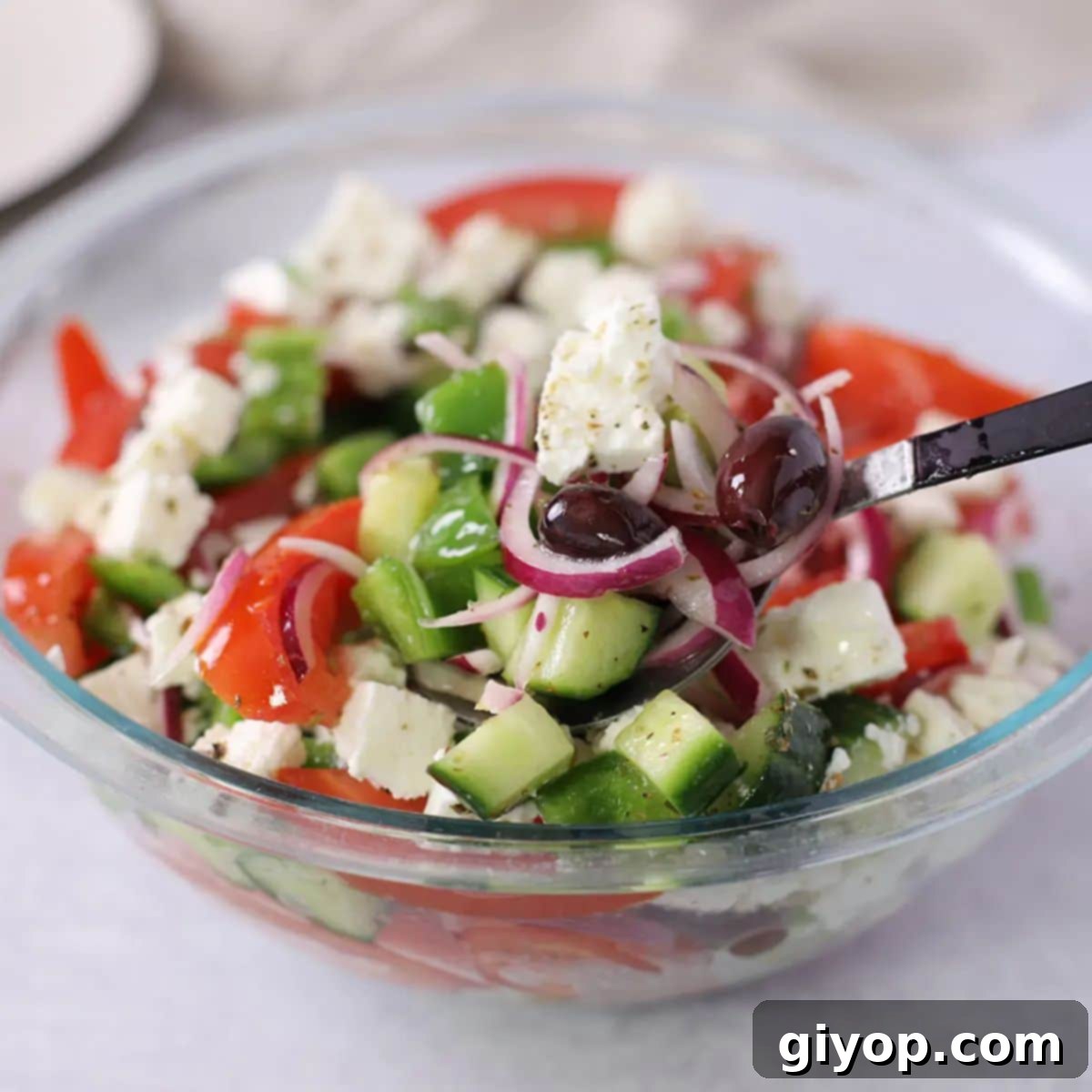
Welcome to the vibrant world of the Classic Greek Salad with Feta, a quintessential Mediterranean delight that promises freshness, flavor, and incredible ease of preparation. This salad isn’t just a dish; it’s an experience, transporting your taste buds straight to the sun-drenched shores of Greece. Bursting with crisp, fresh vegetables and savory Kalamata olives, all brought together by a bright, homemade vinaigrette, it stands as a testament to the simplicity and health benefits of Mediterranean cuisine. Whether you’re seeking a light, satisfying lunch or a delightful side dish to complement any meal, this recipe offers a delicious way to infuse your table with easy-to-make, wholesome goodness. It’s truly an ideal choice for anyone looking to embrace healthy eating without sacrificing incredible taste.
For another exotic salad experience, try this Egyptian salad, which offers a unique dressing and a novel serving style, perfect for expanding your culinary horizons.
The Vibrant Appeal of Classic Greek Salad
- This Greek salad is an absolute showstopper, making it the perfect choice for any picnic, potluck, or gathering. Its robust ingredients mean it travels incredibly well and won’t wilt easily, ensuring it stays fresh and appealing even after some time. It’s one of the simplest salad recipes, relying heavily on the quality and freshness of the produce, requiring minimal effort for maximum impact.
- While many variations exist, this recipe presents a widely beloved and common interpretation of Greek salad, focusing on accessibility and a homemade dressing that captures the essence of Mediterranean flavors. It’s not a strictly authentic *Horiatiki Salata* (traditional Greek village salad, which typically omits lettuce), but rather a popular adaptation that has become a staple in many homes, cherished for its delightful balance and texture.
This incredibly quick and easy salad comes together in less than 15 minutes, utilizing simple, wholesome ingredients to create a healthy and refreshing Mediterranean meal. Each component is chopped and combined, offering a delightful interplay of textures and flavors that will become a go-to in your recipe repertoire.
Gather Your Fresh Ingredients
Crafting the perfect Greek salad starts with selecting the finest, freshest ingredients. Here’s an overview of what you’ll need to bring this vibrant dish to life. You’ll find the full measurements and detailed instructions conveniently located in the printable recipe card at the bottom of this page.
📋 Essential Ingredient Notes
- Cucumbers: For a delightful crunch and fewer seeds, English or Persian cucumbers are often preferred due to their thinner skin and crisp texture. However, feel free to use whichever fresh, firm cucumbers you prefer; simply peel and deseed if their skin or seeds are too thick for your liking.
- Onions: Red onions are a key player, adding a beautiful pop of color, a subtle sweetness, and a delightful sharpness to your salad. Slice them thinly to ensure their flavor integrates seamlessly without overpowering other ingredients. For a milder taste, you can rinse the sliced onions under cold water for a minute before adding them.
- Tomatoes: The success of a Greek salad often hinges on the quality of its tomatoes. Opt for your favorite plump, juicy, and ripe tomatoes – vine-ripened, Roma, or even heirloom varieties work wonderfully. Cut them into substantial wedges or cubes to release their sweet, tangy juices into the salad.
- Green Bell Peppers: These provide a fantastic crunch, a fresh, slightly bitter flavor, and a healthy dose of vitamin C. Slicing or cubing them ensures even distribution and texture. For added visual appeal and a slightly sweeter taste, consider incorporating red, yellow, or orange bell peppers as well.
- Olives: Pitted Kalamata olives are non-negotiable for an authentic Greek salad experience. Their rich, fruity, and briny flavor is distinctive and complements the other vegetables perfectly. Make sure they are pitted for easy enjoyment.
- Feta Cheese: For the best texture and authentic taste, a block of brined feta cheese is highly recommended. Its creamy, crumbly texture and salty tang are superior to pre-crumbled varieties. Cut the block into small, even cubes to ensure every bite includes this essential ingredient.
- Olive Oil: Use high-quality extra virgin olive oil for the dressing. It forms the base of the Mediterranean flavor profile and contributes a smooth, rich note that elevates the entire salad.
- Red Wine Vinegar: A splash of red wine vinegar provides the perfect tangy acidity needed to balance the richness of the olive oil and the freshness of the vegetables, creating a vibrant vinaigrette.
- Oregano: A teaspoon of dried Greek oregano adds a tremendous, earthy, and aromatic flavor that is characteristic of Greek cuisine. While dried works well, fresh oregano can also be used for a more pungent, herbaceous kick.
- Salt: Essential for bringing out and enhancing all the natural flavors of the vegetables and feta. Adjust to your taste, keeping in mind the saltiness of the feta and olives. A dash of freshly ground black pepper can also be a wonderful addition.
Elevate Your Salad: Creative Variations
While the classic Greek salad is perfect on its own, it also serves as an excellent canvas for customization. Feel free to experiment with these simple variations to tailor the salad to your preferences or whatever you have on hand:
- Add Romaine Lettuce: Although a traditional Greek salad does not include lettuce, adding some crisp romaine can turn it into a heartier meal. It adds volume and a different textual dimension, making it more substantial for a main course.
- Brighten with Lemon: A fresh squeeze of lemon juice, either over the finished salad or incorporated into the dressing, adds a wonderful burst of bright acidity that enhances all the flavors. It’s a simple addition that makes a big impact.
- Fresh Mint Leaves: Chop up a few fresh mint leaves and toss them in for a delicate, cooling, and incredibly fresh taste. Mint introduces an aromatic twist that is particularly refreshing during warmer months.
- Sweet Cherry Tomatoes: Instead of large tomatoes, use colorful cherry or grape tomatoes. Halved, they burst with a delicious natural sweetness and add a beautiful visual appeal, making each bite a delightful surprise.
- Boost with Protein: Transform your Greek salad into a complete meal by mixing in some grilled chicken breast, leftover roasted lamb, or even canned tuna. This makes for an incredibly satisfying and healthy lunch or a light dinner.
- Introduce Legumes: For a vegetarian protein boost, add a cup of drained and rinsed chickpeas. They add a wonderful creamy texture and make the salad even more filling, aligning perfectly with Mediterranean dietary principles.
- Additional Bell Pepper Colors: Don’t limit yourself to green bell peppers. Red, yellow, or orange bell peppers will add extra sweetness and make your salad even more visually stunning and nutrient-rich.
- Add Capers: For an extra layer of briny, tangy flavor, a tablespoon of drained capers can be a fantastic addition, especially if you love robust, salty notes.
Step-by-Step Guide: Crafting Your Greek Salad
Making this Classic Greek Salad is wonderfully straightforward. Follow these steps for a perfect outcome. Remember, these are an overview; the detailed instructions are in the recipe card below.
- Prepare the Dressing: In a small bowl or a glass jar with a tight-fitting lid, combine all the dressing ingredients: extra virgin olive oil, red wine vinegar, dried oregano, and salt. Whisk vigorously or shake well until all ingredients are thoroughly combined and the dressing is emulsified. This ensures a balanced flavor in every bite.
- Chop the Vegetables: Begin by thoroughly washing all your fresh vegetables. Then, meticulously cut and prepare each ingredient according to the recipe card. Aim for uniform pieces (e.g., ¼-inch cubes for cucumbers, wedges or cubes for tomatoes, thin slices for onions, and cubes for bell peppers) to ensure a consistent texture and flavor distribution throughout the salad.
- Assemble and Serve: In a large mixing bowl, combine all the prepared salad ingredients: chopped cucumbers, red onion, tomatoes, green bell pepper, Kalamata olives, and cubed feta cheese. Drizzle the homemade dressing generously over the mixture. Toss gently to ensure all the ingredients are evenly coated without bruising the delicate vegetables. Taste the salad and adjust the seasoning (more salt, vinegar, or oregano) as needed. Finally, sprinkle a little extra dried oregano on top for garnish and serve immediately to enjoy its peak freshness and crispness.
Expert Tips for the Perfect Greek Salad
- For an unparalleled taste and texture, this Classic Greek Salad recipe truly shines when made with a block of brined feta cheese, rather than the pre-crumbled variety. Block feta offers a creamier texture, a richer flavor, and a more authentic salty tang that crumbles just right into the salad, ensuring every bite is a burst of Mediterranean goodness.
Storage Recommendations
To preserve the freshness and flavor of your Classic Greek Salad, it’s best to consume it immediately after preparing. However, if you have leftovers, store them in an airtight container and refrigerate for up to 24 hours. The vegetables can start to release moisture and become less crisp over time, especially when dressed. For optimal results when making ahead, consider storing the chopped vegetables and dressing separately, combining them just before serving.
Curate a Mediterranean Feast
Transform your meal into an unforgettable Mediterranean spread by serving this refreshing Greek salad alongside a selection of other delectable recipes. Its fresh, vibrant flavors perfectly complement a variety of traditional dishes, making it an essential component of any festive gathering.
- Shish Kabob (Kebab) Recipe
- Gemista Recipe
- Spanakopita Recipe with Puff Pastry
- Revani (Ravani) Cake Recipe
Make-Ahead Tips for Convenience
Preparing your Greek salad in advance can be a huge time-saver for busy weeknights or entertaining. Most of the ingredients can be chopped ahead of time without losing their freshness. Keep all the prepped vegetables, such as cucumbers, bell peppers, and onions, stored separately in airtight containers in the refrigerator. Tomatoes and feta are best cut closer to serving time to maintain their integrity. Crucially, prepare the dressing separately and store it in a sealed jar. This approach ensures that your salad remains crisp and vibrant. It is always recommended to combine the vegetables with the dressing and serve on the same day for the absolute best taste and freshness, as dressing can cause vegetables to soften over time.
Discover More Irresistible Recipes
If you love the fresh, wholesome flavors of this Greek salad, you’re in for a treat! Explore these other fantastic recipes that celebrate fresh ingredients and Mediterranean-inspired cuisine, perfect for expanding your culinary repertoire:
- Whip up a delightful and healthy meal with this 20-minute edamame quinoa salad. Packed with fresh vegetables and a tangy dressing, it’s an excellent side dish or a versatile option for meal prepping lunches throughout the week.
- Don’t miss out on Tabouli or Tabbouleh, a traditional and wonderfully refreshing Middle Eastern salad. It features finely chopped parsley, invigorating mint, tender bulgur wheat, and vibrant vegetables, all tossed in a zesty dressing – truly a sensational experience for your palate.
- Recreate the beloved taste of a refreshing, delicious Panera Bread Greek Salad right in your own kitchen. This copycat recipe is incredibly easy to make at home, brimming with vibrant, crunchy ingredients and finished with the most delightful tangy Greek dressing.
- For a unique and surprisingly delicious combination, try this refreshing Mediterranean watermelon salad with arugula, crumbled feta, and fresh mint. It’s a vibrant, sweet-and-savory salad that is sure to stand out at any potluck and disappear remarkably fast.
- Loaded with an abundance of fresh herbs and wholesome vegetables, this Mediterranean chickpea salad is a hearty and satisfying option. It’s dressed in a delicious lemon vinaigrette, making it perfect as a fulfilling lunch or a robust side dish that’s bursting with flavor.
Classic Greek Salad
Print
Pin
Rate
SaveSaved!
Ingredients
- 1 English cucumber cut into ¼ inch cubes for ideal texture
- 1 medium red onion thinly sliced for a delicate bite
- 4-5 juicy plump tomatoes cut into wedges or substantial cubes
- 1 green bell pepper sliced or cut into cubes for crunch
- ⅔ cup Kalamata olives pitted for convenience and classic flavor
- 8 oz feta cheese block cut into 1cm cubes for authentic taste and texture
For the Zesty Dressing
- ¼ cup extra virgin olive oil preferably high quality
- 2 teaspoon red wine vinegar for a tangy kick
- 1 teaspoon dried oregano preferably Greek oregano
- salt and freshly ground black pepper, to taste
Instructions
Prepare the Dressing:
- In a small bowl, whisk together the extra virgin olive oil, red wine vinegar, dried oregano, and salt until well combined and slightly emulsified. Alternatively, combine in a glass jar and shake vigorously.
Assemble the Salad:
- In a large mixing bowl, combine the chopped English cucumber, thinly sliced red onion, juicy plump tomatoes, green bell pepper, pitted Kalamata olives, and cubed feta cheese.
- Drizzle the prepared dressing generously over the salad ingredients. Toss gently but thoroughly to ensure every component is evenly coated with the vibrant dressing.
- Taste the salad and adjust seasoning as needed, adding more salt, a splash of vinegar, or a pinch of oregano to achieve your desired flavor balance. Sprinkle some additional dried oregano on top for a final aromatic touch and serve immediately to enjoy its peak freshness.
Notes
- This Classic Greek Salad truly shines when made with traditional brined feta cheese blocks. Its superior creamy texture and salty tang are far more authentic and flavorful than pre-crumbled feta.
Storage Tips
- Store any leftover Greek salad in an airtight container in the refrigerator for up to 24 hours. For best results and to prevent sogginess, if making ahead, store the chopped vegetables and dressing separately, combining them just before serving.
Please check our comprehensive nutrition disclaimer policy for more information.