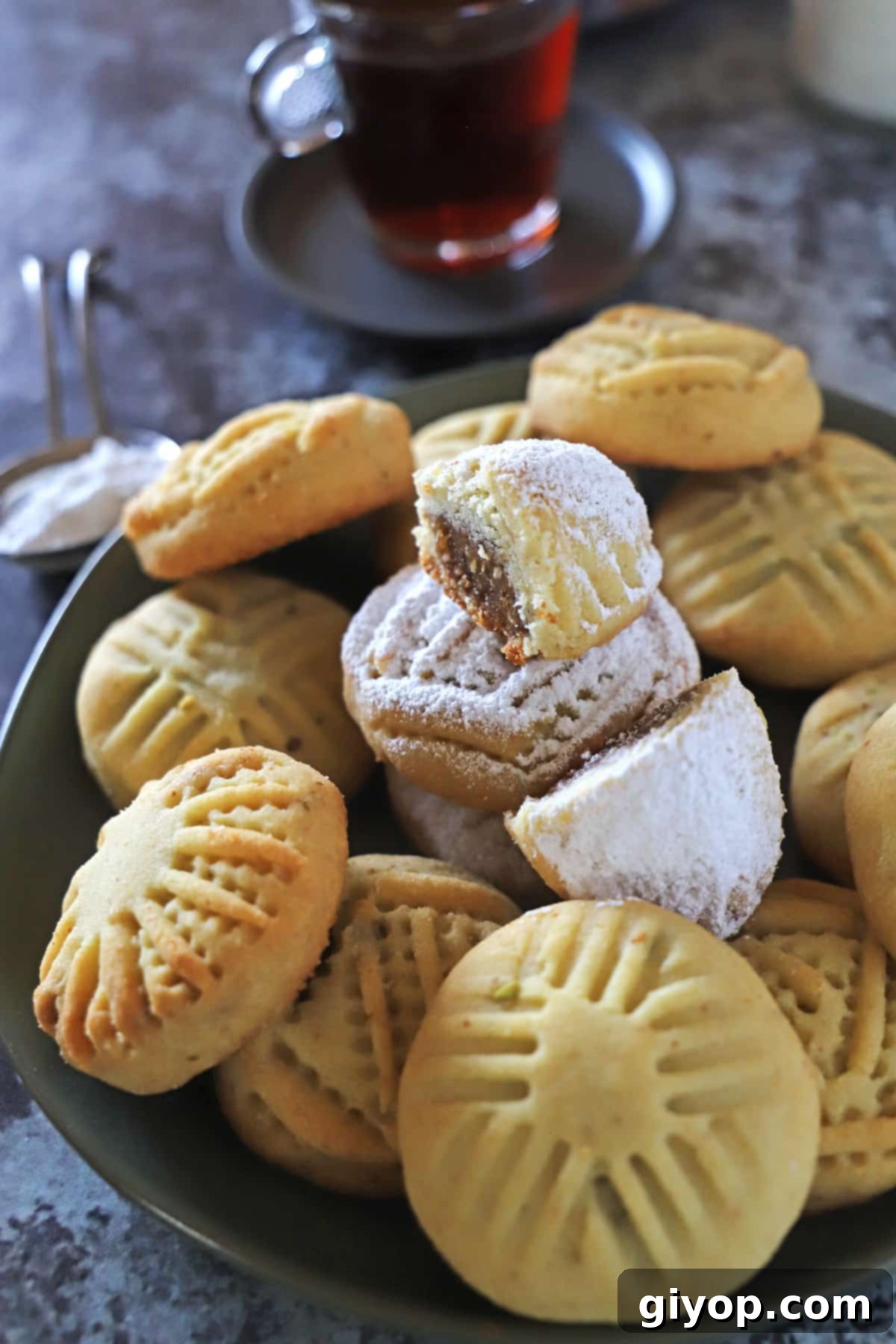
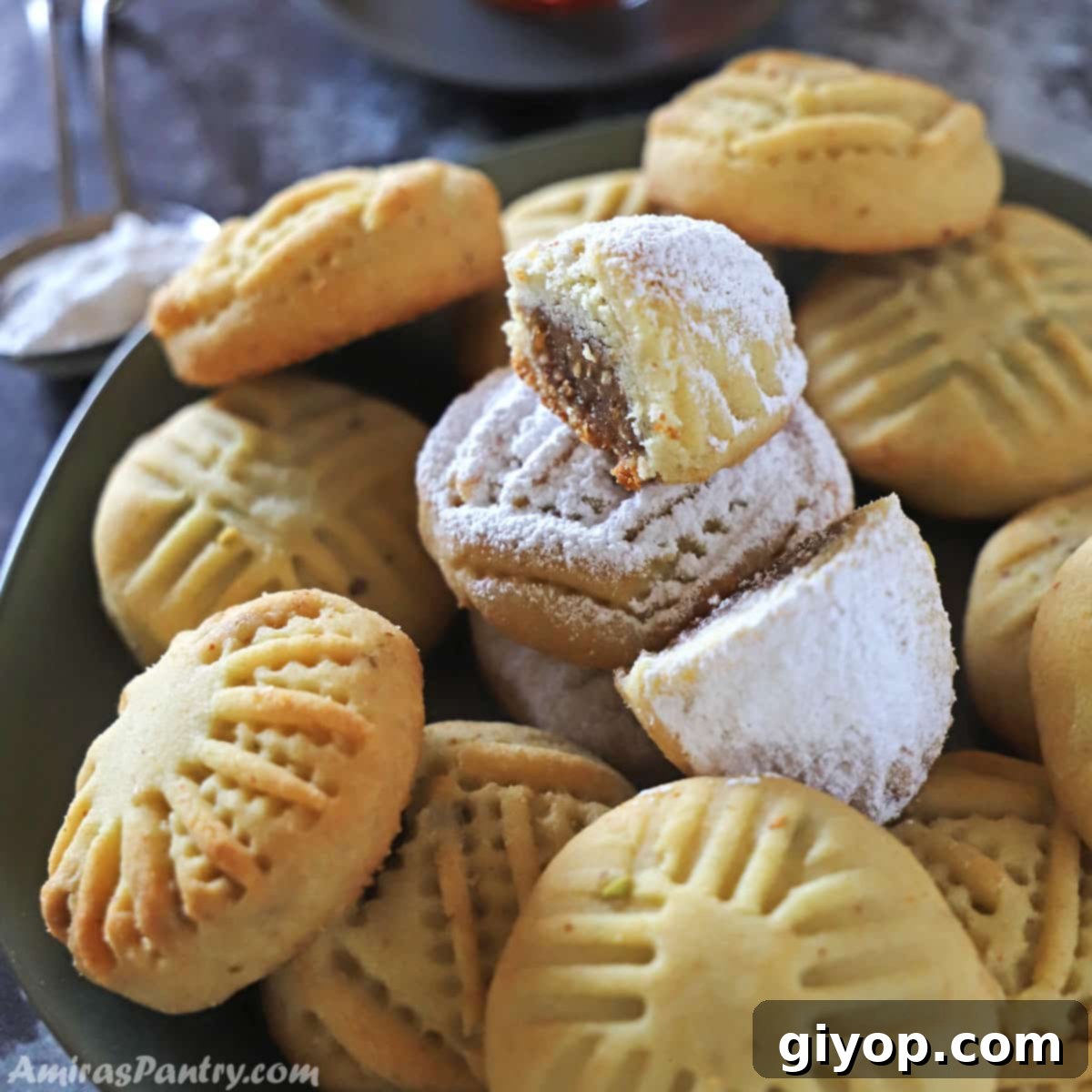
Indulge in the exquisite taste of Maamoul, cherished throughout the Middle East as iconic Arabic date cookies. These delightful pastries hold a special place during significant religious holidays for both Muslims and Christians, including Eid al-Fitr, Eid al-Adha, and Easter. Much like other beloved regional treats such as Kahk, Maamoul are traditionally prepared in generous batches to mark festive occasions, symbolizing joy, hospitality, and community spirit. Sharing these buttery, melt-in-your-mouth cookies with neighbors, family, and guests is a time-honored tradition that brings people together and celebrates cultural heritage.
Maamoul’s versatility lies in its dough, which can be crafted from semolina, farina, all-purpose flour, or a combination thereof, each yielding a subtly different texture. While a myriad of fillings can be used, ranging from various nuts to dried fruits, the most quintessential and arguably the most beloved filling remains the sweet, sticky date paste. In this comprehensive guide, we will embark on a culinary journey to create authentic Maamoul, exploring the traditional techniques, various popular fillings, and crucial insights into selecting the best flour for your desired cookie consistency. Prepare to unlock the secrets behind these timeless Middle Eastern delicacies.
Essential Ingredients for Authentic Maamoul
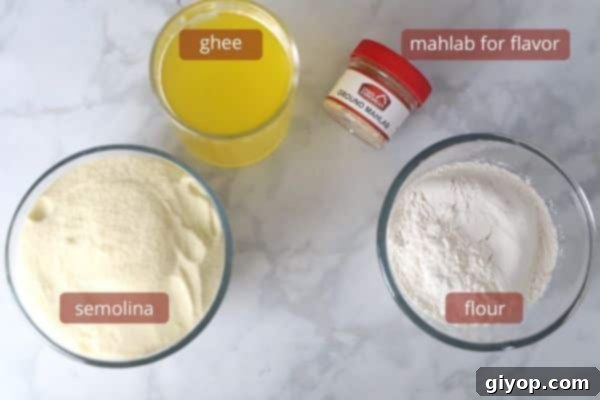
Crafting Maamoul is a two-stage process, essential for achieving its signature tender yet slightly crumbly texture. This initial stage requires an overnight rest, or even up to three days, allowing the semolina to fully absorb the rich ghee. For the first stage, you will need a precise blend of semolina and all-purpose flour, creating the ideal base for the cookie dough. Key to its distinctive flavor is mahlab powder, an aromatic spice derived from cherry pits, which imparts a unique, slightly bitter almond note. A pinch of salt balances the sweetness, and luxurious ghee is the fat of choice, providing unparalleled richness and a delicate, nutty aroma. We will delve deeper into the nuances of different flours, where to source mahlab, and suitable substitutions in the comprehensive tips section of this article.
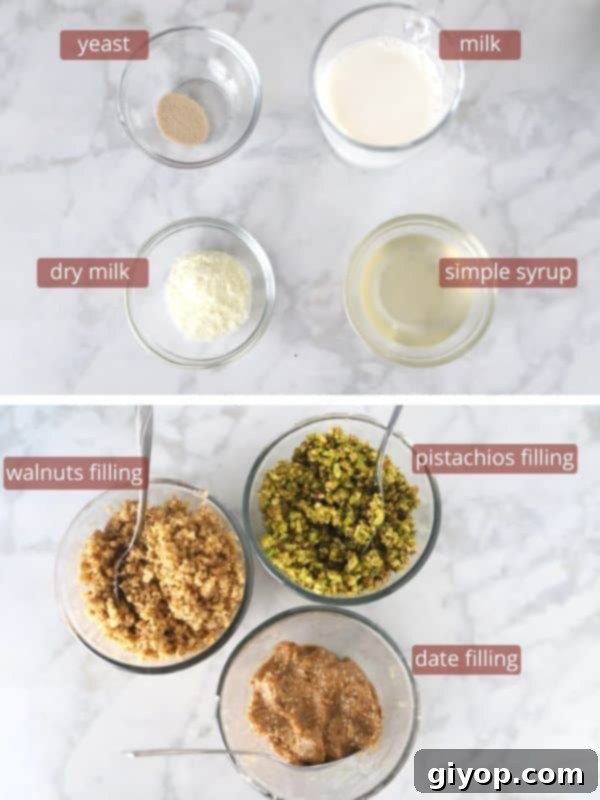
The second stage of Maamoul preparation involves hydrating the dough and preparing the delectable fillings. Here, warm milk contributes to the dough’s softness and pliability, while a touch of dry milk adds richness. Active dry yeast, though optional, is highly recommended as it helps achieve a lighter, more tender cookie. Simple sugar syrup is also incorporated, adding sweetness and moisture to the dough. While Maamoul can be enjoyed plain, its true essence shines through its fillings. The classic date filling, a personal favorite for its natural sweetness and soft texture, is undeniably the most traditional. However, we’ll also explore luscious alternatives using finely ground pistachios and walnuts, offering a delightful variety of flavors and textures to suit every palate.
Step-by-Step Guide to Crafting Maamoul
Creating perfect Maamoul involves a methodical approach, ensuring each cookie is a testament to traditional artistry. Follow these detailed instructions to master the process:
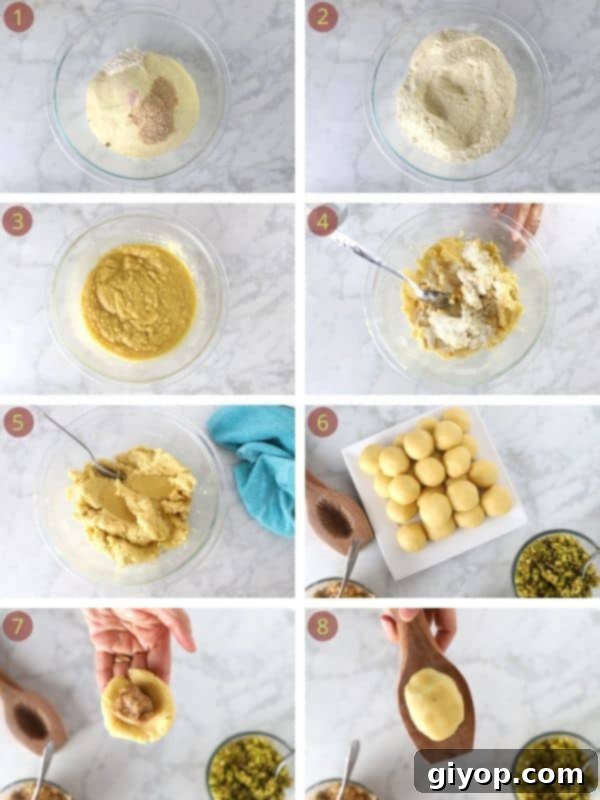
- Begin by combining the dry ingredients for the dough: in a spacious mixing bowl, add the semolina, all-purpose flour, mahlab powder, and a dash of salt. Whisk these ingredients thoroughly until evenly distributed.
- Gently melt the ghee over low heat or in the microwave until liquid, being careful not to let it boil. Pour the warm, melted ghee over the dry flour mixture.
- Using a spoon, initially mix the ghee into the flour blend. Then, crucial for Maamoul’s texture, use the palms of your hands to rub the mixture together for several minutes. This ‘bussing’ technique ensures that every grain of semolina is thoroughly coated with ghee, which is vital for the cookie’s tender consistency.
- Cover the bowl tightly with plastic wrap and refrigerate the dough overnight, or for up to three days. This extended resting period allows the semolina to fully hydrate and develop flavor.
- After the resting period, remove the dough from the refrigerator and let it come to room temperature, which may take an hour or two, especially if it has hardened. Once softened, add the dry milk and active dry yeast, mixing them in thoroughly. Pour in the simple sugar syrup and continue to mix until well combined.
- Gradually add the warm milk, a little at a time, mixing gently until a soft, pliable dough forms. To test for readiness, take a small ball of dough and roll it between your palms; it should form a smooth ball without cracks. If it feels too dry, add a tiny bit more milk. Cover the dough and let it rest for another hour.
- While the dough rests, prepare your chosen filling(s). In a food processor, combine the ingredients for each filling (dates, pistachios, or walnuts) and process until the desired texture is achieved. The fillings should be cohesive enough to roll into small balls. Divide both the prepared dough and the filling into equal-sized small balls, typically yielding 24 Maamoul cookies.
- Take one dough ball and gently flatten it into a disc in your palm. Place a ball of filling in the center, then carefully gather the edges of the dough around the filling, sealing it completely to form a smooth ball.
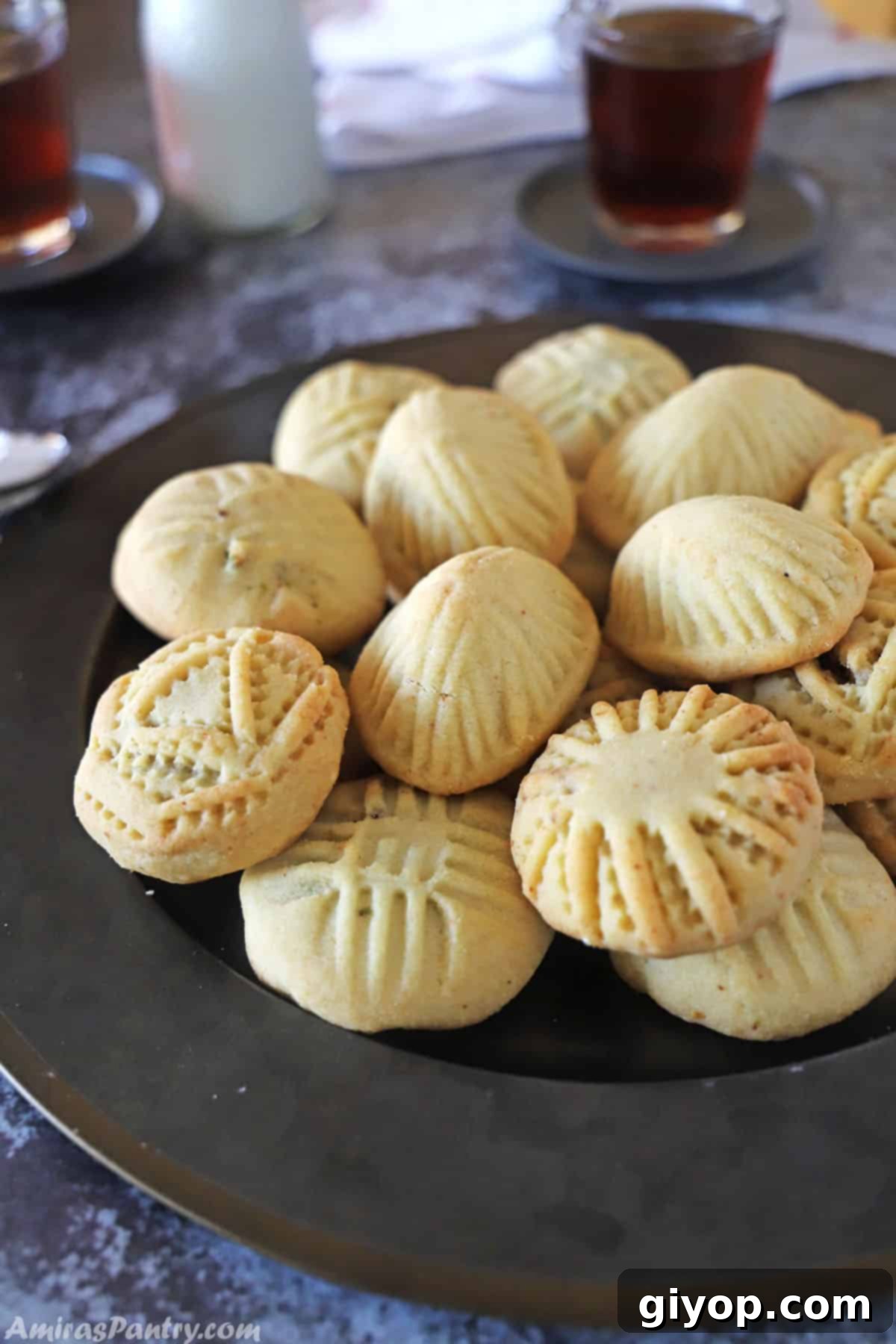
- If you have a traditional Maamoul mold, press the filled dough ball firmly into the mold to create intricate designs. Alternatively, gently flatten the ball slightly and use a fork to create decorative patterns on the top surface.
- Arrange the shaped Maamoul on a baking sheet. Preheat your oven to 350°F (175°C) and bake the cookies as directed below, typically on the middle rack until lightly golden.
Expert Tips for Perfect Maamoul
- Choosing Your Flour: Semolina, Farina, or All-Purpose? The choice of flour significantly impacts the texture of your Maamoul. My personal preference, and what I find yields the most balanced cookie, is a combination of semolina and all-purpose flour. Using farina alone or exclusively semolina resulted in an overly crumbly texture that didn’t quite meet my expectations for a perfect Maamoul. Conversely, a dough made solely with all-purpose flour tends to produce cookies more akin to Kahk, lacking the distinctive bite and rustic charm of traditional semolina Maamoul. This recipe, therefore, focuses on creating what is widely known as ‘semolina Maamoul’, celebrated for its unique textural profile.
- Sourcing and Substituting Mahlab Powder: Mahlab is the secret ingredient that gives Maamoul its signature aromatic profile. Surprisingly, I’ve often found it in Asian grocery stores, in addition to specialized Middle Eastern markets. When purchasing, ensure you select ground mahlab, as it’s also sold whole. If mahlab proves elusive, you have several excellent alternatives. A small amount of crushed mastic mixed with a teaspoon of sugar can mimic a similar fragrant note. Alternatively, you can use rose water, orange blossom water, vanilla extract, almond extract, or a pinch of cinnamon. Don’t fret if you decide to omit it entirely; while mahlab enhances the authenticity, your Maamoul will still be delicious.
- Ghee Versus Butter in Maamoul: The fat used in Maamoul plays a pivotal role in its flavor and texture. While you can certainly use butter, or even a blend of butter and ghee, I wholeheartedly recommend ghee. Ghee, or clarified butter, contributes an intense, rich, and distinctly nutty flavor that elevates Maamoul to another level. Its higher smoke point also makes it ideal for baking, and it lends a wonderful tenderness to the dough that is hard to replicate with other fats.
- Making Ahead and Storage: It’s a common practice in some households to prepare large quantities, even up to 15 pounds, of the first-stage Maamoul dough and store it in the refrigerator for months. While possible, I generally don’t advocate for such long-term storage of the unbaked dough. The initial stage is not overly complex, and I believe Maamoul is best enjoyed fresh, with its flavors and textures at their peak. For optimal results, aim to complete the baking process within a few days of preparing the first stage.
- The Golden Ratio for Maamoul: A general rule of thumb for achieving perfect Maamoul is to follow a 1:½:1 ratio for flour (semolina + all-purpose), ghee, and filling, respectively. This means if you use 1 pound of combined flours, you will need ½ pound of ghee and 1 pound of your chosen filling. Adhering to this ratio ensures a balanced and flavorful cookie every time.
- Simple Syrup Essentials: The simple syrup used in this recipe is straightforward to prepare. Combine 1 cup of granulated sugar with 1 cup of water and ½ teaspoon of fresh lime juice (the lime helps prevent crystallization). Bring the mixture to a boil, then reduce the heat and simmer for approximately 10 minutes until it slightly thickens. For added aroma, you can infuse the syrup with a few drops of rose water, orange blossom water, or vanilla extract. Ensure the syrup is completely cooled before incorporating it into your Maamoul dough.
- Milk vs. Water: While some traditional recipes use water instead of milk in the Maamoul dough, I personally haven’t experimented with this variation. Milk tends to add a richer flavor and contributes to a softer, more tender crumb, which is why it’s my preferred liquid.
- Adjusting Sweetness: Many Maamoul recipes call for adding sugar directly to the dough, ranging from a couple of tablespoons up to half a cup. I prefer my Maamoul to be subtly sweet, allowing the natural sweetness of the date filling and the richness of the ghee to shine. For those who enjoy a sweeter cookie, a generous dusting of powdered sugar after baking provides the perfect customizable finish.
- Yield and Mold Size: This recipe is designed to yield approximately 24 delightful Maamoul cookies. If you are using a traditional wooden Maamoul mold, you might need to adjust the size of your dough and filling balls slightly to perfectly fit your specific mold, ensuring beautiful, consistent shapes.
Delightful Cookie Creations to Explore
- Elevate your cookie game with these irresistible Caramel Chocolate Chip Cookies. Decadent and chewy, featuring a gooey caramel center, they’re a heavenly treat for any occasion.
- These Carrot Cake Mix Cookies offer a fantastic treat for any time of day. They are packed with flavor without being excessively sweet, and boast a wonderfully soft and moist texture.
- Discover the joy of Cherry Cookies, delectable, chewy cookies bursting with vibrant cherry flavor. A crowd-pleasing little delight, perfect for enjoying cherries year-round.
- You’re sure to fall in love with these Whipped Shortbread Cookies! Their unique whipped texture delivers a distinctively creamy flavor, and they are incredibly simple to prepare.
Discover More Middle Eastern Cookie Favorites
- Kahk are traditional Egyptian cookies, a staple during holidays and celebrations like weddings. These small, round cookies are delicately dusted with powdered sugar and cherished by people of all ages.
- Learn how to make traditional Easy Linzer Cookies using a handful of everyday ingredients. Buttery and lightly sweet, filled with vibrant raspberry jam, they are a wonderful way to celebrate any holiday.
- This Raspberry Thumbprint Cookies recipe offers a quick and easy way to create buttery, mildly sweet cookies filled with tart raspberry jam. They pair wonderfully with a cup of coffee or tea.
- Tahini Cookies are a unique indulgence, reminiscent of halva in cookie form. This delicious and nutty twist on traditional cookies is made with simple ingredients, often topped with sesame seeds, and features a crispy exterior with a slightly chewy center.
- Petit Fours are also quite common in the region. Whether filled with chocolate spread or jam, these delicate little cakes are utterly delicious.
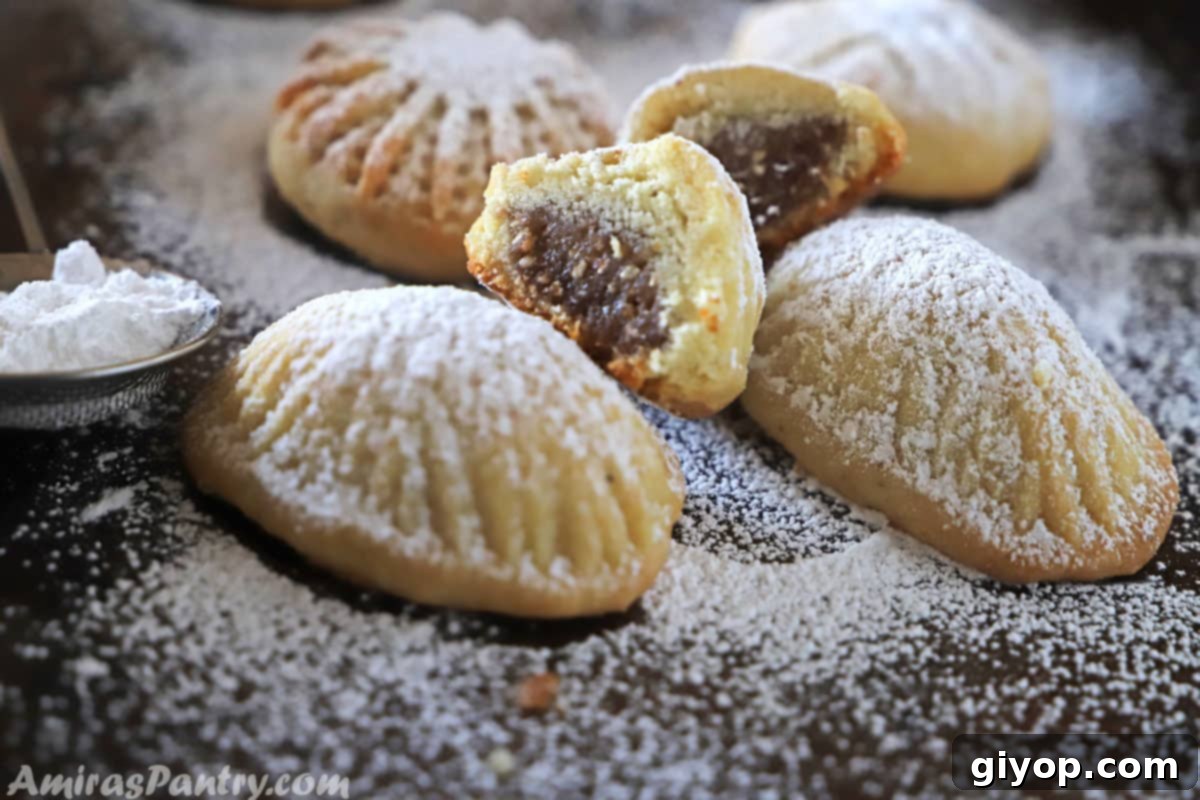
With their lightly sweet, buttery dough and a subtle semolina crunch, these are my ideal Maamoul cookies. While my husband gravitates towards the nutty fillings, I personally find the date-filled version to be the most authentic and satisfying, just as I was introduced to Maamoul back in the 90s. The soft, sweet date paste perfectly complements the rich, delicate cookie shell, creating a truly unforgettable treat.
I am always curious about your culinary preferences! Have you had the pleasure of trying Maamoul cookies before? If so, I would love to hear which filling you enjoyed the most. Please share your thoughts and experiences in the comments section below.
If you cherish this recipe as much as I do, please consider leaving a ⭐⭐⭐⭐⭐ rating! Your feedback is greatly appreciated.

Maamoul
Print
Pin
Rate
SaveSaved!
Ingredients
For the first stage:
- 2 cups (350g) semolina.
- 1 cup (125g) all purpose flour.
- ½ Tablespoon ground mahleb. Note1
- A dash of salt.
- 1 cup (250g) ghee. Note2
For the second stage:
- 1 Tablespoon dry milk.
- ¼ teaspoon active dry yeast.
- 3 Tablespoon simple syrup. Note3
- ¼-1/3 cup warm milk.
Date filling:
- 1 cup (150g) dates.
- 1 teaspoon ghee.
- 1 Tablespoons cinnamon or rose water or orange blossom water.
- 1 Tablespoon roasted sesame seeds.
Pistachio filling:
- 1 ¼ cup (150g) pistachios.
- ½ Tablespoon powder sugar.
- 2 Tablespoons simple syrup.
- ½ teaspoon ghee.
Walnut filling:
- 1 ½ cup (150g) walnuts.
- ½ Tablespoon powder sugar.
- ½ teaspoon cinnamon.
- 2 Tablespoons simple syrup.
- ½ teaspoon ghee.
Instructions
First stage
- Melt ghee in the microwave or on the stovetop, ensuring it is warm but not boiling hot.
- In a deep bowl, combine the semolina, flour, mahlab, and salt. Mix these dry ingredients thoroughly until well blended.
- Pour the melted ghee over the dry mixture and stir with a spoon until combined.
- Using the palms of your hands, rub the semolina mixture for several minutes. This crucial step ensures every semolina grain is coated with ghee, contributing to the Maamoul’s tender texture.
- Cover the bowl tightly and refrigerate the dough overnight, or for up to 3 days, allowing the semolina to fully hydrate.
Second stage:
- Remove the dough from the refrigerator and let it reach room temperature until it softens, as it will be firm from chilling.
- Add the dry milk and yeast to the dough and mix well until incorporated.
- Mix in the simple syrup, then gradually add the warm milk, little by little, until the dough becomes soft, pliable, and forms a smooth ball without cracks.
- Cover the dough and let it rest for 1 hour at room temperature.
- Divide the prepared dough into 24 equal-sized balls.
- Preheat your oven to 350°F (175°C).
Make the fillings:
- In a food processor, combine the ingredients for each chosen filling (date, pistachio, or walnut) and process to your desired texture. Note4
- Divide the prepared filling(s) into 24 equal-sized balls.
Shape and bake maamoul:
- Take each dough ball, make a small indentation with your thumb, and fill it with one of the prepared stuffing balls.
- Carefully close the dough around the filling, sealing it completely, and roll it into a smooth ball. Press the filled ball into a Maamoul mold for intricate designs, or gently flatten it slightly and create decorative marks using a fork.
- Bake the Maamoul on the middle rack for approximately 10 minutes. Then, move them to a higher rack (or switch to broiler for a very short time if needed) and bake for an additional 7-10 minutes, or until the tops are lightly golden.
- Allow the baked Maamoul to cool on the baking sheet for 3-4 minutes before carefully transferring them to a wire rack to cool completely.
- Once cooled, dust generously with powdered sugar before serving.
Notes
Note2: For the fat, you can use ghee, butter, cooking oil, or a combination of these, depending on your preference for flavor and texture.
Note3: To make simple syrup, combine 1 cup of sugar with 1 cup of water and ½ teaspoon of lime or lemon juice in a saucepan. Bring to a boil, then reduce heat and simmer for 10 minutes. For added flavor, you can incorporate vanilla extract, rose water, or orange blossom water. Allow the syrup to cool completely before using it in the Maamoul dough.
Note4: When preparing pistachio and walnut fillings, some prefer to finely process about ¾ of the nuts while leaving the remaining portion roughly chopped. This technique adds a pleasant chunky texture to the filling. You can prepare the entire batch with any single filling by simply tripling the specified amount for that filling.
Nutrition facts provided are calculated specifically for the date-filled Maamoul.
Please review our nutrition disclaimer policy for more information.