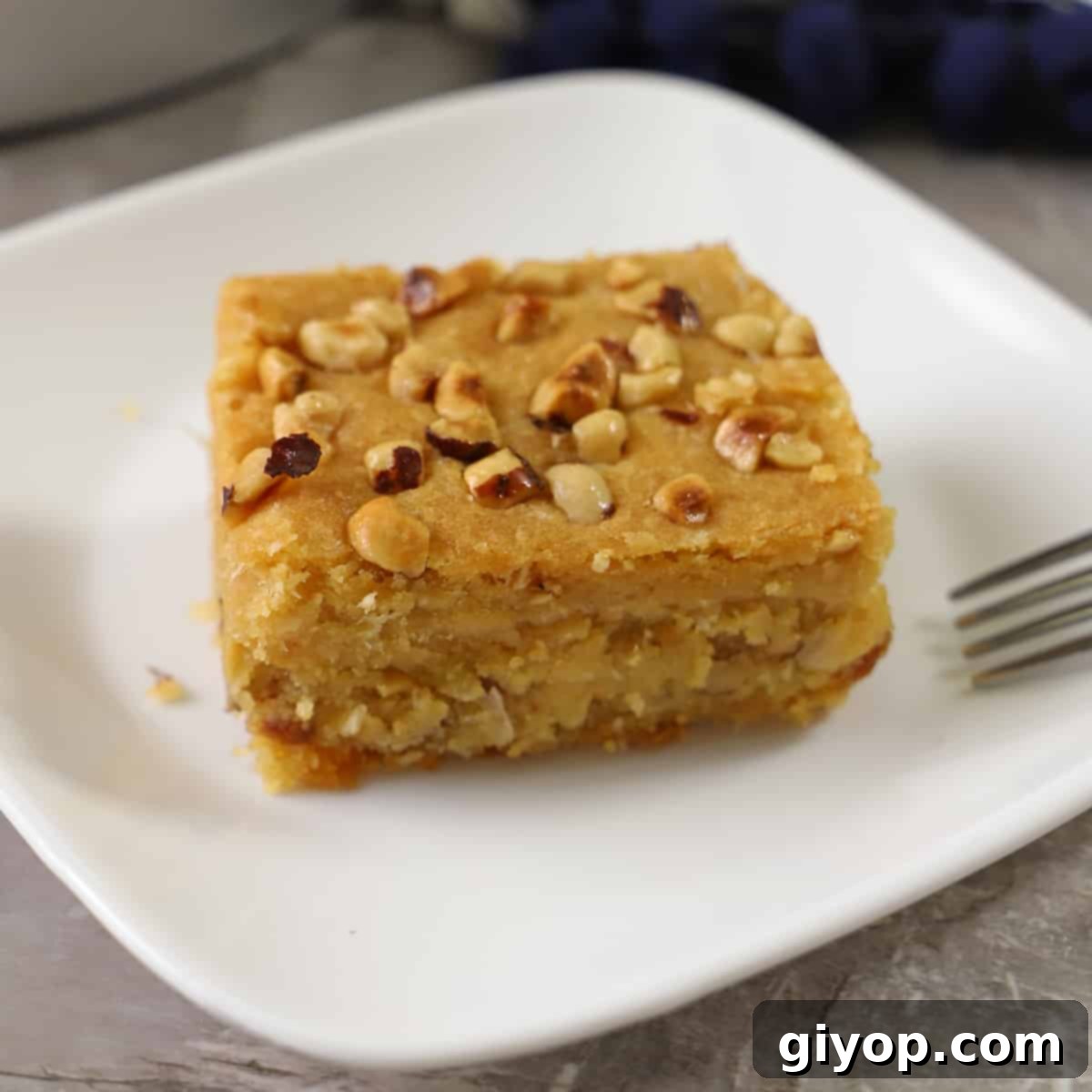
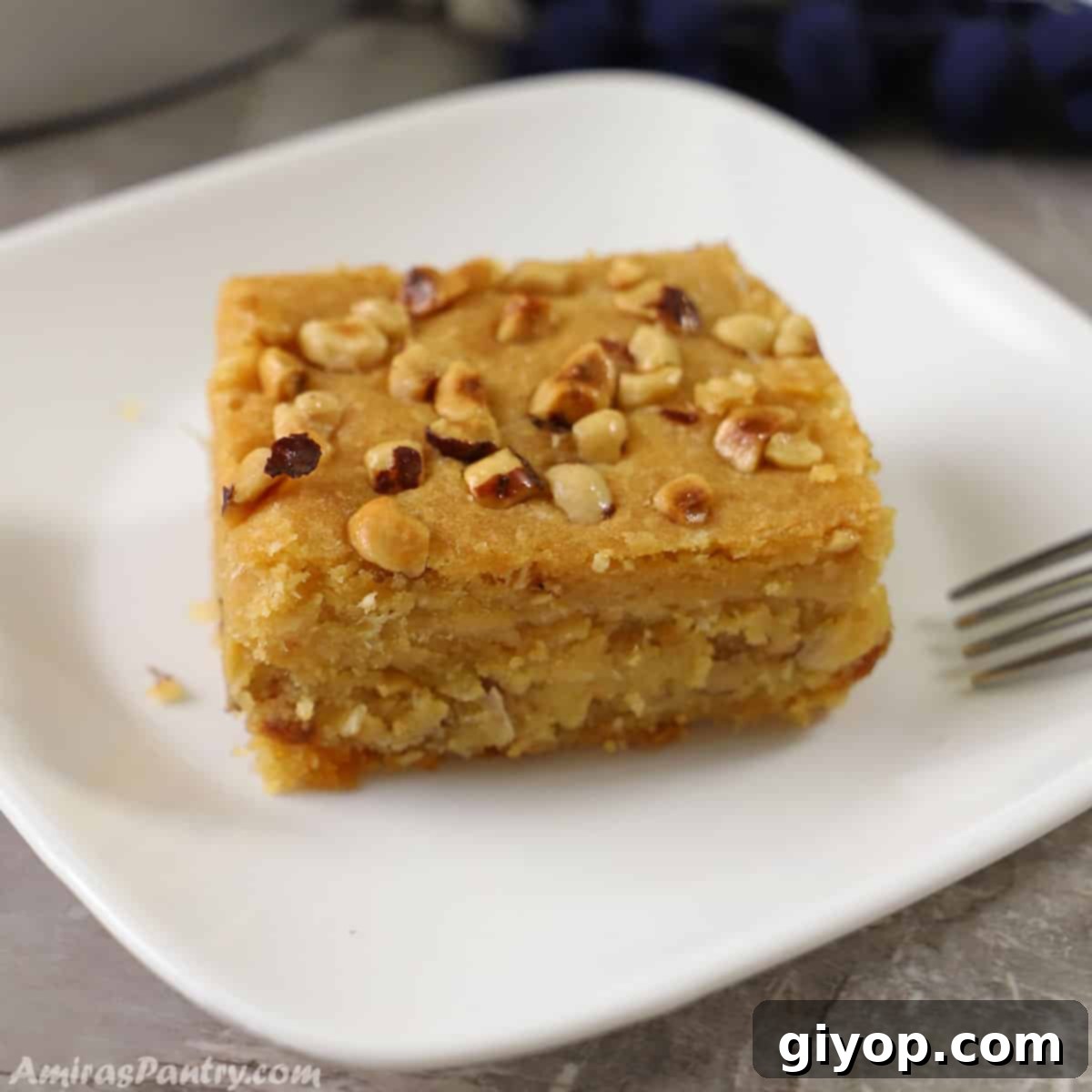
Delight your senses with the rich, sweet, and nutty flavors of Egyptian Harissa, a quintessential Middle Eastern semolina cake that promises an unforgettable dessert experience. Far more than just a sweet treat, this traditional Harissa recipe offers a deep dive into the heart of Egyptian culinary heritage, presenting a dessert that is both decadent and surprisingly easy to master. Unlike many simpler semolina cakes, our Egyptian Harissa stands tall, boasting a dense, moist texture and a generous filling of aromatic nuts, coconut, and raisins, all enveloped in a golden, caramelized syrup. This foolproof recipe is designed to be a winner every time, ensuring a spectacular dessert that will impress family and friends alike.
The Rich History of Harissa: An Egyptian Sweet Symphony
Harissa, a name that evokes a sense of sweet indulgence across the Middle East, refers to a beloved category of semolina-based cakes. While variations exist from the Levant to North Africa, Egyptian Harissa holds a special place, distinguished by its unique preparation methods and flavor profiles. Across Egypt’s diverse governorates, you can find subtle differences in its execution—some prefer a denser cake, others a softer crumb, and the choice of filling often varies. This particular recipe captures the essence of a truly classic Egyptian Harissa, characterized by its distinctive caramel base and a sumptuous nut and coconut filling. Historically, these semolina cakes were staples during celebrations and family gatherings, embodying warmth, hospitality, and the sweet abundance of the region. Preparing Harissa is not just about baking; it’s about connecting with centuries-old culinary traditions that have brought joy to countless generations.
Why This Egyptian Harissa Recipe Stands Out
Among the myriad versions of semolina cakes, this Egyptian Harissa recipe shines for several compelling reasons. It’s incredibly straightforward, requiring no advanced baking skills or complex techniques, making it accessible even for novice bakers. The magic truly begins with the caramelized sugar base, which infuses the entire cake with a depth of flavor that a simple sugar syrup cannot achieve. This distinctive caramelization process not only adds a beautiful golden hue but also a subtle, toasted sweetness that perfectly complements the semolina. Furthermore, this recipe is designed for convenience; it feeds a crowd effortlessly, can be prepared in advance, and stores beautifully in the refrigerator or freezer, making it ideal for entertaining or meal prepping. We’ll also share expert tips to help you customize it to your preference, ensuring everyone finds their perfect slice of Harissa heaven.
Essential Ingredients for Your Harissa
Ingredient Notes for Perfect Harissa
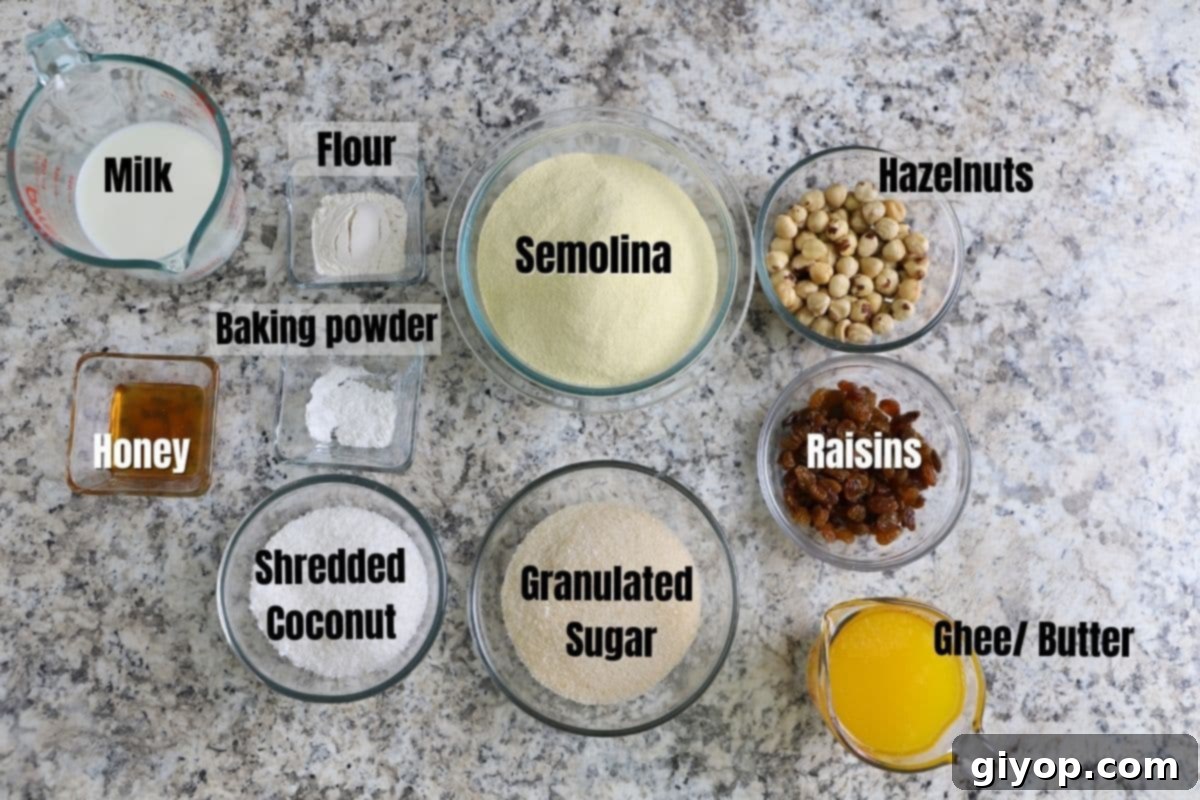
The secret to an exceptional Harissa lies in understanding its core ingredients:
- Semolina: For this recipe, we specifically recommend using fine semolina. Its delicate granules contribute to a softer, cake-like texture, resulting in a Harissa that is wonderfully tender. While some regional varieties might call for coarser farina, fine semolina ensures a moister and more refined crumb, distinguishing this Egyptian version. If you prefer a slightly harder, more crumbly texture, farina can be used as an alternative, but be aware it will alter the cake’s density.
- Ghee (Clarified Butter): Ghee is the traditional choice and highly recommended for its rich, nutty aroma and distinct flavor, which is paramount to authentic Middle Eastern desserts. It imparts a depth of taste and moisture that butter alone cannot replicate. However, if ghee is unavailable, unsalted butter can be used as a substitute, though the flavor profile will be slightly different.
- Coconut: We utilize a blend of both sweetened and unsweetened fine shredded coconut to achieve a balanced sweetness and texture in both the dough and the filling. This combination adds layers of coconut flavor without overwhelming the dessert with excessive sweetness. Feel free to adjust the ratio or use your preferred type of coconut. Some traditional recipes also incorporate larger coconut flakes for added texture in the filling, which is another delicious option.
- Nuts: Hazelnuts are the most traditional and commonly used nut in Egyptian Harissa, offering a delightful crunch and earthy flavor that pairs perfectly with the sweet semolina. However, this recipe is incredibly versatile; feel free to use your favorite nuts or a combination. Almonds, walnuts, or pistachios can all be excellent choices, adding their unique character to the dessert. Ensure they are lightly toasted and chopped for the best flavor and texture.
- Honey: Honey plays a dual role in this recipe: it’s used in the Harissa batter to add moisture and a subtle sweetness that complements the caramelized sugar, and it’s also a key component of the stuffing, binding the ingredients and enriching their flavor. It is also crucial for the syrup, providing a distinctive golden color and rich flavor compared to plain sugar syrup.
- Milk: Using hot milk when combining with the caramelized sugar is essential. It helps to dissolve the hardened caramel quickly and creates a smooth, flavorful base for the semolina mixture.
Step-by-Step Guide to Baking Egyptian Harissa
Crafting this delightful Egyptian Harissa is an enjoyable process. Follow these detailed steps to create a show-stopping dessert.
Preparing the Caramelized Base
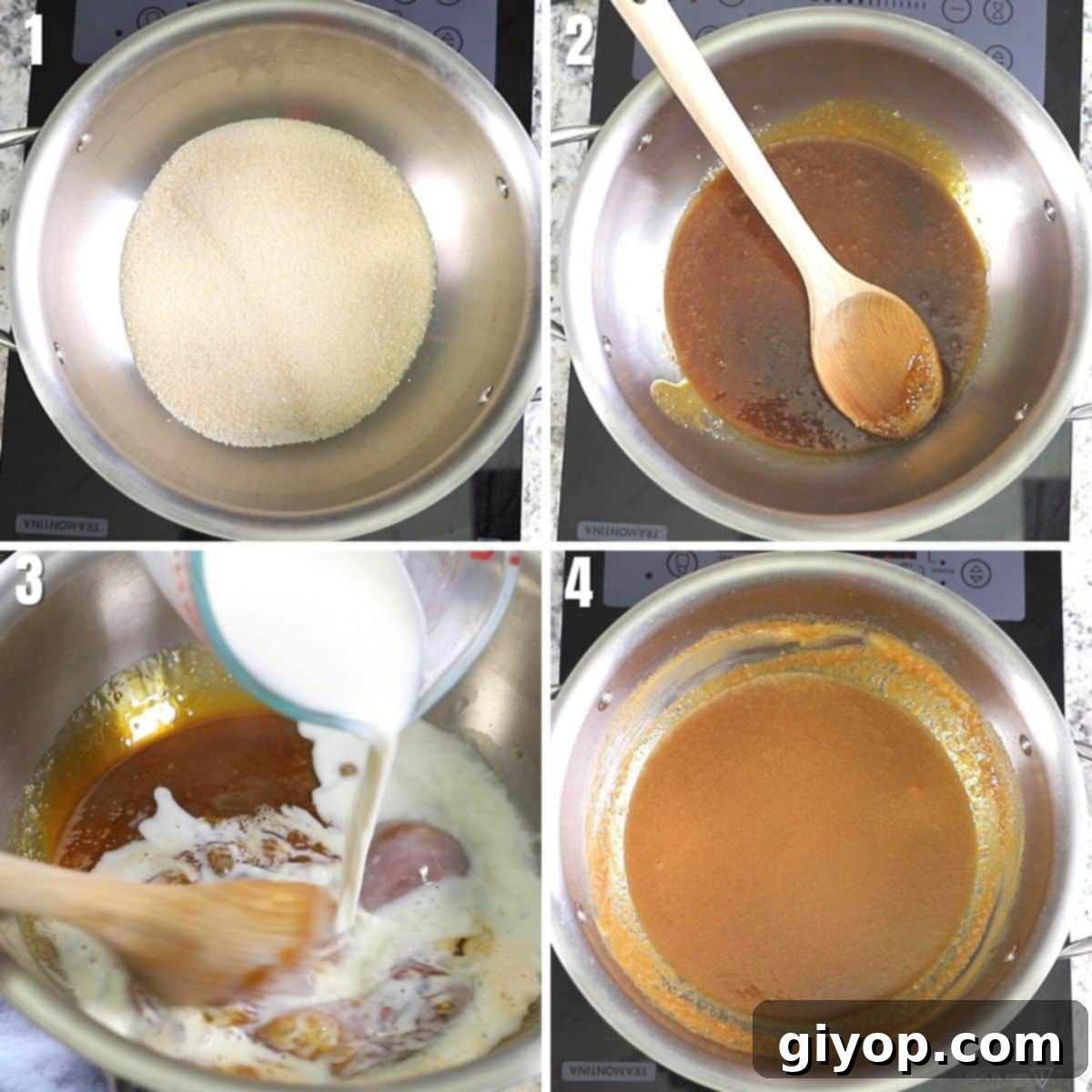
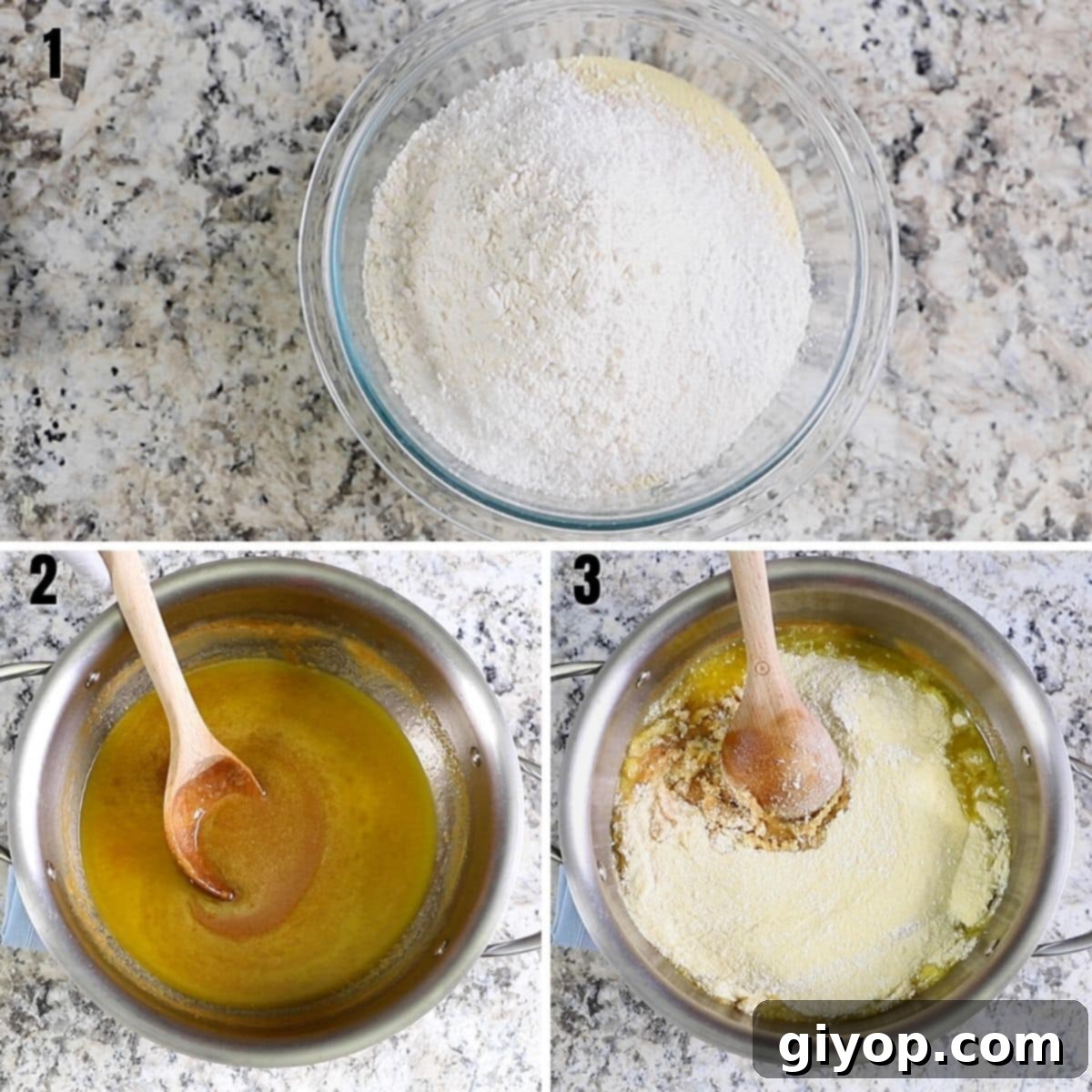
- Begin by placing the granulated sugar in a large, light-colored pot with a heavy bottom. Shake the pan gently to ensure the sugar forms a single, even layer at the bottom. This even distribution is crucial for uniform caramelization.
- Place the pot over medium heat. Allow the sugar to slowly melt and caramelize. Do not stir initially. As soon as you notice the edges starting to melt and turn amber, gently swirl the pan or use a heat-proof spatula to carefully stir the melting sugar, ensuring it caramelizes evenly without burning.
- Continue heating until the sugar transforms into a beautiful, deep amber golden color. The aroma will be wonderfully rich and toasted. Immediately remove the pot from the heat to prevent it from burning.
- Very carefully and gradually, pour in the hot milk while continuously stirring with a long-handled spoon or whisk. The mixture will bubble vigorously and may splatter, so maintain a safe distance. The caramelized sugar will likely seize and clump up, but this is entirely normal and expected.
- Return the pot to very low heat and continue stirring patiently until all the sugar clumps have completely dissolved into a smooth, liquid caramel milk mixture. This process may take a few minutes but is essential for a smooth batter.
- Once smooth, remove from heat. Stir in the ghee (or butter) and the honey until fully incorporated. Set this mixture aside to cool down slightly while you prepare the dry ingredients. It should still be warm but not scalding hot.
Making the Harissa Batter and Filling
- In a separate, large mixing bowl, combine the semolina, all-purpose flour, unsweetened fine shredded coconut, and baking powder. Whisk these dry ingredients together thoroughly to ensure they are well combined.
- Pour the slightly cooled caramel-ghee-honey mixture into the bowl with the dry ingredients. Mix gently until just combined and a soft dough forms. It’s crucial not to overmix the dough, as this can lead to a tough and hard Harissa. Mix only until no dry streaks of semolina remain.
- Divide the Harissa dough into two equal halves. One half will form the bottom layer, and the other will be the top.
Assembling and Baking Your Harissa
- Preheat your oven to 350°F (175°C). Prepare a 10-inch round aluminum baking pan by generously brushing it with butter. This ensures the Harissa doesn’t stick and develops a beautiful golden crust.
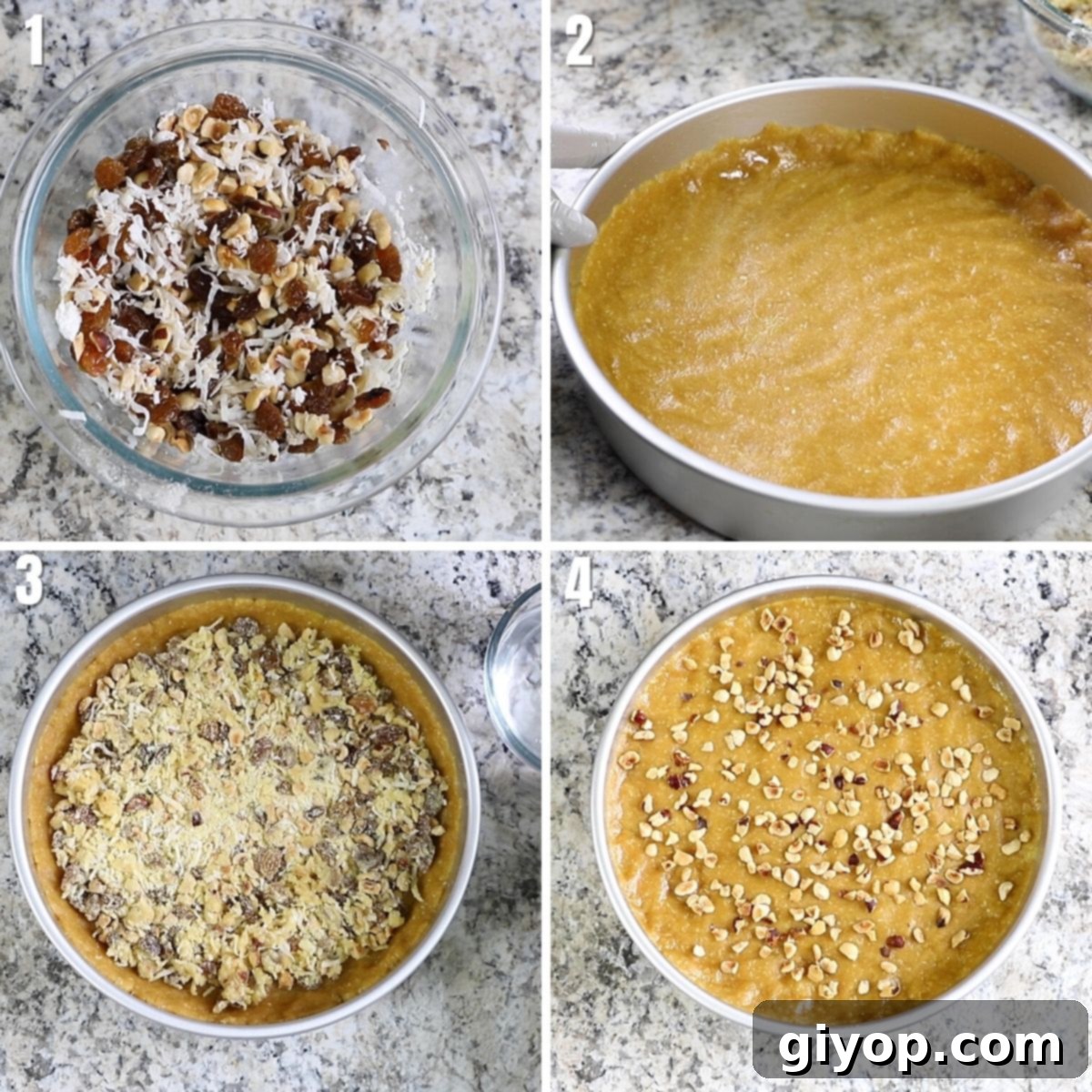
- In a medium bowl, combine all the ingredients for the filling: ½ cup semolina, ½ cup sweetened fine shredded coconut, ½ cup raisins, 1 cup hazelnuts (or your chosen nuts), and 4 tablespoons of honey. Mix thoroughly until everything is well distributed and slightly sticky.
- Take one half of the Harissa dough and spread it evenly into the bottom and slightly up the sides of the prepared pan. You might find it easier to moisten your hands with a little water to prevent sticking and achieve a smooth, even layer.
- Spread the entire filling mixture evenly over the bottom Harissa layer, making sure it reaches the edges.
- Carefully top the filling with the remaining half of the Harissa dough. Again, wetting your hands can help you spread the dough smoothly over the filling. Gently press down to ensure the top layer is even and seals the filling.
- Sprinkle a generous amount of crushed hazelnuts (or other nuts) over the top of the cake. Gently press them into the dough to secure them.
- Bake in the preheated oven for approximately 30-40 minutes, or until the top is beautifully golden brown and the edges are firm.
- While the Harissa is baking, prepare the warm sugar syrup.
Crafting the Perfect Syrup
- In a small saucepan, combine 2 cups of sugar, 2 cups of water, and 2 tablespoons of honey.
- Stir the ingredients for about 10 seconds to help dissolve the sugar. Place the saucepan over medium-high heat and bring the mixture to a rolling boil.
- Once boiling, reduce the heat to low and simmer for 5 minutes. Remove the syrup from the heat and set it aside to cool slightly. The syrup needs to be warm, not boiling hot, when poured over the hot Harissa.
- As soon as the Harissa comes out of the oven, immediately pour the warm syrup evenly over the hot cake. The cake will eagerly absorb the syrup, becoming incredibly moist and flavorful.
- Allow the Harissa to rest and cool down for at least one hour before attempting to cut and serve. This resting period is crucial, as it allows the syrup to fully penetrate and moisten the cake, resulting in the perfect texture and flavor. For best results, allow it to cool completely, even overnight, before serving.
Expert Tips for a Flawless Harissa
To ensure your Egyptian Harissa turns out perfectly every time, consider these invaluable tips from experienced bakers:
- Caramelization Caution: Caramelizing sugar requires attention and a steady hand. Always use a light-colored, heavy-bottomed pan. This allows you to clearly see the color change of the sugar, preventing it from burning. A spatula with a long handle is also recommended for safety. Stay vigilant, as sugar can go from perfectly golden to burnt in a matter of seconds. Keep a large bowl of iced water nearby as a safety precaution, in case of any accidental splatters.
- Controlling Splatter: When adding hot milk to caramelized sugar, the mixture will bubble and rise significantly. Using a wide or larger pan minimizes the risk of splattering. Always add the milk gradually and stir continuously from a safe distance.
- Hot Milk is Key: Ensure your milk is hot, not cold or at room temperature, before adding it to the caramelized sugar. Hot milk helps to dissolve the hardened caramel quickly and smoothly, preventing a lumpy batter. A quick minute in the microwave on full power is usually sufficient to heat the milk.
- Curdling is Okay: Don’t be alarmed if the milk appears to curdle slightly when added to the hot caramel. For Harissa, this is not a concern as we are not aiming for a silky-smooth caramel sauce for topping. Continue stirring over low heat, and the lumps will dissolve.
- Avoid Overmixing: Once you combine the wet caramel mixture with the dry semolina ingredients, mix only until the ingredients are just incorporated. Overmixing develops the gluten in the flour and semolina, which can result in a hard and chewy Harissa, rather than the desired soft and moist texture.
- Syrup Temperature Matters: Unlike some other semolina cakes like Basbousa, Harissa benefits from being hot while the syrup is warm, not boiling hot. The warm syrup allows for gradual absorption, leading to a more evenly moistened cake. A good practice is to start making your syrup when you put the Harissa in the oven; this gives the syrup approximately 10-15 minutes to cool down to the ideal warm temperature.
Customizing Your Harissa: Variations and Substitutions
While the classic Egyptian Harissa is a beloved staple, its versatility allows for wonderful variations to suit different tastes and preferences. Explore these ideas to make your Harissa uniquely yours:
- Texture Preferences: If you prefer a Harissa with a firmer, more substantial texture, you can opt to use coarse semolina (also known as farina) instead of fine semolina for the batter. Additionally, reducing the amount of ghee to ¾ cup instead of a full cup can contribute to a slightly harder cake. Experiment to find your perfect bite!
- Filling Freedom: In some regions of Egypt, the traditional filling for Harissa omits semolina entirely, focusing instead on a richer coconut and nut blend. You can enhance the filling by using a full cup (or even more) of sweetened shredded coconut alongside the raisins and nuts. This creates an even more intensely coconut-flavored center.
- Decorative Touches: Beyond simple crushed hazelnuts, garnishing your Harissa with candied cherries adds a vibrant pop of color and a delightful chewy texture, a common and cherished variation in certain Egyptian households. Other options include finely chopped pistachios for a sophisticated green contrast or a sprinkle of toasted sesame seeds for an earthy crunch.
- Syrup Enhancements: While the classic honey-infused syrup is perfect, you can add a touch of rose water or orange blossom water to the warm syrup for an extra layer of fragrant, floral aroma, a popular addition in many Middle Eastern desserts.
Serving and Storage Tips
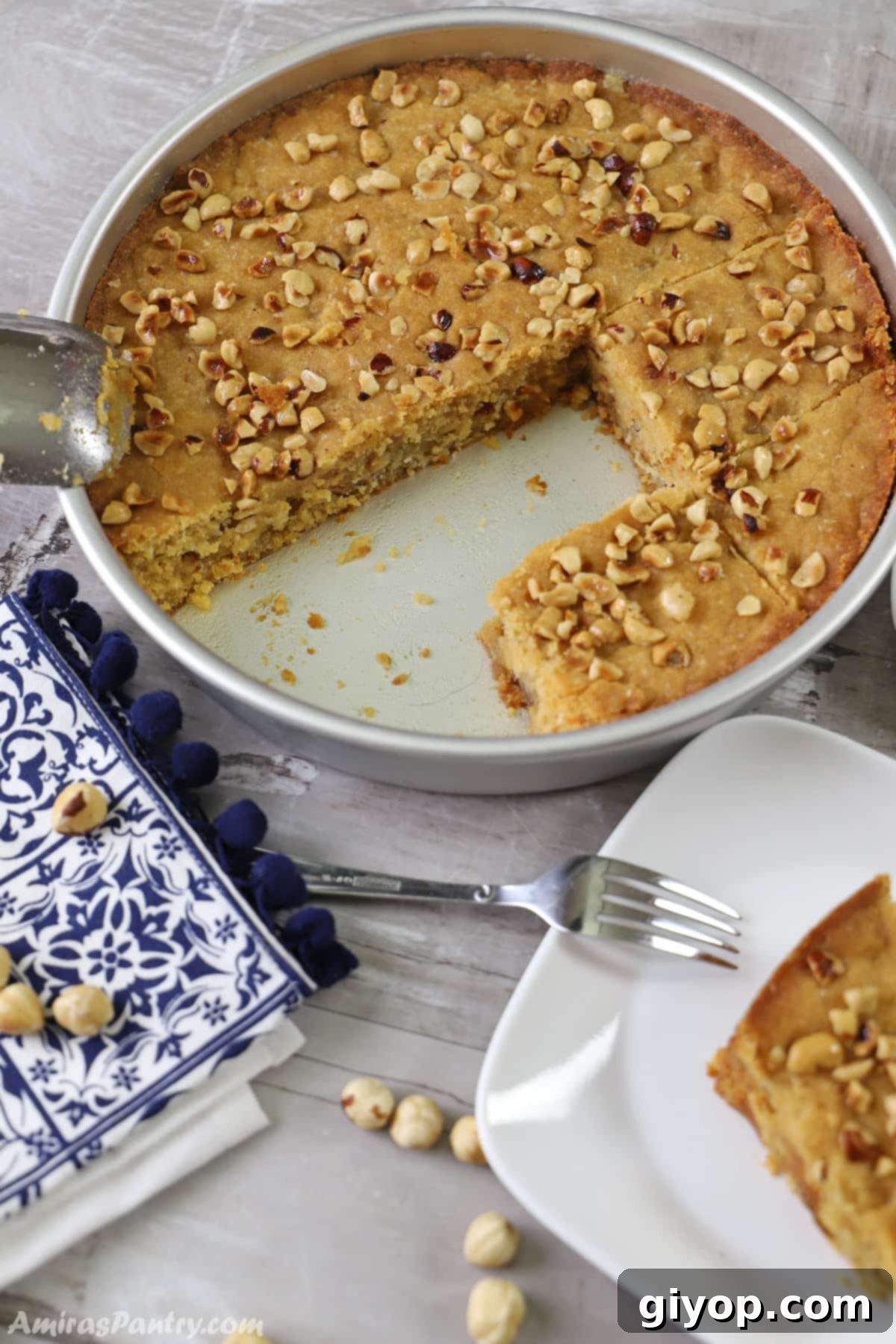
To fully enjoy your homemade Egyptian Harissa, proper serving and storage are key. Always allow the cake to cool completely, preferably for at least an hour or even overnight, after pouring the syrup. This resting period allows the syrup to fully saturate the cake, ensuring maximum moisture and flavor. Serve Harissa at room temperature, cut into generous squares or diamond shapes. It pairs wonderfully with a cup of strong Arabic coffee or hot mint tea, making it perfect for an afternoon treat or a dessert after a celebratory meal.
For storage, Harissa keeps exceptionally well. Store leftover pieces in an airtight container at room temperature for up to 3-4 days, or in the refrigerator for up to a week. The flavors often deepen and meld beautifully on the second day. For longer storage, Harissa freezes remarkably well. Wrap individual pieces tightly in plastic wrap, then place them in a freezer-safe container or bag. It can be stored in the freezer for up to 2-3 months. Thaw at room temperature or gently warm in the microwave before serving for a delicious treat anytime.
Frequently Asked Questions (FAQ) About Harissa
Q: Is “Harissa” spicy like the sauce?
A: No, absolutely not! While both share the name “Harissa,” the dessert “Harissa” is a sweet semolina cake, completely unrelated to the spicy chili paste commonly found in North African cuisine. The name is simply a linguistic coincidence.
Q: Can I make Harissa without ghee?
A: While ghee is highly recommended for its authentic flavor, you can substitute it with unsalted butter. The taste will be slightly different, but the cake will still be delicious. Coconut oil could also be an option for a dairy-free version, though it would impart a distinct coconut flavor.
Q: What kind of semolina should I use?
A: For this recipe, fine semolina is preferred to achieve a soft, cake-like texture. If you use coarse semolina (farina), the resulting cake will be firmer and have a more rustic crumb. Both are valid, but fine semolina creates a more delicate Harissa.
Q: How do I prevent the sugar from burning when caramelizing?
A: Use a light-colored, heavy-bottomed pan and medium heat. Do not stir until the edges start to melt, then gently swirl or stir. Remove from heat as soon as it reaches an amber color. Patience is key; it’s better to go slow than burn it. If it burns, discard and start over.
Q: Can I prepare Harissa ahead of time?
A: Yes, Harissa is an excellent make-ahead dessert! You can bake it a day or two in advance and store it at room temperature in an airtight container. The flavors often improve with a little time, becoming even more integrated and delicious. It also freezes well for longer storage.
Related Middle Eastern Desserts
If you’ve fallen in love with the rich flavors of Egyptian Harissa, you’ll surely enjoy exploring other exquisite Middle Eastern desserts:
- Basbousa: Another beloved traditional Egyptian dessert, Basbousa is a moist semolina cake often infused with coconut and yogurt, drenched in a fragrant simple syrup. It’s renowned for its melt-in-your-mouth texture and delightful sweetness.
- Om Ali: Experience the ultimate comfort dessert with Om Ali, Egypt’s answer to bread pudding. This rich, buttery pastry and milk pudding is traditionally baked with nuts and coconut, creating a warm, creamy, and utterly satisfying treat.
- Pistachio Baklava: Indulge in the layers of flaky phyllo pastry, generously filled with crushed pistachios and bathed in a delicate, not-too-sweet syrup. This traditional Baklava recipe offers a perfect balance of crunch, nuttiness, and syrupy goodness.
- For more sweet inspirations, be sure to check out our comprehensive collection of the best Middle Eastern Desserts, where you’ll find a treasure trove of delightful treats to expand your culinary horizons.
Egyptian Harissa Dessert
Print
Pin
Rate
Save
Saved!
Dessert
Egyptian, Middle Eastern
Halal
40
30
1
1
10
24
pieces
366
kcal
Amira
Ingredients
For the Harissa mixture:
- 1 cup sugar
- 1 cup hot milk
- 3 ⅓ cups semolina 500 g
- 2 Tablespoons all purpose flour
- 1 cup unsweetened fine shredded coconut
- 1 teaspoon baking powder
- 1 cup ghee/butter
- 2 Tablespoons honey
Stuffing:
- ½ cup semolina
- ½ cup sweetened fine shredded coconut
- ½ cup raisins
- 1 cup hazelnut or any nut you like
- 4 Tablespoons honey
Sugar syrup:
- 2 cups sugar
- 2 cups water
- 2 Tablespoons honey
Optional:
- Crushed hazelnut for garnishing
Instructions
Make the Harissa batter:
- In a heavy bottom, light colored pan, sprinkle sugar in an even layer and turn heat to medium.
- When you notice that the sugar starts melting around the edges lower the heat and stir lightly to mix sugar so it will melt evenly.
- When the sugar caramelize, remove from heat and carefully and gradually pour the hot milk while stirring.
- You will notice the mixture is bubbling and rising so keep your distance until it calms down a bit. Also you will notice that the sugar will clump but do not freak out this is normal. Return to very low heat and stir to dissolve sugar clumps.
- When it has dissolved remove from heat, mix in butter and honey then set aside to cool down a bit.
- In a separate bowl, add semolina, all purpose flour, baking powder and coconut then mix well.
- Add the dry ingredients to the caramel mix, do not over mix.
- Divide the mixture in two halves.
Make the filling:
- In a medium bowl mix all the filling ingredients together.
Assemble the cake:
- Preheat your oven to 350F
- Brush a 10in round aluminum pan with butter then spread half the mixture on the bottom and sides of the pan.
- Add the filling and level.
- Wet your hands with some water and spread the remaining harissa mixture on top.
- Sprinkle crushed hazelnuts on top and press lightly with your hands.
- Bake in the oven until top is golden.
Make the syrup:
- In a sauce pan add sugar, water and honey.
- Stir for 10 seconds then turn heat on and bring to a boil.
- Reduce heat and simmer for 5 minutes then remove from heat and set aside.
- When the harissa is done pour the warm syrup over and let it rest and cool down at least an hour before cutting and serving.
Notes
- Be extremely cautious when caramelizing the sugar. I advice you to use light colored pan, a spatula with long handle and stay close by and attentive to your pan.
- Keep a large pan of iced water nearby just in case anything got out of control and the caramel splattered.
- It is very helpful to use a large pan to minimize splattering as well.
- Your milk needs to be hot and not cold or room temperature. I microwave mine for a minute full power before I use it in the caramel.
- Sometimes the milk curdle when added to the caramelized sugar, honestly this is not important in our case as we are not making a silky smooth caramel to use on top of ice cream or something.
- Do not overmix the harissa mixture as this will cause the harissa to be hard and not soft.
- Unlike basbousa, harissa needs to be hot while the syrup is warm and not boiling hot. So start making the syrup when you put the harissa in the oven so it will have around 10 to 15 minutes to cool off a bit.
- Variations:
- Some people like their harissa hard. To do so use coarse semolina (farina) and you may also want to decrease the ghee to ¾ cup instead of a full cup.
- In some parts of Egypt as well the filling does not have semolina and instead they use a full cup of sweetened coconut or even more in the filling along with the raisins and nuts.
- Garnishing the Harissa with hazelnuts and candied cherries is also a common variation in some parts of Egypt.
- Please check the nutrition disclaimer policy.
Nutrition
Calories:
366
kcal
|
Carbohydrates:
56
g
|
Protein:
5
g
|
Fat:
14
g
|
Saturated Fat:
5
g
|
Cholesterol:
1
mg
|
Sodium:
120
mg
|
Potassium:
158
mg
|
Fiber:
2
g
|
Sugar:
33
g
|
Vitamin A:
356
IU
|
Vitamin C:
1
mg
|
Calcium:
38
mg
|
Iron:
2
mg
Tried this Recipe? Pin it for Later!
Mention @AmirasPantry or tag #AmirasPantry!
First published Apr 27, 2013. Last updated March 13, 2021 with new recipe, important tips, clear step by step instructions and readability.